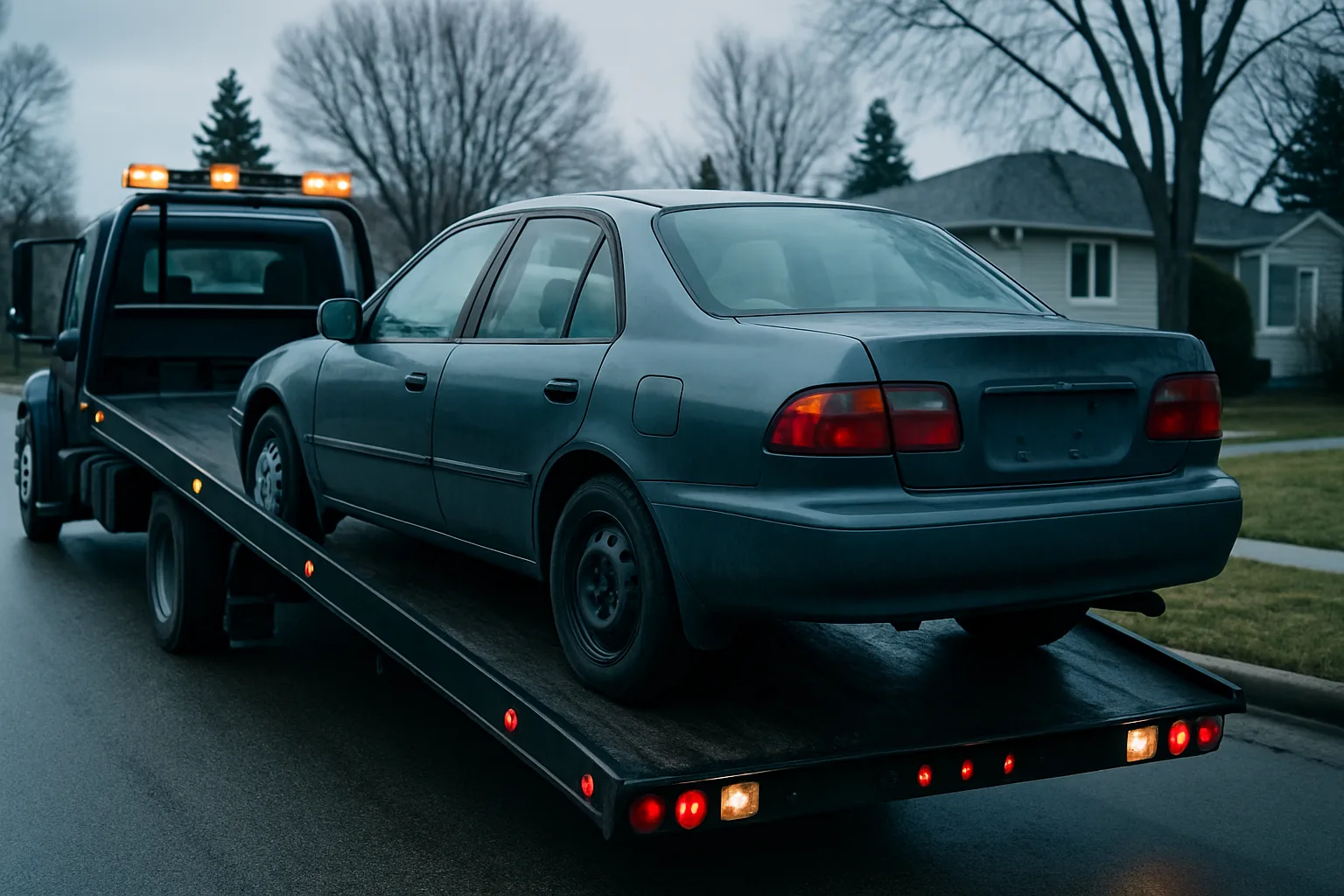
Junkyard, Salvage Yard, or Auto Recycler — Do You Actually Know the Difference?
Most people use these three terms interchangeably. That's a mistake — and it could cost you money when you're trying to get rid of a vehicle in Yorkton. The difference between where your car ends up matters. It affects how much cash you walk away with, how fast the pickup happens, and whether you're dealing with a legitimate buyer or someone lowballing you because you don't know better.
This guide breaks it down plainly. If you're sitting on a non-runner, a flood car, or just a tired old vehicle taking up space in your Saskatchewan driveway, understanding these distinctions helps you make a smarter decision — and get paid fairly for it.
What Is a Junkyard? (And Why the Word Still Matters)
A junkyard is exactly what the name sounds like. It's a lot full of end-of-life vehicles, usually crushed or stripped down, with the primary purpose of selling scrap metal by weight. The car isn't worth much as a parts source anymore. The goal is volume — accumulate enough ferrous and non-ferrous metal to sell to a mill or broker.
When a junkyard buys your car, they're thinking in tons, not in parts. Your vehicle's make and model matter less than its curb weight and what the scrap metal prices today look like. If the price per tonne for shredded steel is up this week, they'll offer you more. If it's down, expect a lower number. There's very little transparency in how that offer gets calculated, which is exactly why so many sellers leave money on the table.
- Pricing is almost entirely weight-based
- Minimal inspection — they're not interested in what runs
- Vehicles are typically crushed and shredded quickly
- Offers are often made verbally with no documentation
This isn't inherently bad. If your car is truly at end of life — no resalable parts, serious structural damage, major fire or flood — a junkyard may be the right destination. But walking into that transaction blind means you're relying entirely on their quoted price with no way to verify it's fair.
What Makes a Salvage Yard Different?
A salvage yard buys vehicles specifically to pull and resell usable parts. They're looking for alternators, transmissions, doors, engines, suspension components — anything with resale value. The vehicle's condition, year, make, and model matter significantly here. A 2019 pickup with a bent frame but a clean drivetrain is worth far more to a salvage yard than a 2004 sedan with 400,000 kilometres and a seized engine.
Salvage yards are the middle ground between scrap metal recovery and the used parts market. They typically store vehicles in rows on a large lot, and buyers come in to pull parts themselves — hence the term "pull-a-part" yards. Others are full-service, meaning the yard does the dismantling and sells specific parts directly.
For the seller, this matters because your vehicle might be worth more than scrap weight if it has parts in demand. A savvy salvage operator will look at what's on the car before quoting. That said, most salvage yards still have limited buyer pools — they'll quote you one price, and that's it. There's no competition driving that number up.
- Vehicles are assessed for part value, not just weight
- Newer vehicles or popular models fetch better offers
- Condition of specific components matters
- Still a single-buyer scenario — limited negotiation leverage
Auto Recyclers: The Professional End of the Business
Auto recyclers operate at a higher standard. They're regulated facilities that follow provincial and federal environmental guidelines for fluid draining, refrigerant recovery, battery handling, and hazardous material disposal. In Saskatchewan, proper auto recycling means following strict protocols before a vehicle gets processed — this protects soil, groundwater, and the surrounding community.
An auto recycler typically combines the function of both a salvage yard and a scrap processor. They strip usable parts for resale, reclaim recyclable materials (copper wiring, aluminum, catalytic converters), and then process the remaining hulk as scrap metal. The result is a more complete and responsible end-of-life process for your vehicle.
From a seller's perspective, a certified auto recycler usually offers more documentation: proper receipts, deregistration paperwork, and a clear chain of custody for your vehicle. That matters when you cancel your plates or insurance. If you're in Yorkton and searching for Yorkton scrap metal services, you want to make sure you're dealing with a licensed facility — not a backyard operation with no accountability.
Free Scrap Car Pickup Yorkton — How the Transaction Actually Works
Whether you're dealing with a junkyard, salvage yard, or auto recycler, the practical question is the same: how do you get rid of the car, get paid fairly, and not spend a week chasing someone down? Free scrap car pickup in Yorkton is a real service — but the quality of that experience varies widely depending on who you call.
Here's the typical process when you contact a legitimate buyer:
- You provide vehicle details — year, make, model, approximate weight, condition, and location
- They generate an offer — either by weight, parts value, or a combination
- Pickup is scheduled — most reputable services in Saskatchewan move within 24–72 hours
- Payment happens at pickup — cash, e-transfer, or cheque depending on the buyer
- You hand over the title/ownership and keys — they handle transport and processing
The problem with the traditional model is step two. One buyer, one quote, no leverage. You either take it or spend more time calling around. That's where platforms like SMASH change the dynamic. Rather than relying on a single offer from a single buyer, find the best price for your scrap in Canada by letting vetted buyers compete for your load. More competition means better price discovery — that's not a sales pitch, it's how markets work.
For anyone doing junk car removal in Yorkton, that competitive layer matters. The difference between the lowest and highest offer on a vehicle can be significant, depending on current scrap metal prices and what parts your car carries.
How Scrap Car Value Is Actually Calculated in 2026
If you've searched for a scrap car value calculator recently, you've probably noticed that the numbers vary wildly between tools. That's because scrap car value is genuinely dynamic. It's not a fixed rate — it shifts with commodity markets, local demand, and what buyers are actively looking for.
Here's what actually drives your car's value at end of life:
- Vehicle weight: Heavier vehicles carry more ferrous metal. Trucks and SUVs typically yield more than compact cars by weight alone.
- Catalytic converter: "Cats" contain platinum group metals and can represent a meaningful portion of a vehicle's scrap value. Certain makes carry more valuable cats than others.
- Non-ferrous components: Copper wiring, aluminum wheels, and radiators add up.
- Resalable parts: A transmission, engine, or axle in working order can push the value significantly higher than scrap weight alone.
- Current market conditions: Steel, aluminum, and copper prices fluctuate daily. A vehicle that fetches one price today might be quoted differently next week.
Note: Scrap metal prices fluctuate based on global commodity markets. Always check current rates before accepting an offer — the numbers above reflect general dynamics, not a guaranteed price.
One thing worth noting: if you've come across tools or articles referencing how much is my scrap car worth based on UK pricing models, disregard those for Canadian transactions. Exchange rates, market structures, and processing costs are completely different. Stick to Canadian buyers and Canadian benchmarks when you're selling your car for cash across Canada.
Why SMASH Makes Sense for Sellers Across Saskatchewan
The scrap and salvage industry has historically been opaque. You call a yard, they give you a number, and you decide whether to accept it with no idea whether that number is fair. For a one-time seller — someone just trying to clear a driveway in Yorkton — that information gap is a real disadvantage.
SMASH addresses this directly. It's an auction-based platform where vetted buyers bid on vehicles and loads. Sellers get documented inventory, transparent pricing, and actual competition driving the final number. No subscription fees. No guessing. The platform only wins when you do.
For Saskatchewan sellers specifically, this matters because the local buyer pool in smaller markets can be thin. One or two buyers controlling the market means compressed offers. Opening that up to vetted buyers across a broader network — through platforms like SMASH — is simply how better price discovery works. You can read Canadian car selling guides to understand more about how the process works across different provinces.
Whether your vehicle ends up at a junkyard, salvage yard, or certified auto recycler, the goal is the same: get paid fairly, document the transaction properly, and move on. The difference is whether you have leverage going in or not.
If you want a fast, fair quote on your vehicle — no matter what condition it's in — get a free car valuation today. Sell your car for cash across Canada without the guesswork, the back-and-forth, or the feeling that you left money on the table.
Frequently Asked Questions
Q: What's the difference between free scrap car pickup in Yorkton and a standard junk car removal service?
Free pickup means the buyer absorbs the towing or transport cost — it's included in the deal, not charged to you separately. Standard junk car removal in Yorkton typically includes free pickup as part of the offer, but always confirm upfront that there are no hidden towing fees before you agree to a price.
Q: Do I need the title or ownership papers to sell a scrap car in Saskatchewan?
Yes. In Saskatchewan, you'll need the vehicle's ownership documentation to legally transfer it to a buyer. This protects you from future liability once the car leaves your possession. If you've lost the title, contact SGI to arrange a replacement before you proceed with the sale.
Q: How quickly can I get free scrap car pickup in Yorkton?
Most legitimate buyers operating in the Yorkton area can schedule pickup within 24 to 72 hours of an accepted offer. Response times can vary depending on the time of year and local demand, but same-week service is the standard expectation for a straightforward transaction.
Q: Does it matter if my car doesn't run when I'm trying to sell it for scrap?
Not at all. Non-runners, flood vehicles, cars with seized engines, and vehicles with major frame damage are all purchased regularly. The buyer will factor in the condition when calculating the offer, but a car that doesn't start is still worth cash as scrap metal or for parts.
Q: How do I know if I'm getting a fair scrap car price in Yorkton?
The best way is to get multiple quotes and compare. Platforms like SMASH let vetted buyers compete for your vehicle, which gives you a clearer picture of what the market will actually pay — rather than relying on a single number from a single buyer with no context. Scrap metal prices fluctuate, so checking current commodity rates before you accept any offer is always a smart move.
Follow SMASH on LinkedIn for ongoing scrap metal market insights and industry updates: linkedin.com/company/scrap-metal-auction-sales-hub