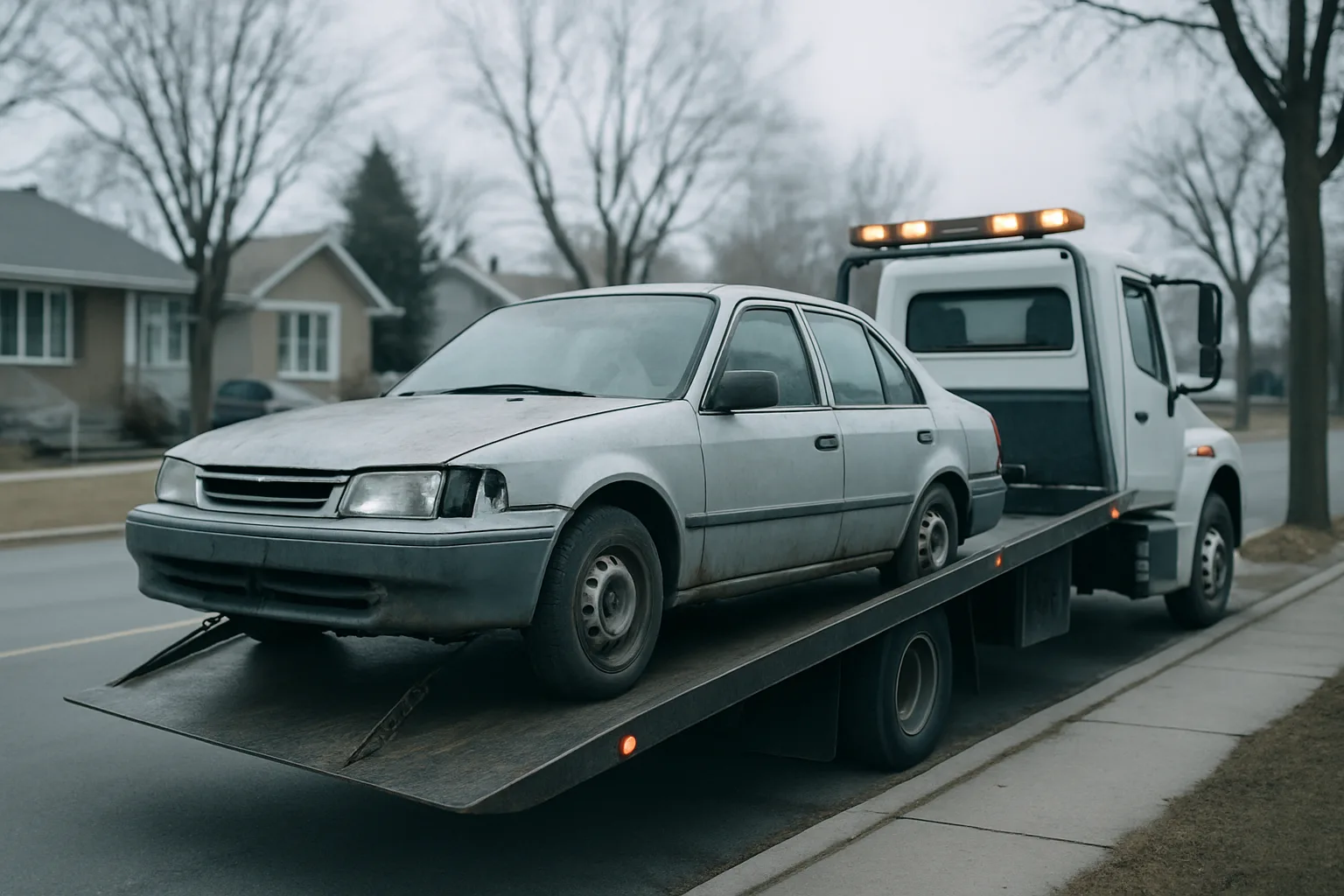
Catalytic converter theft in Canada has surged so dramatically that it's reshaping scrap car values from Vancouver to Montreal — and most car owners have no idea. If you've been sitting on an older vehicle wondering what it's worth, the answer in 2026 is more complicated than it used to be. The metals inside a single catalytic converter — platinum, palladium, and rhodium — can be worth hundreds of dollars. That fact has created a shadow economy that directly affects what you'll get when you go to sell your car for cash across Canada.
This isn't a scare piece. It's a market reality check. If you're searching cash for junk cars Montreal, you need to understand what's happening to converter values, how theft affects your payout, and what legitimate buyers actually look for in 2026.
---Why Catalytic Converters Became the Most Stolen Auto Part in Canada
The math is brutal and simple. A catalytic converter contains platinum group metals (PGMs) — platinum, palladium, and rhodium. These metals are traded on global commodity markets, and their values have made converters more attractive to steal than almost anything else bolted to a vehicle. A thief with a cordless saw can remove a converter in under two minutes. The whole job happens under the car, out of sight, often in broad daylight.
Hybrid vehicles like the Toyota Prius are targeted most aggressively because their converters contain higher concentrations of PGMs. But trucks, SUVs, and older domestic vehicles are also hit regularly — especially in dense urban areas like Montreal, where vehicles park on the street overnight. Quebec has seen a significant increase in reported converter thefts since 2023, and the trend hasn't reversed.
Here's what that means for the scrap car market:
- Vehicles arriving at yards without their converter are worth meaningfully less than vehicles with one intact.
- Scrap buyers now factor converter presence — and condition — into their first offer.
- Legitimate buyers document converters carefully because regulators are watching the secondary market closely.
- Theft-related converter fraud has made vetted, transparent transactions more important than ever.
What a Missing Converter Does to Your Scrap Car Value
If you're using a scrap car value calculator online and your vehicle is missing its catalytic converter, the number you see may not reflect reality. Most generic calculators don't account for converter status. They estimate based on vehicle weight, year, make, and model — but a missing converter is a real deduction that a serious buyer will apply at pickup.
The deduction varies by vehicle. A converter from a mid-size sedan carries different PGM content than one from a full-size SUV or a diesel truck. In 2026, buyers are more sophisticated about this than ever. They ask directly: is the converter present? Is it the original? Some buyers verify this against VIN data and manufacturer specifications — exactly the kind of detail-oriented approach that platforms like Canada's B2B scrap recycling marketplace SMASH have normalized in the industry.
If your converter was stolen before you decided to scrap the vehicle, be upfront about it. Trying to hide the absence or claim it was removed for another reason raises red flags and can kill a deal. Honest disclosure keeps the process clean and gets you paid faster.
General expectations if your converter is missing:
- Expect a lower offer — the exact amount depends on your vehicle type and current PGM spot prices.
- The scrap value of the rest of the car (body steel, aluminum, copper wiring, etc.) still has real worth.
- A reputable buyer will explain the deduction clearly — if they don't, ask.
Selling Your Car for Cash in Montreal: What to Expect in 2026
Montreal is one of the densest used-car markets in Canada. The city has a large population of older vehicles, a significant French-speaking working-class base that tends to run vehicles longer, and a robust scrap infrastructure across the island and into the surrounding regions. That means competition among buyers — which is good for sellers.
When you go to sell my car for cash Montreal, the process in 2026 looks like this:
- Get a quote — online or by phone. Give accurate information about make, model, year, mileage, condition, and whether the catalytic converter is present.
- Schedule pickup — most legitimate buyers in the Montreal area offer same-day or next-day pickup.
- Hand over documentation — even a title-less vehicle can often be sold. More on that below.
- Get paid — cash, e-transfer, or certified cheque depending on the buyer.
The converter theft wave has made step one more detailed than it used to be. Buyers now ask specific questions they didn't ask three years ago. Answer them honestly. It moves the deal forward. For first-time sellers, read Canadian car selling guides to understand what documentation you'll need and how the process works province to province.
Can You Sell Catalytic Converters Online Separately? Here's the Reality
If your vehicle's converter is still intact and you're thinking about removing and selling it separately before scrapping the rest of the car — understand what you're getting into. The question of how to sell catalytic converters online legally is more complex in 2026 than it was even two years ago.
Canadian provinces have tightened regulations on secondary converter sales following the national theft epidemic. In Quebec, as in most provinces, sellers of used catalytic converters are increasingly required to provide proof of ownership — typically a vehicle title or bill of sale. Many legitimate recyclers and scrap buyers will refuse to purchase a loose converter without documentation. This is intentional. It's designed to shut down the theft-to-resale pipeline.
Platforms like SMASH — Canada's B2B scrap recycling marketplace — require documented inventory for exactly this reason. Serial tracking, photo documentation, and verified seller profiles are standard. That's the direction the whole industry is moving. If you're a legitimate owner with a legitimate converter, documentation protects you and speeds up the sale.
For most private car owners, the cleanest path is to sell the entire vehicle intact. You get a fair price for the whole unit, avoid regulatory complexity, and let the licensed buyer handle the dismantling process correctly.
No Title? Here's What Cash for Cars Quebec Buyers Will Accept
One of the most common questions we hear from Quebec car owners is: can I sell my car if I've lost the title? The short answer is: often yes, but it depends on the buyer and the vehicle's history.
The term cash for cars no title needed is used heavily in search — and for good reason. Many older vehicles in Quebec change hands without proper paperwork, get declared total losses and sit forgotten, or have titles lost over decades of ownership. Legitimate buyers have processes for this.
What buyers typically accept in lieu of a title in Quebec:
- A valid government-issued ID matching the registered owner
- A signed statutory declaration of ownership
- SAAQ registration documents showing your name as owner
- For very old vehicles with no registration — a signed bill of sale may suffice
Every buyer has slightly different requirements. Be transparent about your situation upfront. Trying to sell a vehicle without clear ownership documentation after a converter theft has occurred will raise fraud flags immediately. Honesty moves deals. Games kill them.
For cash for cars Quebec inquiries specifically, local service options are available — including dedicated Montreal scrap metal services that handle title-complex vehicles regularly.
How to Get the Best Price for Your Junk Car Despite the Converter Theft Market
The converter theft epidemic has changed the game, but it hasn't eliminated value. Your junk car still has real worth — in scrap steel, aluminum components, copper wiring, glass, rubber, and yes, the converter if it's still there. The key is knowing how to position your vehicle correctly and work with buyers who give you a transparent breakdown.
Steps to maximize your payout in 2026:
- Document everything before the buyer arrives. Photos of the undercarriage, engine bay, interior, and exterior. Note any missing parts.
- Know your converter status. If it's there, say so clearly. If it's been stolen, say so clearly. Buyers price both scenarios.
- Get multiple quotes. The cash for junk cars Montreal market has genuine competition. Use it. A second or third quote costs you nothing and often reveals better value.
- Ask for a breakdown. A reputable buyer can tell you approximately what the vehicle is worth in parts versus flat scrap weight.
- Don't strip the car yourself unless you're licensed and know what you're doing. Improper removal of fluids or components creates liability and may reduce your offer.
The best buyers in this market operate transparently. They document what they receive, they don't lowball on phantom deductions, and they pay when they say they'll pay. If something feels off — the offer changes at pickup, the buyer becomes vague about deductions — walk away. There are enough legitimate buyers in this market that you don't need to settle.
Whether you're in Montreal, Quebec City, Toronto, Calgary, or anywhere else across Canada, the process works the same way: get a free car valuation, get a quote you can trust, and move forward knowing what you're getting and why.
If you're ready to stop guessing what your vehicle is worth and get a real number based on real market conditions, it starts with one honest conversation. Sell your car for cash across Canada — get a free quote at cashforcars-canada.ca.
---Frequently Asked Questions
Q: How much less is my junk car worth without a catalytic converter in Montreal?
The deduction depends on your vehicle make, model, and year — and on current platinum group metal spot prices, which fluctuate daily. A missing converter from a hybrid or larger SUV typically means a more significant deduction than one from a small sedan. Get a quote for both scenarios so you know the gap before committing.
Q: Can I sell my junk car for cash in Montreal without the title?
Yes, in many cases. Most buyers serving the Montreal and broader Quebec market will accept valid government ID, SAAQ registration documents, or a statutory declaration in lieu of a formal title. Be upfront about your documentation situation when you request a quote — it avoids delays at pickup.
Q: Is it legal to sell a catalytic converter separately in Quebec?
It can be, but regulations have tightened significantly. In 2026, most licensed Quebec recyclers require proof of ownership before purchasing a loose converter. Selling without documentation is risky legally and most reputable buyers will refuse the transaction. Selling the whole vehicle intact is almost always the cleaner option.
Q: How do I know if I'm getting a fair price for my junk car in Montreal?
Get at least two or three quotes. Ask each buyer to explain what's included in their offer — converter value, scrap steel weight, any deductions. A buyer who can't or won't break down their number is a buyer to be cautious of. Legitimate buyers in the Montreal market are competitive and transparent.
Q: Does catalytic converter theft affect the price I get even if my converter wasn't stolen?
Indirectly, yes. Theft-related fraud has made buyers more cautious and documentation-heavy across the board. But if your converter is intact and you can demonstrate it, that actually works in your favor — documented, complete vehicles attract stronger offers because buyers have confidence in what they're purchasing.
---Follow SMASH on LinkedIn for industry updates, scrap metal market insights, and news from Canada's B2B recycling marketplace.