Most people forget one thing after they scrap their car: cancelling the insurance. It sounds minor. It isn't. You could pay months of premiums on a vehicle that no longer exists — and in some cases, that money is gone for good.
If you're looking to sell scrap car Kamloops, or anywhere else across Canada, this guide walks you through exactly what to do with your insurance after the deal is done. No guessing. No wasted premiums. Just a clean exit.
What Happens to Your Insurance When You Scrap a Car?
Your insurance doesn't automatically cancel when you scrap your vehicle. The policy stays active until you contact your provider and tell them to end it. This is true whether you're in Kamloops, Calgary, or Halifax. Insurance companies don't monitor ownership transfers or scrap transactions in real time.
That means if you hand over your car on a Tuesday and forget to call your insurer, your policy keeps running. You keep paying. The car is gone, but the premium isn't. Depending on your billing cycle, you could lose anywhere from a few days to a full month of coverage on a vehicle you no longer own.
The moment the car leaves your possession — especially when you sell your car for cash across Canada — that's the moment you need to act on the insurance side too.
Step-by-Step: How to Cancel Your Insurance After Scrapping
This process is straightforward. Don't overcomplicate it. Here's what you need to do, in order:
- Get your documentation in order first. Before you call your insurer, make sure you have the bill of sale or transfer receipt from the scrap buyer, your policy number, and the date the transaction occurred. Some insurers in British Columbia will ask for the name of the buyer or the recycling facility.
- Call or email your insurer on the same day you sell. Same-day contact is important. It establishes the exact cancellation date and protects you from being charged for coverage after the car is gone. Most insurers will backdate the cancellation to the date of sale if you contact them promptly.
- Request written confirmation of cancellation. Don't accept a verbal confirmation and move on. Get an email or a cancellation letter. You want a paper trail in case billing issues come up later.
- Ask about a refund or credit. If you paid your premium in advance — quarterly, semi-annually, or annually — you're likely owed a prorated refund. Ask directly. Don't assume the insurer will volunteer it.
- Return or surrender your licence plates. In British Columbia, your plates belong to you, not the vehicle. But if you're not transferring them to another car, you may want to surrender them to ICBC to stop any associated fees or obligations. ICBC handles insurance and registration together in BC, which makes this step slightly different than in other provinces.
- Keep a copy of everything. Cancellation letter, refund confirmation, bill of sale — store these digitally and physically. If a billing dispute comes up six months from now, you'll be glad you have them.
This process takes less than an hour if you're organized. The delay is almost always on the insurer's side, not yours. Be direct, have your documents ready, and don't get off the phone without a confirmed cancellation date.
ICBC and Insurance Cancellation in British Columbia
If you're in Kamloops or anywhere else in British Columbia, your auto insurance situation is different from most other provinces. ICBC — the Insurance Corporation of British Columbia — is the mandatory basic auto insurer for all BC drivers. You can't just shop around for basic coverage like you can in Ontario or Alberta. ICBC handles it.
When you scrap your vehicle in BC, you need to contact ICBC directly (or through an Autoplan broker) to cancel your policy. Here's what makes BC unique:
- Your licence plates don't transfer with the car in BC — you keep them and can move them to another vehicle or surrender them.
- If you surrender your plates, ICBC may issue a refund on unused insurance. The exact amount depends on your policy type and how much time remains.
- Optional coverage (collision, comprehensive) is often purchased through the same ICBC broker — cancellation of those layers happens simultaneously.
- ICBC has a cancellation form available online and through brokers. You don't always need to visit in person.
If you purchased extended or optional coverage through a private insurer alongside your ICBC policy, you'll need to contact that company separately. Two calls, not one. Don't skip the private insurer — that's where a lot of people leave money on the table.
For anyone using a platform like SMASH to facilitate the scrap transaction, the B2B documentation generated — invoices, transfer records, packing lists — can serve as supporting evidence for your insurance cancellation request. That paperwork matters more than people realize.
Free Scrap Car Pickup in Kamloops — And Why the Timing Matters for Insurance
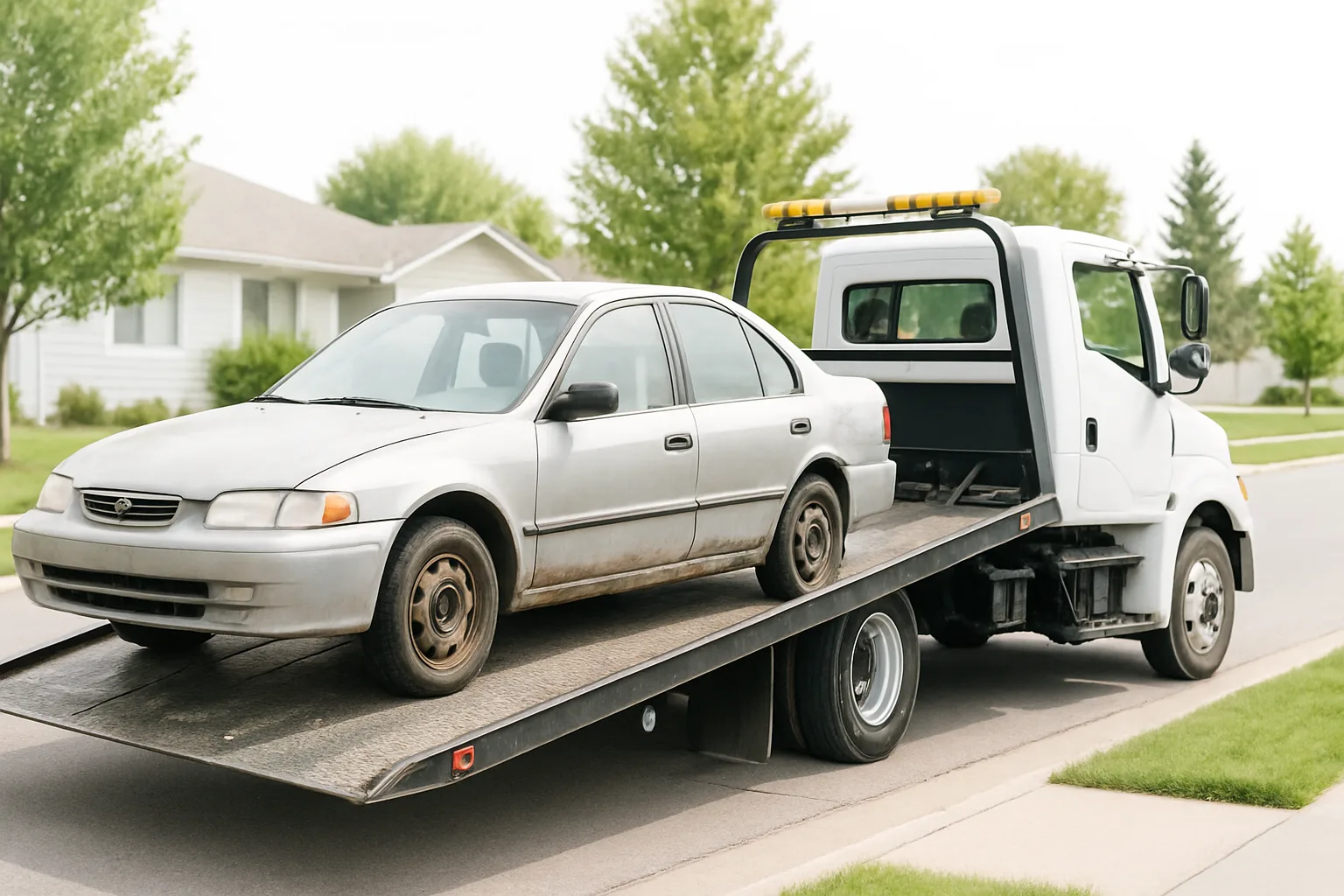
If you're arranging free scrap car pickup Kamloops, the pickup date is your insurance cancellation trigger date. The moment the vehicle leaves your property — or the moment ownership officially transfers — is the moment you stop having an insurable interest in that car.
This matters because some scrap buyers schedule pickups days after the paperwork is signed. In that window, you technically still have possession of the vehicle, and your insurer may argue coverage should run until physical pickup, not the date of the agreement. Talk to your insurer before the pickup happens if there's going to be a delay between signing and collection.
When you get a free car valuation and schedule a pickup, the best practice is:
- Confirm the pickup date in writing with the scrap buyer.
- Contact your insurer before or on the day of pickup.
- Provide the pickup date as your requested cancellation date.
- Get confirmation before the truck arrives.
Platforms like SMASH operate through a scrap metal auction platform model that creates a clear transaction record — bid history, buyer details, invoice generation. That kind of documentation is exactly what an insurer needs to process a cancellation cleanly. The more organized your transaction, the faster your cancellation goes through.
What About a Refund? Here's What to Actually Expect
This is where most people get frustrated. They expect a full refund and get a partial one. Or they get nothing because of a short-rate cancellation penalty. Here's the reality:
If you cancel mid-term on a policy you paid in advance, most insurers will refund the prorated unused portion, minus a short-rate penalty. The penalty is the insurer's fee for the administrative work of cancellation. It's legal, it's standard, and it's rarely negotiable.
If you pay monthly, you typically just cancel at the end of the billing cycle or with a few days' notice. No major refund, but no penalty either.
In British Columbia with ICBC, the refund calculation is based on the "short-rate" table ICBC uses internally. It's not always dollar-for-dollar prorated — you may get slightly less than you expect. Ask your broker to walk you through the exact calculation before you commit to the cancellation date.
If you've been using your vehicle as a daily driver in Kamloops through a harsh Interior winter and are scrapping it in the summer, you may have already used the highest-risk portion of your coverage period. Refunds tend to be smaller in that scenario because the insurer has already absorbed more risk.
Don't assume. Ask. Then ask again in writing.
How SMASH Makes the Scrap Process Cleaner — Including the Insurance Side
Scrapping a car involves more paperwork than most people expect. Title transfer, bill of sale, weight receipts, pickup confirmation — and now you know the insurance cancellation layer on top of that.
SMASH — Canada's B2B scrap recycling marketplace — is built around transparency. When a transaction runs through SMASH, the documentation trail is automatic: vetted buyers, auction records, auto-invoicing, and full transaction history. That paper trail isn't just useful for the sale — it's exactly what your insurer needs to process your cancellation without pushback.
Whether you're a yard operator in Kamloops or an individual seller trying to move a junker, having a clean transaction record makes every downstream process faster. Insurance cancellation is one of them. Plate surrender is another. Title transfer is a third.
You can read Canadian car selling guides to understand the full process — from valuation to pickup to paperwork — before you commit to selling. The more you know going in, the fewer surprises you deal with on the back end.
If you're ready to move your vehicle and close the loop cleanly — sale, pickup, documentation, insurance — the easiest first step is getting a quote. Sell your car for cash across Canada and use the transaction documentation to handle your insurance cancellation the same day. That's how you leave nothing on the table.
For local support, check out the Kamloops scrap metal services page to connect with buyers and get the process started in your area.
Frequently Asked Questions
Q: Can I cancel my car insurance the same day I sell my scrap car in Kamloops?
Yes, and you should. Contact your insurer or ICBC broker on the day of sale or pickup. Provide the bill of sale as proof of transfer. Most insurers will backdate the cancellation to the transaction date if you contact them promptly, which stops premiums from running on a car you no longer own.
Q: Will I get a refund when I cancel my insurance after scrapping my car in British Columbia?
Possibly. If you paid your premium in advance, you may be owed a prorated refund minus a short-rate cancellation fee. ICBC uses its own refund table, so ask your Autoplan broker to calculate the exact amount before you confirm the cancellation date. Monthly payers typically don't receive a significant refund but also don't face a penalty.
Q: Do I need to return my licence plates when I sell scrap car in Kamloops?
In British Columbia, plates stay with the owner, not the vehicle. You can transfer them to another car or surrender them to ICBC. If you're not buying another vehicle, surrendering the plates through an Autoplan broker ensures you're not carrying any ongoing obligations tied to those plates.
Q: What documents do I need to cancel insurance after a scrap car sale?
At minimum: your policy number, the bill of sale or transfer receipt from the scrap buyer, and the confirmed pickup or sale date. In British Columbia, your ICBC broker may also ask for the name of the recycling facility or buyer. Having this ready before you call speeds the process up significantly.
Q: Does using a scrap metal auction platform like SMASH help with the insurance cancellation process?
Indirectly, yes. Platforms like SMASH generate clean transaction records — invoices, buyer details, dated transaction history — that serve as documentation for your insurance cancellation request. A well-documented sale gives your insurer exactly what they need to process the cancellation without delays or disputes.
Ready to move your vehicle? Sell your car for cash across Canada — get a free quote at cashforcars-canada.ca. Handle the sale, the pickup, and the insurance cancellation all in the same week. Clean process, no loose ends.
Follow SMASH on LinkedIn for scrap metal market updates, industry insights, and news across the North American recycling space.