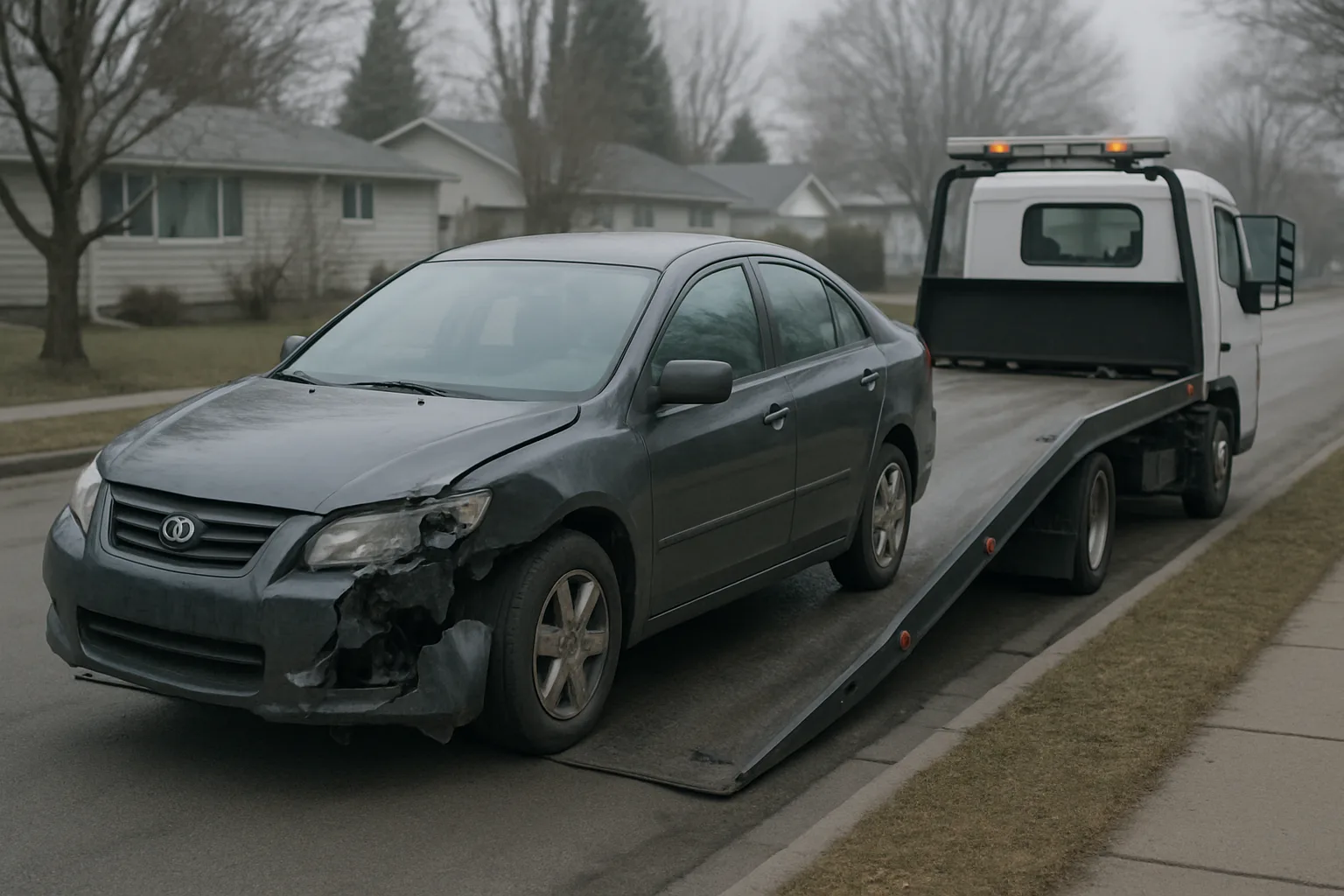
Your car took a hit — maybe a bad winter collision on the Hart Highway, maybe a fender-bender that turned into a total loss write-off. Now it's sitting in your driveway, undriveable, and you're wondering what it's actually worth. Here's the truth: an accident doesn't make your car worthless. It makes it a scrap car. And scrap cars still have real value — in the steel, the aluminum, the copper wiring, the catalytic converter, and dozens of reusable parts underneath the damage.
If you're trying to sell my car fast Prince George, this guide is for you. We'll walk through exactly what happens when you scrap an accident-damaged vehicle, what paperwork you need (and what you can work around), and how to make sure you're getting a fair price — not just the first number someone throws at you.
What Happens to a Car After an Accident? Understanding Your Options
When a vehicle is damaged in a collision, ICBC or your insurer will typically assess the damage. If repair costs exceed a certain threshold relative to the car's market value, it gets written off. A write-off doesn't mean the car is garbage — it means the insurance math didn't work out in favour of fixing it.
You have a few paths from here:
- Keep the buyback: Some owners buy back their written-off vehicle from the insurer at a reduced value and repair it — but this can get complicated and costly.
- Sell it privately as a salvage vehicle: Possible, but buyers are limited and negotiations can drag on for weeks.
- Scrap it for cash: The fastest, cleanest option. A licensed scrap buyer strips it for parts and recycles the metal. You get paid. Done.
For most Prince George residents dealing with a damaged vehicle they can't or won't repair, scrapping is the clear winner. It's fast, the pickup is free in most cases, and you walk away with cash — not a project car gathering rust in your yard.
What Your Wrecked Car Is Actually Worth as Scrap
This is where most people underestimate their vehicle. A passenger car typically contains around 2,000 lbs of steel, plus non-ferrous metals like copper from the wiring harness, aluminum in the engine block and wheels, and a catalytic converter that can hold meaningful platinum group metal value depending on the make and model.
Accident damage affects the drivability of the car, not necessarily the weight or the metal content. A front-end collision that destroyed the radiator and airbags still leaves most of the steel frame intact. That steel still gets weighed and priced at current market rates.
Factors that affect your scrap car payout in 2026:
- Vehicle weight and size: Heavier trucks and SUVs pay more than compact cars.
- Make and model: Some vehicles have high-demand parts that increase value beyond base scrap weight.
- Catalytic converter type: Diesel cats, hybrid converters, and certain OEM units carry different precious metal loads.
- Current steel prices: Scrap metal markets fluctuate weekly. What you get today may differ from what you'd get next month.
- Fuel type: Electric vehicles have different recycling profiles — the battery pack requires special handling and can add or complicate value.
Platforms like Canada's B2B scrap recycling marketplace SMASH use auction-based pricing and vetted buyers to help ensure scrap values are discovered through real competition — not guesswork from a single buyer with one number in mind.
Paperwork After an Accident: What You Need to Sell or Scrap
One of the biggest concerns people have when scrapping a written-off vehicle is the title. What if the insurance company kept it? What if it's still registered in your name but you no longer have the physical permit? What if the car was never properly registered to begin with?
Here's how it works in British Columbia:
If ICBC wrote off the vehicle and retained the title as part of the settlement, they typically issue you documentation showing the vehicle is now a total loss. Licensed scrap buyers in Prince George are familiar with this process — you don't necessarily need the original title in hand to scrap a vehicle, but you do need to show proof of your identity and your right to dispose of the vehicle.
Some buyers also accept vehicles with no title and no registration — particularly if you have supporting documentation like an insurance settlement letter, a bill of sale, or proof of purchase. If you're searching for cash for cars no title no registration options, it's worth calling ahead to confirm what each buyer requires.
Documents that typically help the process:
- Government-issued photo ID
- ICBC total loss letter or settlement documentation
- Original bill of sale if you purchased the vehicle privately
- BC registration (even if expired)
- VIN number (usually visible through the windshield or on the door jamb)
If you're not sure what you have, don't assume you're stuck. Talk to a licensed buyer first. Many situations have workable solutions.
How to Sell My Car Fast in Prince George After a Collision
Speed matters when you're dealing with a damaged vehicle. Storage costs add up. Insurance on a non-operational vehicle is money out of your pocket. And a wrecked car sitting outside in a Prince George winter degrades faster than you'd expect.
Here's a step-by-step process to move quickly:
- Get your VIN ready. Every serious buyer will ask for it. It tells them the exact make, model, year, engine type, and cat configuration — information that directly impacts their offer.
- Document the damage honestly. Take photos. Clear, well-lit photos of the collision damage, the interior, the engine bay, and the tires. Buyers who can see what they're buying give better offers — guessing means they lowball to protect themselves.
- Get more than one quote. This is non-negotiable. One buyer gives you one number. Two or three buyers gives you a market. Scrap metal values in northern British Columbia can vary more than people expect between buyers.
- Confirm free towing. Most licensed cash-for-cars buyers include free pickup. If someone's charging you a tow fee, factor that into their offer.
- Arrange same-day or next-day pickup if possible. Many buyers in the Prince George area can move fast — you don't need to wait a week.
For sellers who want their vehicle part of a competitive process — not a take-it-or-leave-it phone call — SMASH operates as Canada's B2B scrap recycling marketplace, connecting sellers and yards through vetted auction-style pricing that creates real price discovery instead of guessing.
You can also get a free car valuation to understand what your wrecked vehicle might fetch before you commit to anything.
Cash for Junk Cars Prince George: What Buyers Are Actually Looking For
When a licensed buyer in Prince George assesses your accident-damaged vehicle, they're not looking at it the way a body shop would. They don't care about the crumpled quarter panel. They're calculating the total recoverable value — parts they can resell, metals they can sell to a recycler, and the overall weight of the remaining steel.
High-value components that survive most accidents:
- Catalytic converter: Unless the exhaust took a direct hit, the cat is often recoverable and worth pricing separately.
- Transmission and rear end (rear-impact vehicles): Front-end collisions often leave the drivetrain untouched.
- Doors, glass, and interior trim: If the damage was concentrated, the rest of the car may have perfectly good parts.
- Wheels and tires: Often overlooked, but a set of decent rims adds real dollars to an offer.
- Battery (especially EV/hybrid): High-voltage battery packs require specialized handling but represent significant value.
If you want to understand the full recycling side of what happens to your vehicle's materials, read Canadian car selling guides that break down the process province by province.
And if you're in British Columbia and want local service, check out the available Prince George scrap metal services to get started with a buyer who knows your area.
Getting Paid: What to Expect on the Day of Pickup
The pickup day is straightforward when you've done the prep work. Here's what typically happens:
The buyer arrives with a tow truck or flatbed. They verify your ID, confirm the VIN matches what was quoted, and do a quick visual inspection. If the vehicle is as described, you get paid on the spot — cash, e-transfer, or cheque depending on the buyer's process. Sign over the documentation and you're done.
A few things to do before the driver shows up:
- Remove all personal belongings from the vehicle — glove box, trunk, under the seats
- Remove any aftermarket parts you want to keep (roof rack, upgraded stereo, etc.) — once you sign it over, it goes with the car
- Cancel your insurance on the vehicle after pickup, not before
- Keep a copy of your sale documentation for your own records
The whole transaction — from first quote to cash in hand — can happen in under 24 hours with the right buyer. That's the reality for most cash for junk cars Prince George transactions in 2026.
Ready to move? Sell your car for cash across Canada through a process built around transparency, real offers, and fast pickup — no games, no lowball surprises at the door.
Frequently Asked Questions
Q: Can I sell my car fast in Prince George if it's a total write-off?
Yes. A total write-off designation from ICBC doesn't prevent you from scrapping or selling the vehicle — it actually simplifies things in some ways. You'll need your settlement documentation and a valid ID. Most licensed buyers in the Prince George area handle written-off vehicles regularly and can complete the transaction quickly.
Q: What if I don't have the title or registration for my accident-damaged car?
Many buyers will still work with you if you have supporting documentation — an insurance letter, original bill of sale, or proof of identity tied to the VIN. Cash for cars no title no registration transactions are handled case by case, so call ahead and explain your situation before assuming you're out of options.
Q: How do I know I'm getting a fair price for my scrap car?
Get multiple quotes. Scrap prices are tied to live metal markets that change week to week, and individual buyers price differently based on their downstream buyers and overhead. Competition between buyers is what creates a fair price. Platforms that use auction-style pricing — like SMASH — are built on exactly that principle.
Q: Does it cost anything to have my wrecked car picked up in Prince George?
Most licensed cash-for-cars buyers include free towing as part of their offer. Always confirm this upfront. If a buyer quotes you a strong price but then deducts a tow fee at pickup, factor that into your comparison. The net payout is what matters.
Q: How long does the whole process take — from quote to cash?
For most sellers in British Columbia, the process takes one to two business days. You get a quote, confirm the details, schedule pickup, and get paid when the driver arrives. Same-day service is available in many cases. The more documentation you have ready, the faster the transaction moves.
If your wrecked vehicle is taking up space and you're ready to turn it into cash, don't wait for the rust to set in. Sell your car for cash across Canada — get a free quote at cashforcars-canada.ca and find out what your accident-damaged car is worth today.
For ongoing scrap metal market insights and industry updates, follow SMASH on LinkedIn — it's where the recycling industry tracks what's moving and what's paying.