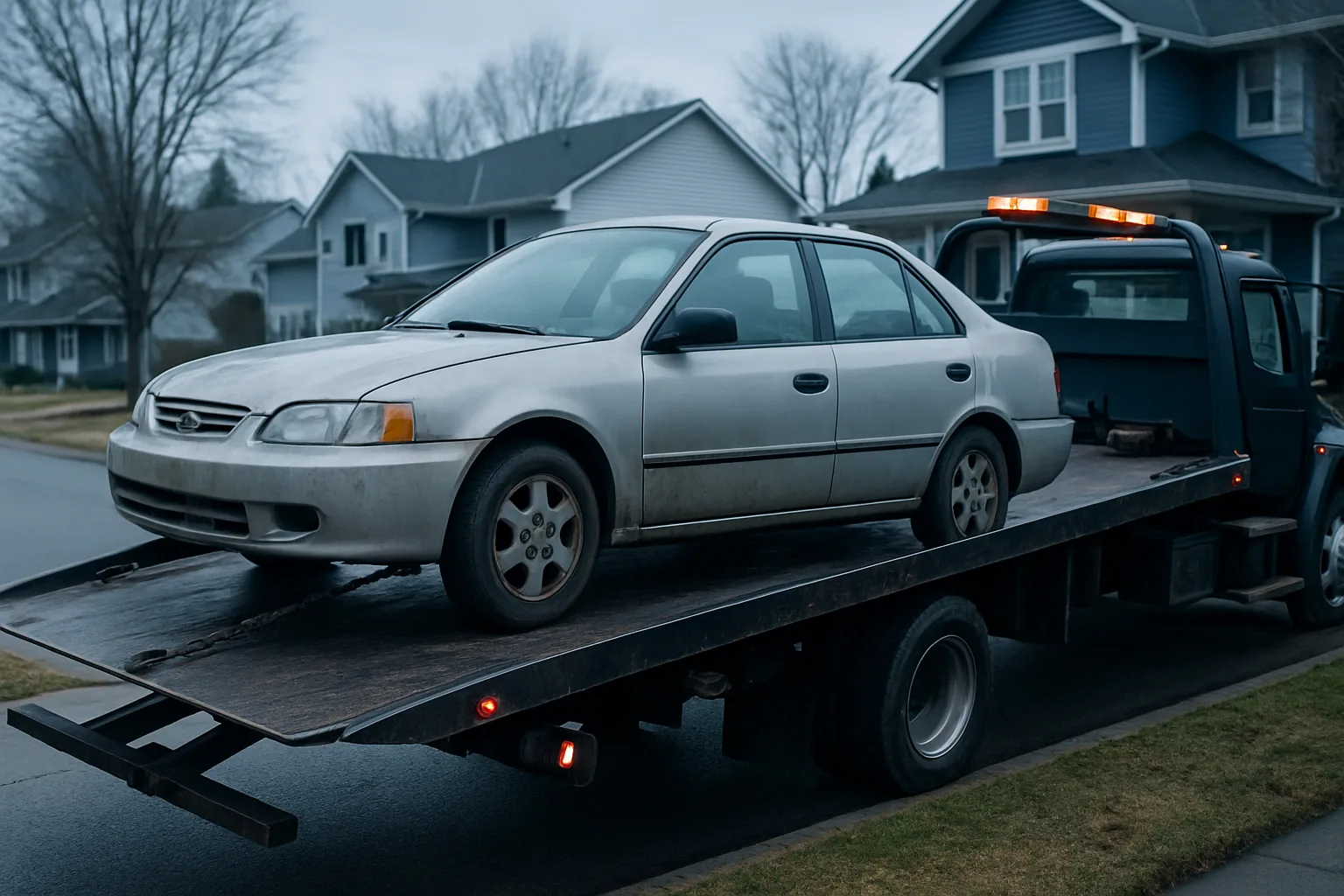
That car sitting in your driveway didn't appear out of thin air — and it won't disappear on its own either. Every vehicle on Canadian roads follows a predictable path: factory floor to dealer lot, daily driver to aging trade-in, and eventually, scrap yard. Understanding that lifecycle helps you make smarter decisions at every stage — especially at the end, when real money is still sitting in that metal.
If you're in Prince George and wondering what happens to a car after it stops running, this breakdown is for you. August 2026 scrap markets are active, and knowing what your vehicle is worth — at any stage of its life — puts you in a better position to act.
Stage One: Manufacturing and the Raw Materials That Start It All
A modern vehicle contains roughly 900 to 1,000 kilograms of steel, 130 to 180 kilograms of aluminum, and smaller volumes of copper, zinc, and platinum-group metals. Before a car ever rolls off an assembly line, it's already a significant collection of commodities. Automakers source these materials globally, process them into components, and assemble them into the finished product you drive off a lot.
This matters to you at the end of life because those raw materials don't disappear — they stay in the vehicle, slowly losing value as the car depreciates. A well-maintained vehicle retains more structural integrity, which translates directly to better scrap yields when the time comes. Rust, collision damage, and stripped parts reduce the recoverable metal content significantly.
- Steel makes up the body, frame, and major structural components
- Aluminum is increasingly common in hoods, wheels, and engine blocks
- Copper runs through wiring harnesses, motors, and alternators
- Catalytic converters contain platinum, palladium, and rhodium — some of the most valuable metals in the vehicle
- Cast iron appears in rotors, brake drums, and older engine blocks
Every one of these materials has a market price. That price fluctuates daily based on global supply chains, manufacturing demand, and commodity trading. When you bring a car to a scrap yard, you're not just selling a broken vehicle — you're selling a concentrated package of raw inputs that industry needs.
From Daily Driver to Diminishing Asset: The Middle Years
Most passenger vehicles in Canada stay in active service for 10 to 15 years before reaching end-of-life status. During that window, depreciation curves steeply — the average new car loses roughly 50% of its value in the first three years alone. After year seven or eight, repair costs start competing with resale value, and that's when most owners begin weighing their options seriously.
In British Columbia, winter road conditions, mountain terrain, and the occasional freeze-thaw cycle in areas like Prince George accelerate wear on undercarriages, suspension components, and exhaust systems. A vehicle that would fetch $3,000 at a southern California junk yard might have significant frame rust in a northern BC context — and that affects your payout. Buyers account for condition, and honest documentation of what you have leads to more accurate quotes.
The smart move during this middle stage is keeping records. Service history, accident reports, and known mechanical issues all affect what a junk car buyer will pay. Even if your vehicle won't pass another safety inspection, paperwork that proves the car's history gives buyers more confidence — and more confidence often leads to better price discovery.
Scrap Car Removal Prince George: What Actually Happens When a Car Reaches End of Life
Here's where the lifecycle gets interesting — and where most car owners leave money on the table. When a vehicle reaches end-of-life, the typical path looks like this:
- Fluid draining: All hazardous fluids — oil, coolant, transmission fluid, brake fluid, AC refrigerant — are extracted and disposed of under provincial environmental regulations. British Columbia has strict guidelines around automotive fluid disposal.
- Parts harvesting: High-value components are pulled before the car goes to the crusher. Catalytic converters (cats), alternators, starters, and usable body panels are often resold into the used parts market.
- Hulk processing: The stripped shell goes to a shredder or crusher. The resulting metal is baled and sold to steel mills and smelters as shredded steel or mixed non-ferrous.
- Material sorting: Advanced shredder systems separate ferrous from non-ferrous, recovering aluminum, copper, and zinc for separate streams.
- Commodity sale: Processed metal is sold into spot or contract markets and eventually re-enters manufacturing — sometimes becoming part of a new vehicle.
The amount you get paid for scrap car removal in Prince George depends on where in this chain your vehicle enters — and who's doing the buying. A single buyer giving you a cold-call offer has no competitive pressure to pay fair market value. That's a fundamental flaw in how most car owners approach this transaction.
Platforms like SMASH solve that problem directly. Instead of one buyer, one price, and zero transparency, SMASH connects sellers to vetted buyers through a competitive auction format. More buyers means better price discovery. Documented inventory — photos, VIN lookup, condition notes — gives buyers more confidence to bid higher. If you want to sell your car for cash across Canada, competition is the mechanism that reveals what your vehicle is actually worth.
Scrap Metal Inventory Management: Why Documentation Changes Your Payout
Most people treat scrapping a car as a handshake deal — you call someone, they show up, they hand you cash, and it's done. That model consistently undervalues what you're selling. Professional scrap buyers and recycling operations use structured scrap metal inventory management processes to understand exactly what they're buying before they make an offer. If you walk in with no documentation, you're negotiating blind.
Here's what a well-documented vehicle includes when it goes to market:
- VIN record: Confirms year, make, model, and factory specifications — including whether the engine is aluminum or cast iron
- Photo documentation: Body condition, undercarriage rust, catalytic converter presence, and wheel type all factor into value
- Known parts status: Is the cat still on the vehicle? Are wheels original aluminum alloy or steel? Is the battery present?
- Weight estimate: Heavier vehicles yield more ferrous metal — a full-size pickup truck yields far more than a compact sedan
- Title/ownership: Most buyers require proof of ownership before purchasing
SMASH's platform includes built-in tools for VIN lookup, photo uploads, and serial tracking — the same tools professional yards use internally. When you document your vehicle properly before selling, you're not just being organized. You're giving buyers the information they need to bid with confidence, which drives competition upward. You can also get a free car valuation before you commit to any buyer.
For Prince George sellers, this is especially relevant. Buyers who can't physically inspect a vehicle need documentation to justify a strong offer. Remote and northern markets depend on trust built through data, not guesswork.
Junk Car Buyers Near Me in Prince George: How to Find the Right Buyer
Searching for junk car buyers near me in Prince George will surface a mix of local yards, national brokers, and towing-focused operations. Not all of them operate the same way — and the difference between them can be hundreds of dollars on a single vehicle.
Local scrap yards are a starting point, but they operate with their own margin requirements and may not be actively competing for your vehicle on a given day. National brokers often offer convenience but act as middlemen, shaving margin off your payout to cover their cut. The most transparent option is a platform that puts your vehicle in front of multiple buyers simultaneously and lets them compete.
When evaluating any buyer, ask these questions:
- Is the quote based on current scrap metal prices, or is it a flat rate?
- Does the buyer confirm the cat is included in the price?
- Are there towing fees, or is removal genuinely free?
- What documentation do they require before pickup?
- How quickly will payment arrive after pickup?
Transparent answers to all five indicate a professional operation. Vague responses on any of them are a signal to keep looking. If you want to read Canadian car selling guides that walk through the process in more detail, that's a good next step before committing to any offer.
For the broader scrap metal side of this transaction — especially if you're a yard operator or fleet manager processing multiple vehicles — find the best price for your scrap in Canada through a competitive auction process rather than a single-buyer arrangement.
August 2026 Market Conditions: What's Moving Scrap Values Right Now
Scrap metal prices in August 2026 are being shaped by a combination of North American steel mill demand, global non-ferrous supply patterns, and ongoing pressure on platinum-group metals from the automotive catalyst market. Vehicle catalytic converters remain high-priority items for recyclers — the PGM content in a single cat can represent a meaningful portion of a vehicle's total scrap value.
In northern British Columbia, regional logistics affect net payouts. Transportation costs from Prince George to major processing facilities influence what local buyers can offer relative to national benchmarks. This is exactly why competition matters — a local buyer with limited throughput may price conservatively, while a buyer with better logistics can offer more. SMASH's auction format puts both of them in the same room, bidding on your load.
Disclaimer: Scrap metal prices fluctuate daily based on commodity markets, regional demand, and processor capacity. Always verify current rates before finalizing any transaction. The figures and market observations in this article reflect general August 2026 conditions and should not be treated as guaranteed pricing.
If your vehicle has reached end of life — whether it's a 2010 pickup with a blown engine or a 2019 sedan that was written off in a collision — now is a reasonable time to move. Sitting on a depreciating asset in a fluctuating market rarely improves your outcome. The best time to sell is when you're ready and the market is active. Both conditions apply right now.
When you're ready, sell your car for cash across Canada through a process that's transparent, competitive, and built around what your vehicle is actually worth — not what a single buyer decides to offer on a given afternoon. Whether you're in Prince George, the Lower Mainland, or anywhere else in the country, the process works the same way. Vetted buyers, competitive format, no subscription fees.
Reach out to explore your options for Prince George scrap metal services and get a clear picture of what your vehicle is worth before you make any decisions.
Frequently Asked Questions
Q: How does scrap car removal in Prince George work?
You contact a buyer or platform, provide your vehicle details (VIN, condition, photos), receive a quote, and schedule a pickup. Most reputable services handle towing and transfer of ownership paperwork at the time of pickup. Payment is typically cash or e-transfer at the point of collection or within a few business days.
Q: What affects how much I get paid for my junk car in Prince George?
Current scrap metal prices, the weight and metal composition of your vehicle, whether the catalytic converter is still attached, the condition of the body and frame, and how many buyers are competing for your vehicle all factor into the final number. Documentation and competition consistently improve outcomes.
Q: Do I need the title to sell a junk car in British Columbia?
Yes. Most buyers in British Columbia require proof of ownership before purchasing a vehicle for scrap. This protects both the seller and the buyer and is required for legitimate transfer of the vehicle. If you've lost your title, ICBC can assist with replacement documentation.
Q: Is free junk car removal actually free, or are there hidden fees?
It varies by buyer. Some operations genuinely include towing in their offer with no deduction at pickup. Others quote a gross number and subtract towing fees afterward. Always confirm in writing whether the quote is net of towing before scheduling a pickup.
Q: How long does the scrap car removal process take in Prince George?
Most transactions from first contact to vehicle pickup take between one and three business days, depending on buyer availability and your schedule. Platforms that use competitive auctions may take slightly longer to generate multiple bids, but the improved price discovery is typically worth the wait.
Follow SMASH on LinkedIn for ongoing scrap metal market updates, industry insights, and platform news — useful whether you're scrapping one car or managing a full recycling operation.
```