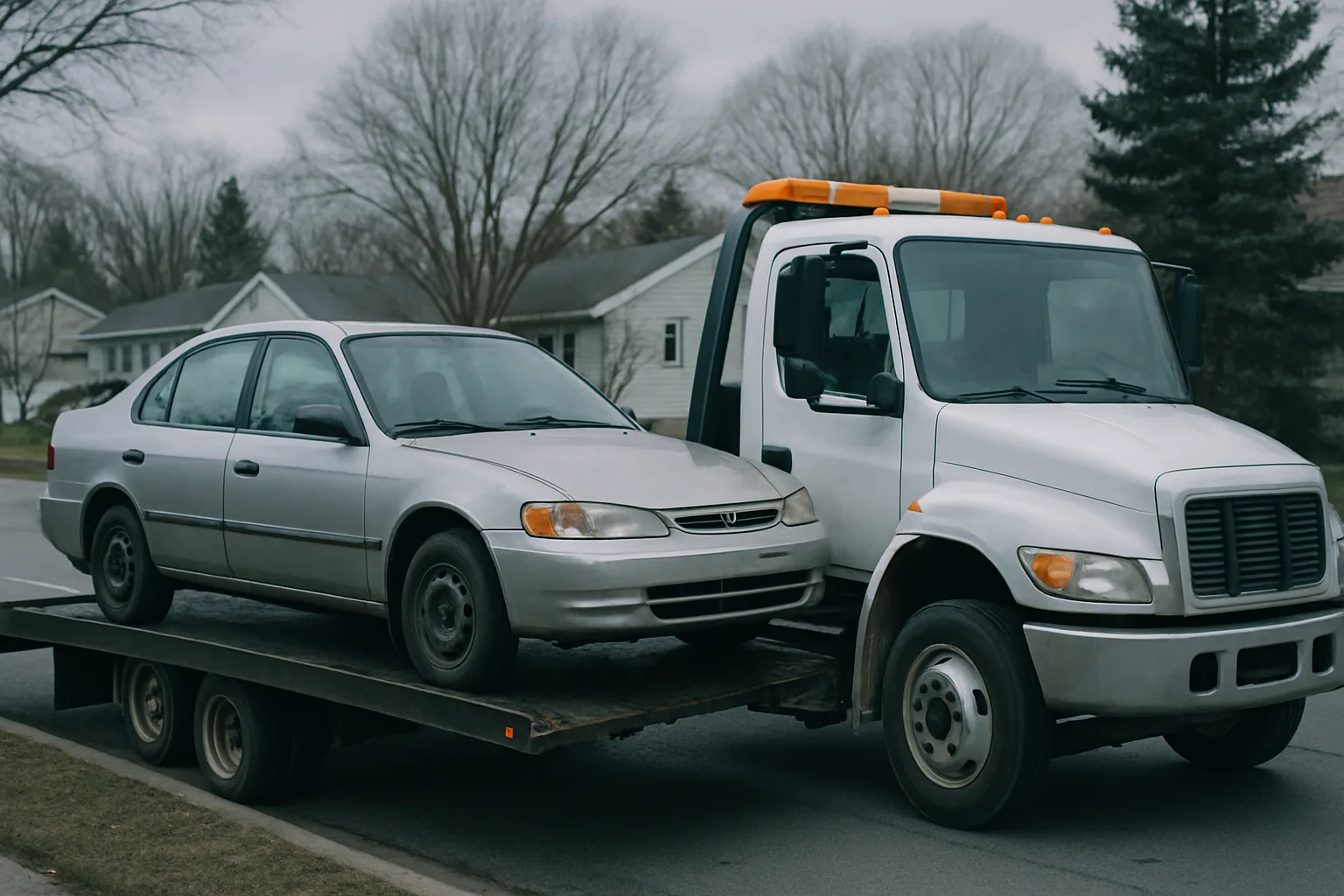
Before You Call for Scrap Car Removal in Dartmouth, Do These 6 Things First
Most people call a junk car buyer, hand over the keys, and walk away with cash. Simple enough. But the ones who skip a few basic steps before scrapping their vehicle often leave money on the table — or worse, deal with headaches weeks after the car is gone. Whether you're in Dartmouth, Edmonton, or anywhere else across Canada, what you do in the 24–48 hours before your vehicle gets picked up matters more than most people realize.
This week's roundup breaks down exactly what to do before scrap car removal happens — so you protect yourself legally, get the best value, and walk away clean.
Step 1: Pull Everything Out of the Vehicle
This sounds obvious. It isn't, apparently — because it's one of the most common mistakes junk car sellers make. People forget gym bags under the seats, insurance slips in the glovebox, emergency kits in the trunk, and spare change stuffed into every crevice. Once that vehicle leaves your driveway, it's gone.
Do a full sweep before the pickup truck arrives:
- Check every door pocket and seat pocket
- Pop the trunk and look under the mat for tools or spare tires
- Check the glovebox for registration, insurance cards, and any documents with your personal information
- Look under both front seats — phones, wallets, and keys end up there constantly
- Remove any aftermarket accessories you installed: roof racks, floor mats, hitch receivers, dash cams, stereo equipment
Aftermarket parts can often be sold separately, especially if they're in good condition. That's extra cash that won't be reflected in your scrap weight quote. Don't donate it to the wrecker.
Step 2: Gather Your Paperwork — Especially the Title
In Canada, you need to transfer ownership when you sell or scrap a vehicle. No legitimate sell your car for cash across Canada service will take your car without proof of ownership. If you don't have the title (ownership permit), contact your provincial licensing office before the pickup is scheduled.
In Nova Scotia, you can request a replacement ownership permit through Access Nova Scotia. In Ontario, it's ServiceOntario. In Alberta, it's Alberta Registries. Each province handles this slightly differently, but the process is generally straightforward. The key is doing it before pickup day — not scrambling after the buyer arrives.
Other paperwork to handle before scrapping:
- Cancel your insurance. Contact your insurer the day the car is picked up. You're paying for coverage on a vehicle you no longer own the moment it leaves.
- Return or cancel your plates. In most provinces, plates belong to the owner, not the vehicle. Return them to your provincial registry or transfer them to your next vehicle.
- File the transfer of ownership. This removes you from liability. If someone does something with that VIN after the sale, you don't want your name attached.
This is especially important if you're dealing with junk car buyers near me Dartmouth searches — local yards are legitimate, but protecting yourself legally is always your responsibility first.
Step 3: Know What Your Vehicle Is Actually Worth
Scrap value isn't one flat number. It depends on the weight of the vehicle, current metal prices, whether the catalytic converter is intact, and whether the buyer sees value in selling parts before crushing. A full-size pickup truck scraps for significantly more than a compact sedan — not because of brand loyalty, but because of raw weight.
In 2026, scrap steel prices have stayed volatile. Global demand, trade policy shifts, and North American manufacturing output all play a role. What your neighbour got for their 2003 Civic six months ago may be different from what you'll get today. Always get a free car valuation before agreeing to a price — and get more than one quote if you have time.
A few factors that affect scrap car value in Canada right now:
- Catalytic converters: Still valuable, especially on trucks, SUVs, and older models with larger cats. Don't let anyone tell you yours is missing if it's clearly still there.
- Battery condition: Hybrid and EV batteries can carry significant scrap value on their own.
- Condition of the body: Some buyers will pay more for vehicles they can part out before scrapping the shell.
- Full tank of gas: Not worth leaving behind. Siphon it or at least note it when getting quotes.
Disclaimer: Metal and scrap vehicle prices fluctuate based on market conditions. Always verify current rates with buyers before accepting any offer.
Step 4: Document the Vehicle Before It Leaves
Take photos. Do it the morning of the pickup or the night before. Photograph every panel, the interior, the engine bay, the odometer, and the VIN plate on the dash. This takes five minutes and protects you from any dispute about the vehicle's condition at time of sale.
This is the same logic that professional recyclers use when managing high-volume inventory. Platforms like the SMASH Recycling auction platform require photo documentation and serial tracking on loads before they go to buyers — because documented inventory gives buyers more confidence and creates a clear record for both sides. That same thinking applies to a single car sale. A clear photo record means no "the converter was already missing" arguments after the fact.
Good scrap metal inventory management at the individual vehicle level means:
- Date-stamped photos of the exterior and interior
- Photo of the VIN plate
- A written note of the mileage and general condition
- A copy of the bill of sale or transfer form once it's signed
If you're selling multiple vehicles — common for small businesses, fleet operators, or estates — this documentation habit becomes critical. For volume sellers, read Canadian car selling guides to understand how bulk vehicle sales work and what buyers expect.
Step 5: Drain or Flag Fluids — Know What Your Buyer Expects
Most professional scrap car removal services in Dartmouth and across Nova Scotia handle fluid removal as part of their process. But it's worth asking upfront. Environmental regulations in Canada require proper disposal of engine oil, coolant, transmission fluid, and brake fluid before a vehicle is shredded or crushed.
You don't need to drain the car yourself. But knowing that the buyer handles de-pollution responsibly matters — both for legal compliance and environmental responsibility. A legitimate junk car buyer will confirm their yard is licensed to handle end-of-life vehicles. If they can't answer that question, that's a red flag.
This is a weekly roundup week, and the broader market signal is consistent: in 2026, regulatory pressure on end-of-life vehicle processing has increased across several provinces. Nova Scotia has maintained strict environmental standards for automotive fluid disposal. Make sure your buyer operates within those standards. Ask the question directly.
Step 6: Compare Buyers Before You Commit
The first number someone quotes you over the phone isn't necessarily the market rate. It's an opening position. Scrap car pricing is competitive — or it should be. The best way to find out what your vehicle is actually worth is to get at least two or three quotes before agreeing to anything.
Search junk car buyers near me Dartmouth to find local yards, but don't stop there. National platforms that connect sellers with vetted buyers — like SMASH — exist precisely because competition reveals the real price. More buyers bidding on your vehicle means better price discovery. That's not a promise of a higher number; it's just how markets work.
What to ask every buyer before you agree:
- Is this a firm offer, or will the price change at pickup?
- Do you handle the ownership transfer paperwork?
- Is towing included in the quote?
- Are you licensed to accept end-of-life vehicles in Nova Scotia?
- When can you pick up, and will I get payment on the spot?
Any buyer worth dealing with will answer these without hesitation. If someone dodges the licensing question or changes the price on arrival, walk away. There are legitimate buyers across Canada — in Dartmouth, Halifax, Toronto, Calgary, and everywhere between — who do this the right way.
Frequently Asked Questions
Q: How do I arrange scrap car removal in Dartmouth?
Contact a licensed junk car buyer or scrap metal dealer that serves the Dartmouth and Halifax area. Most offer same-day or next-day pickup. Have your ownership documentation ready and confirm whether towing is included in their quote before booking.
Q: Do I need the title to scrap my car in Nova Scotia?
Yes. You need to transfer ownership to legally sell or scrap a vehicle in Nova Scotia. If you've lost your ownership permit, contact Access Nova Scotia to request a replacement before scheduling your pickup. No legitimate buyer should take a vehicle without ownership documentation.
Q: What happens to my license plates when I scrap my car?
In Nova Scotia, license plates belong to the registered owner, not the vehicle. When you scrap your car, you must surrender your plates to Access Nova Scotia or transfer them to another vehicle. Leaving plates on a scrapped vehicle can create liability issues.
Q: Will I get more money if my catalytic converter is still on the car?
Generally, yes. Catalytic converters contain precious metals — platinum, palladium, and rhodium — that carry independent scrap value. A vehicle with an intact converter typically fetches more than one without. Always confirm this is reflected in your quote. Prices fluctuate, so check current rates with your buyer.
Q: Can I sell my car for scrap if it doesn't run?
Absolutely. Most junk car buyers across Canada — including those in Dartmouth — specifically buy non-running vehicles. The car's ability to drive has little bearing on its scrap metal value. Weight, condition, and which components are intact matter far more than whether the engine starts.
Ready to move forward? Selling a scrap vehicle across Canada doesn't have to be complicated — it just takes a bit of preparation before the truck shows up. If you're in Dartmouth or anywhere else from BC to Newfoundland, sell your car for cash across Canada and get a fair, transparent offer at cashforcars-canada.ca.
For industry trends, market updates, and insights on scrap metal recycling across North America, follow SMASH on LinkedIn — worth a follow if you're in the business of moving metal.