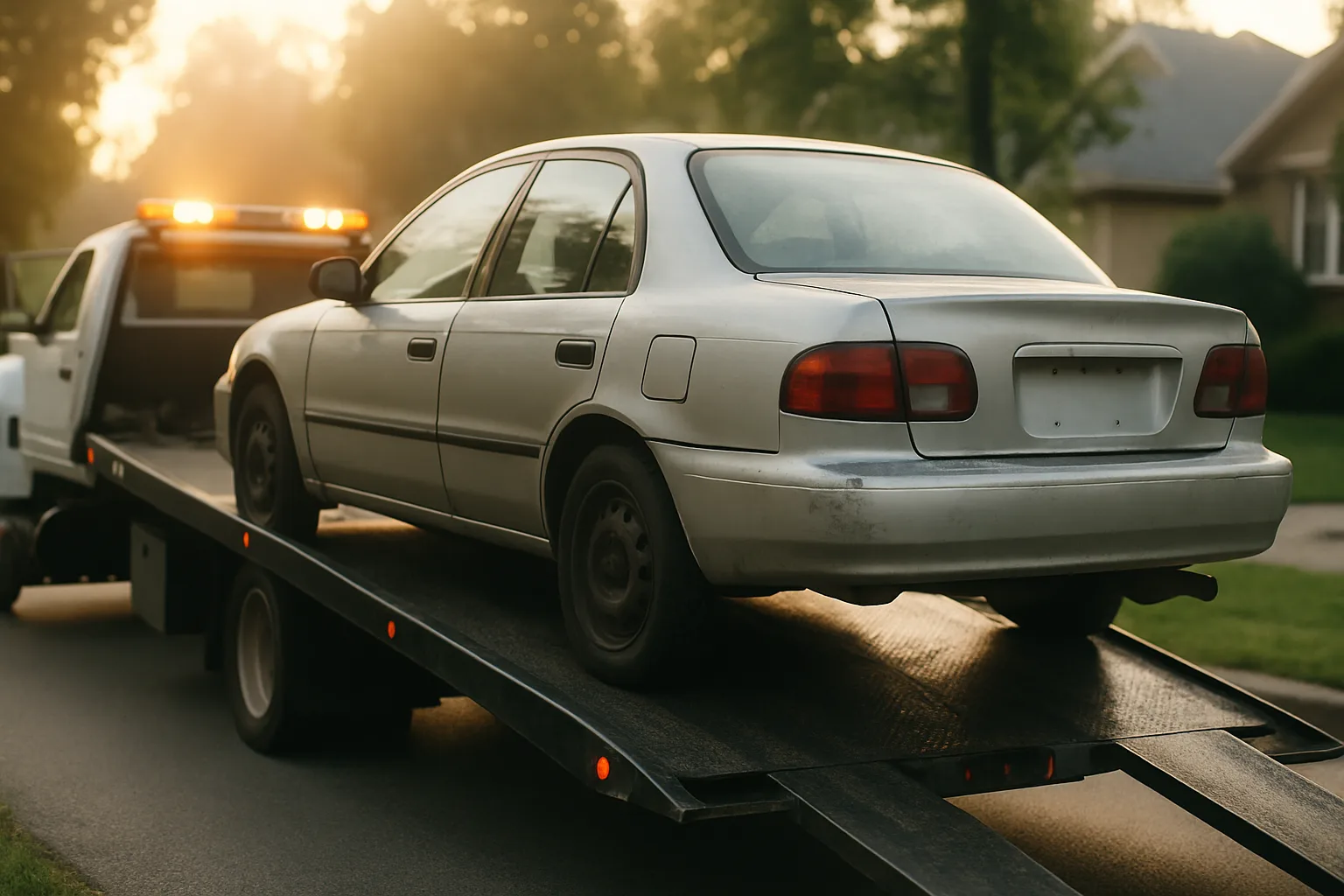
Most car owners leave hundreds of dollars on the table — not because their car isn't worth anything, but because they believed the wrong things about selling it. Myths about junk car removal are everywhere, and they cost people real money every year. If you've got an old, damaged, or non-running vehicle sitting in your driveway in Ottawa, Ontario — or anywhere else across Canada — it's time to separate fact from fiction.
Understanding your scrap car value today is the first step to making a smart decision. Let's bust the most common misconceptions that are probably holding you back right now.
Myth #1: Your Junk Car Has No Real Value
This is the biggest myth in the industry — and it's completely wrong. Even a vehicle that doesn't run, has been in a major accident, or has been sitting in a field for five years still carries real, recoverable value. Cars are made of steel, aluminum, copper wiring, and dozens of components that recyclers and processors actively want to buy.
A typical passenger car weighs between 1,300 and 1,800 kilograms. At current scrap metal market rates, that's a meaningful amount of raw material. Beyond the metal alone, functioning parts — even in a "junk" car — can include:
- Catalytic converters (often the most valuable single component)
- Alternators and starters
- Non-ferrous materials like copper wiring and aluminum rims
- Engines and transmissions with serviceable cores
- Batteries and electronics
Platforms like find the best price for your scrap in Canada exist precisely because competitive markets — not one-buyer guesswork — reveal what scrap is actually worth. Don't accept the first low-ball offer from a single buyer. Competition changes the math entirely.
Myth #2: You Need a Clean Title to Sell a Scrap Car in Ottawa
This one stops people cold — and it shouldn't. While having a clean title makes the transaction smoother, plenty of legitimate junk car buyers across Canada, including right here in Ottawa, will purchase vehicles without one. The process varies by province, but missing or lost titles are handled regularly by experienced buyers who know the paperwork.
In Ontario, there are established processes for dealing with lien situations, lost ownership documents, and estate vehicles. A reputable buyer walks you through it. The key is working with someone who's done this before — not a random posting on a classifieds site. When you sell your car for cash across Canada, connecting with buyers who handle these situations professionally is part of the service.
The bottom line: don't let a missing title be the reason you leave cash on the table. Ask the buyer directly. Most of the time, there's a path forward.
Myth #3: All Junk Car Buyers Offer the Same Price
This myth is not just wrong — it's expensive. Junk car buyers set their own prices, and those prices can vary significantly depending on who's buying, what they need, and what the current scrap car value today looks like in your local market. If you call one buyer and accept their offer without shopping around, you're essentially letting that one person decide what your car is worth.
The old way of selling scrap — one phone call, one offer, take it or leave it — is broken. That model benefits the buyer, not you. Auction-style platforms and marketplaces that create real competition among multiple vetted buyers produce better price discovery. When buyers compete, sellers find out what the market actually pays, not what one yard feels like offering today.
This is exactly what SMASH was built to address. The SMASH scrap metal auction model brings multiple vetted buyers to the table, so sellers aren't stuck guessing or accepting an arbitrary number from a single source. More buyers means better price discovery — that's not hype, that's just how markets work.
Whether you're in Ottawa or anywhere else in Ontario, getting more than one offer before you commit is always worth the extra 20 minutes.
Myth #4: Junk Cars Are a Hassle to Sell — The Process Takes Forever
People assume selling a junk car is a bureaucratic nightmare involving tow trucks, paperwork mountains, and days of back-and-forth. In 2026, that's not the reality. The process, when you're working with a legitimate buyer, is typically straightforward and fast.
Here's what a typical modern junk car sale actually looks like:
- Get a quote — Provide basic details about your vehicle (year, make, model, condition). Many services give you an offer within minutes.
- Schedule pickup — Most buyers offer free towing. You don't need to move the vehicle yourself.
- Hand over documentation — Your ownership papers, or whatever documentation you have.
- Get paid — Cash or e-transfer, same day or within 24-48 hours in most cases.
That's it. The days of spending a week trying to haul your car to a yard yourself are over for most sellers. If you want to get a free car valuation before you even pick up the phone, online tools make that step instant.
Good documentation always helps — photos, a VIN lookup result, any service records you have. The more a buyer knows about what they're getting, the more confident they can be in their offer. Documented inventory gives buyers more confidence, which typically means better offers for sellers.
Myth #5: The Condition of Your Car Doesn't Matter — Scrap Is Scrap
Sellers often assume that since their car is "junk," condition doesn't factor into the price. That's only partially true. Yes, at its floor value, a car is worth its weight in metal. But above that floor, condition matters — a lot.
A vehicle with a working catalytic converter, intact non-ferrous components, salvageable engine cores, and documented history is worth more than a stripped shell. Buyers looking for specific parts, cores, or high-value non-ferrous materials like copper and aluminum pay attention to what's actually present in the vehicle.
This is where proper inventory documentation pays off. When you provide photos, a VIN report, and a clear description of what's working and what isn't, buyers can price the vehicle more accurately — and more competitively. Guesswork drives prices down because buyers build in risk. Transparency drives prices up because buyers can bid with confidence.
For yards and resellers managing larger volumes of vehicles, scrap metal inventory management tools become critical — tracking what's in each unit, serial numbers, condition reports, and component value. Platforms like SMASH are built around exactly that kind of documentation discipline. You can read Canadian car selling guides for more on how to prepare your vehicle for the best possible offer.
Myth #6: Location Limits Your Options — Especially Outside Major Cities
Car owners outside of major urban centres sometimes feel like they're stuck with whoever happens to operate nearby. If you're in a smaller community, the thinking goes, you take whatever offer the local yard gives you. That's no longer true.
Online platforms and national junk car buyers have fundamentally changed the geography of this market. Whether you're in Ottawa, a smaller Ontario town, or a province like Alberta or British Columbia, the same competitive market access is available to you. Services that connect you with multiple buyers across Canada don't care where your car is sitting — they can arrange logistics and still get your vehicle in front of competing offers.
For Ottawa residents specifically, the local market is active and well-served. Ottawa scrap metal services are accessible to anyone in the region — you're not limited to one-yard, one-offer transactions. And nationally, the same principle holds. Cash for cars services operate coast to coast, meaning your location is rarely the barrier it used to be.
Disclaimer: Scrap car values and metal prices fluctuate based on market conditions, commodity prices, and vehicle-specific factors. Always check current rates before making a decision.
Frequently Asked Questions
Q: What is my scrap car worth today in Ottawa?
Scrap car value today depends on the vehicle's weight, metal composition, condition, and current commodity prices. A typical passenger car yields several hundred dollars in scrap value at minimum, with higher-value components like catalytic converters potentially adding significantly to that total. Get quotes from multiple buyers to understand what the Ottawa market is actually paying right now.
Q: Can I sell a scrap car in Ottawa without a title?
Yes, many junk car buyers in Ottawa and across Ontario work with vehicles that have missing or lost ownership documents. The process varies depending on the specific situation — whether there's a lien, whether it's an estate vehicle, or whether the title is simply lost. Ask your buyer directly, and work with someone experienced enough to navigate Ontario's documentation requirements.
Q: How quickly can I get cash for my junk car in Ottawa?
Most reputable junk car buyers complete the transaction within 24-48 hours of accepting an offer. Same-day pickup and payment is available in many cases. The faster you have your documentation ready and the more clearly you describe the vehicle's condition, the smoother the process tends to go.
Q: Do I need to bring the car to the buyer, or will they pick it up?
The vast majority of junk car buyers offer free towing as part of the deal. You don't need to arrange transport yourself. The buyer sends a tow truck to your location — home, driveway, storage lot — picks up the vehicle, and completes payment on the spot or via e-transfer.
Q: Is it worth getting multiple quotes before selling my scrap car?
Absolutely — and this is probably the most actionable advice in this entire article. One buyer sets one price based on their own interests. Multiple buyers competing for your vehicle reveal what the market actually pays. Even a 20-minute effort to get a second or third quote regularly results in a meaningfully better outcome. Don't skip this step.
If you've got a vehicle you're ready to move — running or not, titled or not, anywhere across Canada — the next step is simple. sell your car for cash across Canada and find out what your car is actually worth today, not what one buyer feels like telling you. Get your free quote at cashforcars-canada.ca and stop leaving money in your driveway.
Stay up to date on scrap metal market trends and industry insights by following SMASH on LinkedIn — it's where the scrap industry pays attention.
```