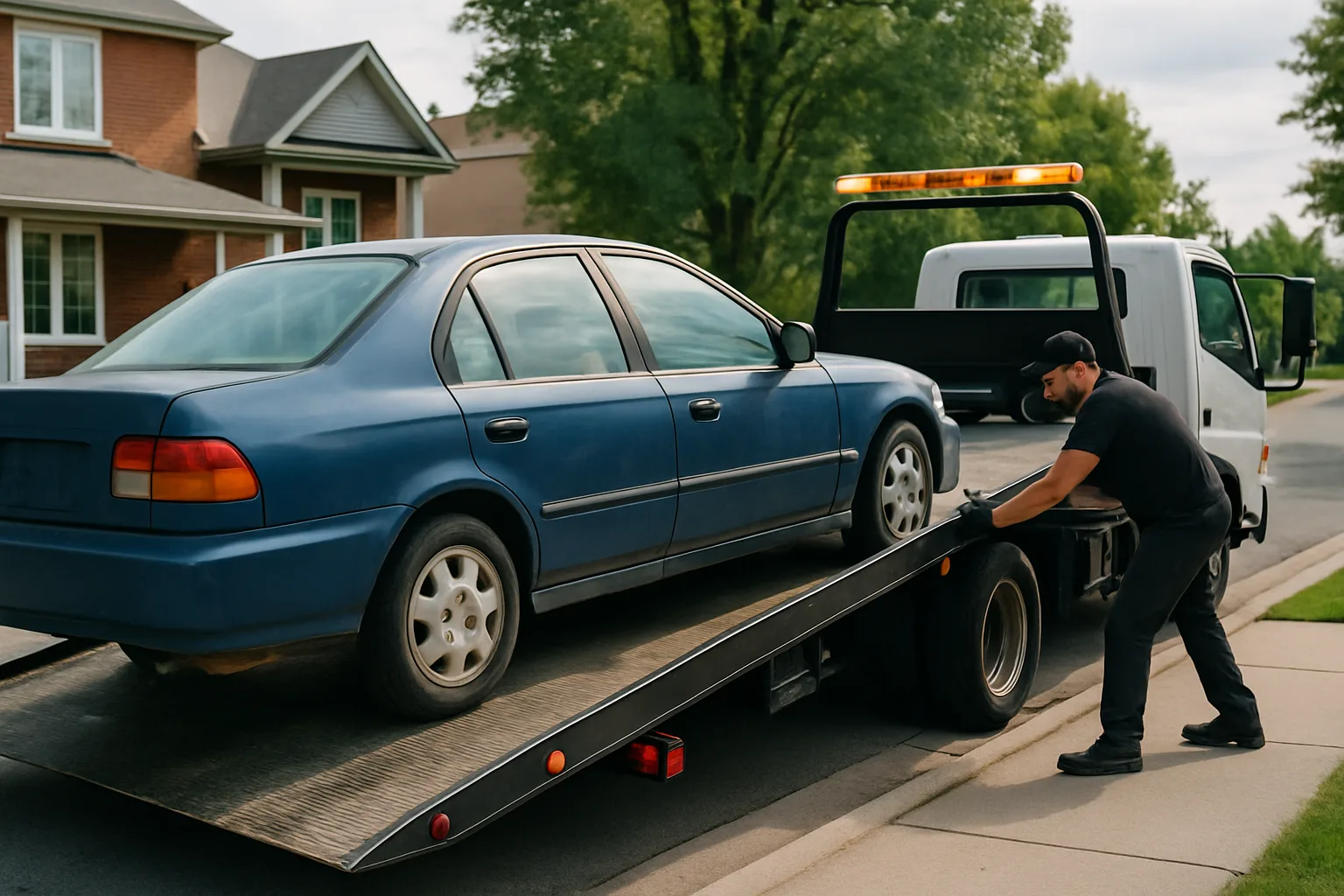
Most Canadians sitting on a dead car think the hard part is finding a buyer. It's not. The hard part is showing up without the right documents and watching the deal fall apart at the last minute. If you're looking into cash for cars Gatineau or anywhere else across Canada, knowing your paperwork before you make a single call saves you time, money, and a serious headache.
Scrapping a car isn't just handing over keys and collecting cash. There's a paper trail — and for good reason. Recyclers, scrap yards, and platforms like SMASH need to verify ownership, protect themselves legally, and comply with provincial regulations. Miss a document, and you either delay the sale or walk away empty-handed.
Here's exactly what you need, province by province, and how to get it done right the first time.
---Why Paperwork Matters When You Scrap a Car in Canada
Scrap car regulations exist to prevent fraud, theft, and improper disposal of hazardous materials. Every province has its own rules, but the underlying principle is the same: the person selling the vehicle needs to prove they have the legal right to sell it. No proof of ownership, no deal — full stop.
This matters more in 2026 than it did a decade ago. Provincial governments across Canada have tightened requirements for scrap metal recyclers and auto dismantlers following years of organized vehicle theft rings targeting end-of-life vehicles. Recyclers who don't collect proper documentation face steep fines and loss of operating licenses. That means they're not cutting corners for anyone — not even a cooperative seller with a clean-looking vehicle.
Beyond legality, proper paperwork protects you. Once you sell and sign over that vehicle, you want no future liability tied to it. If it gets mishandled, towed, or generates parking violations before it's fully processed, documented ownership transfer is your proof of exit.
---The Core Documents You'll Need to Scrap a Car
Whether you're scrapping in Gatineau, Edmonton, or Halifax, these are the baseline documents almost every legitimate buyer will ask for. Think of this as your non-negotiable checklist.
- Vehicle Registration (or Proof of Ownership) — This is the most important document. In Quebec, this is your certificat d'immatriculation issued by the SAAQ. In Ontario, it's your vehicle permit. In Alberta, it's your certificate of title. No ownership document, no sale.
- Government-Issued Photo ID — A driver's license or passport. The recycler needs to confirm the name on the registration matches the person standing in front of them.
- Bill of Sale (in some cases) — If you bought the car privately and the registration is still in the previous owner's name, a bill of sale showing the chain of ownership helps. Some buyers require this; others won't touch the vehicle without it.
- Lien Release Documentation — If the vehicle had a car loan attached to it, you need written proof the lien has been discharged. A vehicle with an active lien legally belongs (in part) to the lender. Selling it without clearing the lien is fraud.
- SAAQ Cancellation (Quebec-specific) — In Quebec, you must cancel your registration with the SAAQ before or immediately after scrapping the vehicle. This stops insurance charges and removes your liability. Sellers in Gatineau should handle this before or on the day of the transaction.
It's a short list, but every item on it matters. If you're missing the registration because the car sat in a driveway for five years and the paperwork got lost, you'll need to apply for a replacement through your provincial authority — the SAAQ in Quebec, ServiceOntario in Ontario, or Alberta's registry agents — before any legitimate buyer will move forward.
---Province-by-Province Differences You Need to Know
Canada doesn't have a single national standard for scrapping vehicles. Each province controls its own vehicle registration, title transfer, and recycler licensing rules. Here's a quick breakdown of what changes by region.
Quebec (Including Gatineau)
Quebec operates through the SAAQ for all vehicle registration and ownership transfers. If you're in Gatineau looking to sell your car for cash across Canada — starting locally — you need your certificat d'immatriculation and valid photo ID at minimum. Gatineau sits directly across the Ottawa River from Ontario, which means some sellers mistakenly try to cross-province the transaction. Don't. Quebec-registered vehicles need to be processed through Quebec's system. The recycler must be licensed in Quebec, and the SAAQ cancellation must happen on the Quebec side. You can get a free car valuation before you even start the paperwork process so you know what you're working with.
Ontario
Ontario requires the vehicle ownership permit (both portions — the vehicle portion and the plate portion). The plate stays with the owner; the vehicle portion gets signed over to the buyer. Ontario-licensed recyclers are required to record the seller's ID and vehicle details in a provincial database — this is part of anti-theft compliance under the Repair and Storage Liens Act and related scrap metal regulations updated in recent years.
Alberta
Alberta uses a title-based system. You'll need your certificate of title, which you can order through any Alberta registry agent if you've lost yours. Alberta has some of the more streamlined processes for private vehicle sales and scrap transactions, but licensed recyclers still require proper ID and title before processing any vehicle.
British Columbia
BC requires the Transfer/Tax Form (APV9T) alongside the registration. ICBC manages vehicle registration in BC, and ownership transfer must be reported within a set window. BC also has active End-of-Life Vehicle (ELV) programs through Autorecycle BC that handle proper fluid and parts processing.
---What Happens If You Don't Have the Title or Registration?
This is one of the most common situations — especially for older vehicles that sat in storage, were inherited, or were purchased informally years ago. No title doesn't automatically mean no sale, but it does mean more work.
Your first step is applying for a replacement registration or title through your provincial authority. In Quebec, that's the SAAQ. There's a fee involved, and processing times vary, but it's the only clean path forward. Some sellers try to work around this by finding "no title needed" buyers — and while those buyers exist, they're often operating outside licensing requirements, which creates risk for you as the seller. If something goes wrong downstream, you may still carry liability for a vehicle you thought you'd sold.
Platforms that connect you with vetted, licensed buyers — like SMASH Recycling — where verified buyers bid on your metal — only work with compliant transactions. That's the point. Compliance protects sellers as much as it protects buyers. It's not bureaucracy for the sake of it.
If the vehicle was inherited, you may also need probate documentation or a letter of administration confirming your authority to dispose of the estate's assets. An estate lawyer can help you navigate this if the vehicle has significant value or the estate is complex.
---How Scrap Car Value Is Determined in 2026
Understanding your paperwork is step one. Understanding what your car is actually worth before you hand it over is step two. Many sellers leave money on the table because they accept the first number they hear without knowing what drives scrap car pricing.
The main factors affecting scrap car value in Canada right now include:
- Curb weight of the vehicle — Heavier vehicles carry more steel and non-ferrous metals, which means higher base scrap value.
- Catalytic converter presence and condition — Cats contain platinum, palladium, and rhodium. A vehicle with its original, intact catalytic converter is worth meaningfully more than one stripped of it.
- Current scrap metal market prices — Steel, aluminum, and copper prices fluctuate daily based on global commodity markets. Your car's value on a Monday can differ from its value on a Friday.
- Salvageable parts — Engines, transmissions, doors, and electronics that can be resold add value beyond the raw metal price.
- Vehicle condition and completeness — Stripped, crushed, or fire-damaged vehicles fetch less than intact ones.
If you've searched "how much is my car scrap value" or looked at a scrap car value calculator, you've probably noticed the results vary wildly. That's not a glitch — it's because no two vehicles are identical in condition, and market prices shift constantly. The best way to know your car's real value is to put it in front of multiple buyers. Competition reveals the actual market price. That's exactly what SMASH is built to do — multiple vetted buyers bidding against each other, not one buyer making a take-it-or-leave-it offer in a parking lot.
For current scrap metal pricing context relevant to Canada, read Canadian car selling guides that cover commodity price trends and how they affect your payout.
Disclaimer: Scrap metal and vehicle prices fluctuate based on commodity markets. Always confirm current rates directly with buyers before committing to a sale.
---How to Scrap Your Car the Right Way — Step by Step
Once your paperwork is in order, the actual process is straightforward. Here's the sequence that works whether you're in Gatineau, Toronto, Calgary, or anywhere else in Canada.
- Locate your registration and government ID. If anything's missing, replace it through your provincial authority before making calls.
- Clear any outstanding liens. Contact your lender for a lien discharge letter if you paid off a car loan on the vehicle.
- Get valuations from multiple buyers. Don't accept the first offer. Put the vehicle in front of at least three buyers — or use a platform that does this automatically.
- Schedule pickup or drop-off. Most legitimate buyers offer free towing for scrap vehicles. Confirm this before you commit.
- Sign over ownership at the time of sale. Complete the transfer documentation on the spot. Never hand over the car without completing the paperwork simultaneously.
- Cancel your registration. In Quebec, notify the SAAQ. In other provinces, return your plates or cancel insurance as required. This step protects you from future liability.
If you're in the Gatineau area, note that the SAAQ office serving your region can process registration cancellations in person or online through their portal. Don't skip this step — it's the final clean break between you and the vehicle.
---Frequently Asked Questions
Q: Can I scrap a car in Gatineau without the registration?
Technically, a licensed recycler in Quebec cannot legally process a vehicle without proof of ownership. If you've lost your registration, apply for a replacement through the SAAQ before proceeding. The process takes time, but it's the only compliant path. Some buyers may quote you without it, but a legitimate transaction requires documentation.
Q: How long does it take to get cash for cars in Gatineau?
Once your paperwork is in order, most transactions complete within 24 to 72 hours. Many buyers offer same-day or next-day pickup and pay on the spot when they collect the vehicle. Having your documents ready in advance is the biggest factor in speed.
Q: Does it matter that Gatineau is in Quebec when scrapping a car?
Yes. Quebec has its own vehicle registration system through the SAAQ, and Quebec-registered vehicles must be processed by Quebec-licensed recyclers. Even though Gatineau borders Ottawa, you can't simply cross into Ontario to process a Quebec-plated vehicle. Handle the transaction on the Quebec side and cancel your SAAQ registration to close the loop.
Q: How do I find out my scrap car value before I sell?
The most reliable method is getting quotes from multiple buyers. Online tools give rough estimates, but actual payout depends on current metal prices, your vehicle's weight, catalytic converter status, and part condition. Platforms that bring multiple vetted buyers into a competitive process tend to surface better pricing than a single-buyer cold call.
Q: Do I need to remove personal belongings before scrapping?
Yes — and do it carefully. Check the glove box, under seats, trunk, and any storage compartments. Once the vehicle leaves your hands, recovering personal items becomes difficult or impossible. Also remove your license plates if your province requires you to return them (Quebec plates stay with the vehicle under SAAQ rules, so confirm your province's specific requirement).
---Getting the paperwork right is what separates a clean, fast transaction from a frustrating back-and-forth that drags on for days. If you're ready to move your vehicle and want buyers competing for it rather than one yard setting the price, sell your car for cash across Canada through a process built for transparency. Whether you're in Gatineau or anywhere else across the country, cashforcars-canada.ca is a straightforward place to start — get a free quote, know your number, and move forward with confidence.
Follow SMASH on LinkedIn for scrap metal market updates, industry news, and insights that help you sell smarter — not just faster.