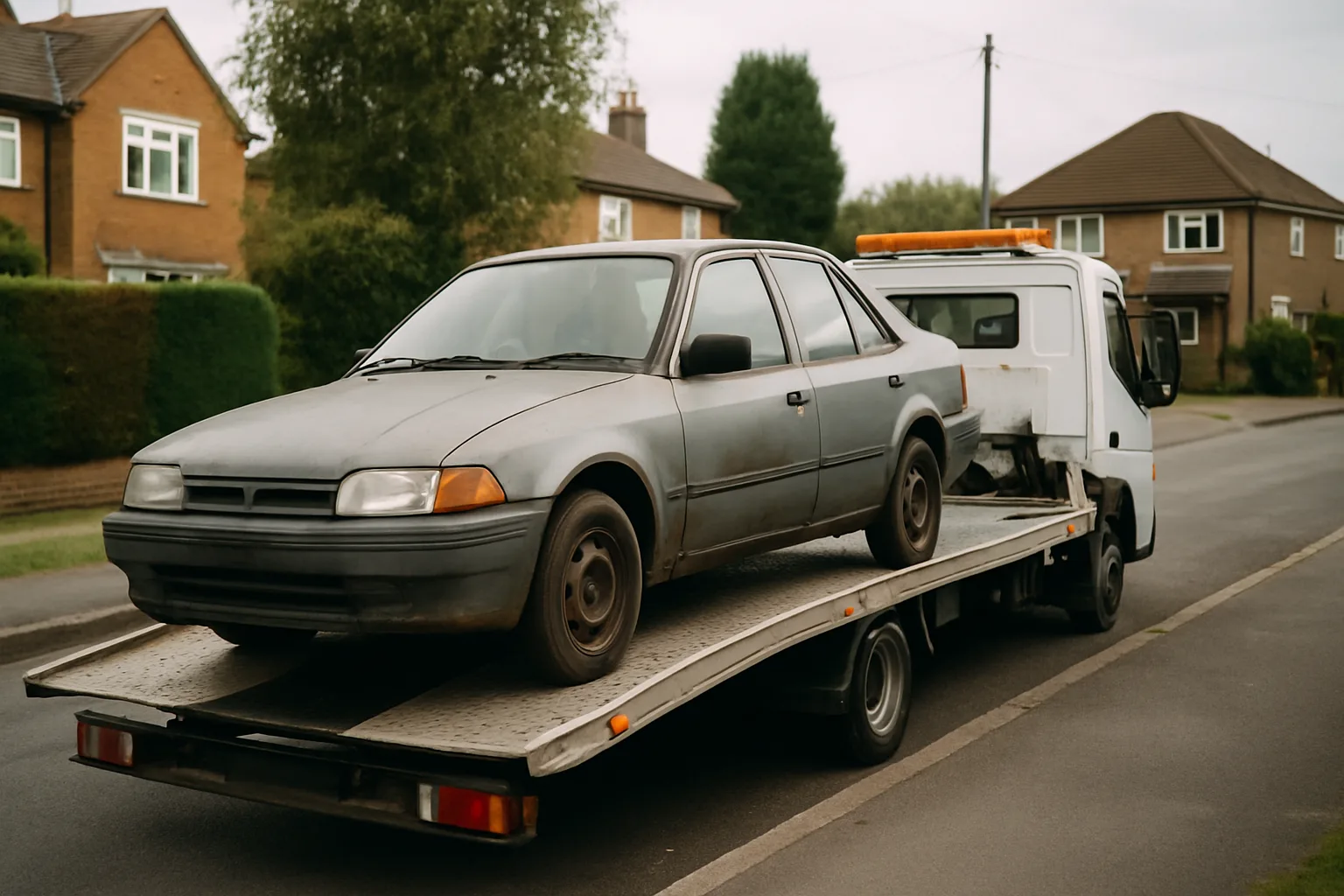
Most car owners in London leave serious money on the table when they scrap a vehicle. Not because the market is bad — because they don't know how it works.
If you're searching for cash for junk cars London, you've already made the right first move. But getting the best scrap value means understanding what buyers actually pay for, what documentation you need, and how to avoid deals that shortchange you. This guide breaks it down — no fluff, no guesswork.
What Determines the Scrap Value of Your Car in London, Ontario
Scrap car value isn't random. Buyers are pricing specific components — and if you don't know what they're looking at, you can't negotiate. Every offer you receive is built from a handful of key variables.
Here's what actually moves the number:
- Vehicle weight: Scrap metal pricing is largely based on weight. A heavier vehicle — a truck, an SUV, a full-size sedan — will almost always yield more than a compact. Buyers quote per-tonne rates on the steel body, frame, and chassis.
- Catalytic converter: This is often the single most valuable component on a scrap vehicle. Cats contain platinum, palladium, and rhodium. The exact value depends on the vehicle make, engine size, and current precious metal spot prices. A cat off a late-model V6 or V8 is worth significantly more than one from a small 4-cylinder.
- Condition of the drivetrain: Running engines and transmissions attract buyers looking for used parts. Even non-running vehicles can have reusable drivetrain components that add to the offer.
- Scrap metal market rates: Steel, aluminum, and copper prices fluctuate daily. A vehicle scrapped during a strong market will bring more than the same vehicle sold during a price dip. Timing matters — but most sellers don't think about it.
- Make, model, and year: Popular vehicles have higher parts demand. A Honda, Ford, or GM with a large existing install base means easier parts resale for the buyer — which they factor into their offer.
Understanding these variables gives you leverage. When a buyer quotes you a low number, you can ask why — and push back with specifics.
How to Maximize Your Cash Payout Before You Call Anyone
Preparation separates sellers who get fair market value from sellers who accept whatever's offered first. You don't need a mechanic or special tools — just a bit of legwork before you pick up the phone.
Start with what you can document. Get a free car valuation before committing to anything — knowing your baseline prevents you from being lowballed on the first call. Here's what to do in advance:
- Locate your title and registration. In Ontario, having proof of ownership speeds up the process and protects you legally. Buyers can work around missing paperwork, but it often affects the offer.
- Photograph the vehicle thoroughly. Front, rear, sides, interior, engine bay, and any visible damage. Documentation gives buyers confidence — confident buyers bid higher. Platforms like smashrecycling.ca use photo documentation as a core part of the listing process precisely because it improves price discovery.
- Identify your catalytic converter location. Know whether it's OEM or aftermarket — OEM cats are worth more. If you're considering removing and selling catalytic converters online separately, do your research first. Some buyers will offer more for the car with the cat included; others prefer to strip it themselves.
- Remove personal belongings and check for aftermarket parts. Aftermarket wheels, a newer stereo, a recently replaced battery — these may be worth removing and selling separately if they're in good condition.
- Get more than one quote. This is the single most important step. One buyer is not a market. One quote is not a price — it's a starting position.
The goal is simple: more information and more competition consistently produce better outcomes than a single cold call to one local yard.
Why Competition Changes Everything for London Car Sellers
Here's the uncomfortable truth about selling a junk car the traditional way: you call one yard, they give you a number, and you either take it or spend the next two hours making more calls. Most people take the first offer. Buyers know this — and they price accordingly.
The old way of selling scrap is a single buyer, one phone call, and a price you can't verify. That's not a transaction — that's guessing. When you sell your car for cash in London through a competitive process, buyers have to sharpen their numbers to win the load. That's how price discovery actually works.
Platforms like SMASH are built around this principle. Instead of calling five yards manually and hoping they're all honest about their current rates, you list once and let vetted buyers compete. More buyers means better price discovery. That's not marketing language — it's basic economics applied to the scrap market. You can read Canadian car selling guides to understand how the competitive quoting process works in more detail.
For sellers in London and across cash for cars Ontario searches, this shift in approach — from passive to competitive — is often the difference between a mediocre payout and a fair one.
Sell My Car for Cash in London: What the Process Actually Looks Like
A lot of sellers hesitate because they don't know what to expect. Here's the honest, step-by-step picture — no surprises.
Step 1: Get your vehicle details together. Year, make, model, mileage, condition, and whether it runs. This is what every buyer needs to make an offer. Have it ready.
Step 2: Get a quote — or better, multiple quotes. Whether you go through a platform like SMASH or call yards directly, get more than one number. The spread between offers is often significant and tells you a lot about where the real market sits.
Step 3: Confirm pickup logistics. Most legitimate junk car buyers in London will arrange scrap car removal at no cost to you. Confirm this upfront. If a buyer tries to deduct towing from your quoted price after the fact, that's a red flag.
Step 4: Paperwork and payment. In Ontario, you'll need to transfer ownership. Some buyers handle the admin; others require you to manage it. Clarify this before anything is loaded. Payment should be confirmed — cash, e-transfer, or certified cheque — before the vehicle leaves your property.
Step 5: Cancel your insurance and plates. Once the vehicle is sold, contact your insurer immediately. Return your plates to a ServiceOntario location. This is a step many first-time sellers forget — and it can cause billing headaches.
If you're in London, Ontario and want to make sure you're connected with vetted buyers who handle the full process cleanly, the London scrap metal services page is a good starting point to understand your local options.
Scrap Car Pricing: What's Realistic in 2026
Prices fluctuate — that's not a dodge, it's the reality of a commodity-driven market. Steel prices shift. Precious metal spot prices for platinum, palladium, and rhodium move daily. Regional supply and demand affects what London-area buyers are willing to pay at any given moment.
That said, you can get a general sense of the range. A typical passenger vehicle — mid-size sedan, reasonable condition — will generate a scrap value tied primarily to its weight and the state of the catalytic converter. Heavier vehicles like pickups and SUVs consistently command higher totals. Vehicles with intact OEM catalytic converters add a meaningful premium to the base scrap weight value.
Disclaimer: Scrap metal prices and junk car values change frequently based on commodity markets, regional demand, and vehicle condition. Always check current rates before committing to a sale. The figures above are general context only.
What you should never do: accept the first offer without verifying it against at least one or two others. The range between a low offer and a fair offer on the same vehicle can be substantial. Selling your car for cash across Canada through a competitive process removes the guesswork and puts pressure on buyers to be honest about what your vehicle is worth.
Common Mistakes That Cost London Sellers Money
These aren't edge cases — they happen regularly, and they're all avoidable.
- Accepting the first quote. Already covered this, but it bears repeating. One quote is not a market price.
- Not knowing if the cat is OEM. If a previous owner replaced your catalytic converter with an aftermarket unit, it's worth less. Know this before you negotiate.
- Agreeing to a quote that includes tow deductions. Get an all-in number. Hidden fees after the fact are a common tactic with low-quality buyers.
- Selling to an unvetted buyer. Not every buyer who finds you on Kijiji or Facebook is operating legitimately. Platforms that vet buyers protect you from liability and ensure proper documentation.
- Waiting too long. A running vehicle stored for six months becomes a non-runner. A non-runner with four good tires becomes a stripped shell. The longer you wait, the less it's worth.
- Forgetting to cancel insurance. You'll keep paying premiums on a vehicle you no longer own. It sounds minor — until you see three months of unnecessary charges on your statement.
Avoiding these mistakes won't turn a $400 car into a $4,000 payday — but it will ensure you get honest value for what you have, every time.
Frequently Asked Questions
Q: How do I find the best cash for junk cars London buyers without getting lowballed?
Get at least two to three quotes before agreeing to anything. Use platforms that bring vetted buyers into competition with each other — like SMASH — so you're not relying on one yard's self-reported rates. Document your vehicle thoroughly with photos and accurate condition notes to improve buyer confidence and offers.
Q: Does my car need to run to get a cash offer in London, Ontario?
No. Most scrap car buyers in London and across Ontario purchase non-running vehicles. The value is driven by scrap weight, the catalytic converter, and usable parts — not whether it starts. Be upfront about condition and you'll still receive competitive offers.
Q: How long does the scrap car removal process take in London?
In most cases, from first quote to vehicle pickup, the process takes one to three business days. Some buyers can arrange same-day or next-day removal depending on availability. Confirm pickup timing and payment method before you agree to anything.
Q: Should I remove the catalytic converter before selling my junk car?
It depends. If you can sell the cat separately at a strong price and the buyer is comfortable purchasing without it, this can increase your total return. However, some buyers prefer the vehicle intact and build the cat value into their offer. Get quotes both ways if you're unsure — and always verify the buyer is legitimate before removing any components.
Q: Is scrap car removal free in London, Ontario?
Most reputable junk car buyers in London include free towing as part of the deal. Always confirm this upfront and get the all-in price in writing before scheduling pickup. If a buyer tries to deduct towing costs after the fact, walk away.
Ready to stop guessing and start getting fair value for your vehicle? Whether you're in London or anywhere else in Canada, the process works the same way — document your car, get competitive quotes, and deal with vetted buyers who are transparent about pricing. Sell your car for cash across Canada and get a free quote at cashforcars-canada.ca — no pressure, no hidden fees, just a straightforward offer backed by real market competition.
Follow SMASH on LinkedIn for scrap metal market updates, pricing insights, and industry news that helps you sell smarter — whether it's a single vehicle or a full yard load.