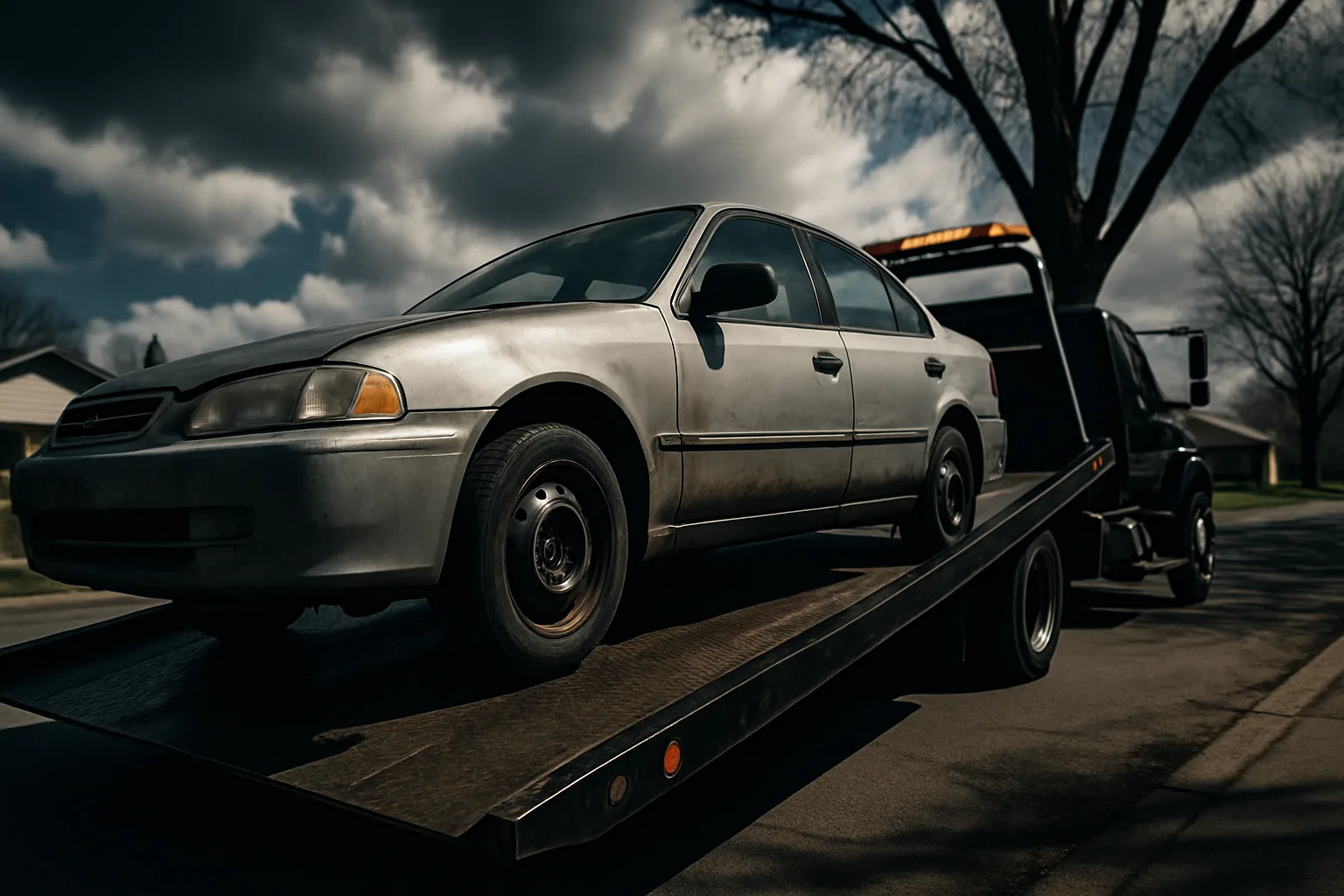
Your neighbour got $800 for their old Civic last spring. You called the same yard with a similar-year Camry and walked away with $400. Same city, same week, completely different number. Why?
Scrap car prices aren't random — but they're not simple either. If you're searching for cash for cars Ottawa and wondering why quotes vary so much, this guide breaks it down. Make, model, condition, metal content, and market timing all play a role. Understanding how these factors interact helps you walk into any conversation with a buyer knowing what your car is actually worth.
Whether you're sitting on a rusted-out Ford F-150 in Nepean, a stripped Honda Accord in Kanata, or a non-running Dodge minivan in Gloucester, the principles are the same. Let's get into it.
The Metal Weight Equation: Why Bigger Isn't Always Better
At its most basic level, a scrap car is a pile of metal. The yard buying it will shred, sort, and resell that metal to processors. So the first thing most buyers look at is curb weight — how much steel, aluminum, and other materials are actually in the vehicle.
Heavier vehicles generally yield more scrap metal by the tonne. A full-size pickup truck, a large SUV, or a body-on-frame van carries significantly more recyclable steel than a compact hatchback. That weight difference directly affects what a buyer is willing to pay. A 1,800 kg truck at current scrap steel prices represents a very different payday than a 1,000 kg compact car.
But here's where it gets more nuanced:
- Aluminum-intensive vehicles (certain luxury models, some newer trucks) may command better pricing because aluminum sells at a higher rate per kilogram than steel.
- Vehicles with heavy plastic body panels or composite components have lower effective metal yield, which buyers factor into their offer.
- Electric vehicles are increasingly showing up at scrap yards — their battery packs, copper wiring, and drivetrain components create different value profiles entirely, and many yards are still figuring out how to price them accurately.
When you get a free car valuation, a reputable buyer will account for the actual metal breakdown in your specific vehicle — not just a rough guess based on year and make.
Make and Model Matter More Than You Think: Catalytic Converters and Parts Value
Two cars that weigh exactly the same can generate very different offers. Why? Because scrap car pricing isn't just about the steel — it's about every recoverable component on the vehicle.
Catalytic converters are the most significant variable. These emissions control devices contain platinum group metals (PGMs) — platinum, palladium, and rhodium — in amounts that vary significantly by make and model. A catalytic converter from a large V8 truck or a hybrid vehicle can be worth considerably more than one from a small four-cylinder compact. Buyers who understand this will adjust their offer accordingly. If your cat has already been removed before you call, expect a lower quote — yards price this in immediately.
Beyond cats, parts value plays a role for vehicles that aren't fully stripped:
- Popular makes with high demand for used parts (certain Honda, Toyota, and GM models) may fetch slightly better offers because parts can be resold before the car is crushed.
- Rare or discontinued models sometimes carry parts premiums if specific components are in demand.
- Engines and transmissions in working condition — even in a non-running car — have resale value that a knowledgeable buyer will factor in.
This is why calling one generic buyer and taking their first number isn't always the smartest move. Getting multiple quotes reveals where the market actually sits for your specific vehicle. Platforms like SMASH are built around exactly this principle — more buyers in competition means better price discovery for the seller.
Condition Is a Spectrum — Not a Binary Switch
Most sellers describe their car as either "running" or "not running." Buyers break condition down much further. Every point on the condition spectrum affects what you'll actually receive.
Here's how condition factors typically get priced:
- Runs and drives — Best case. Even if the car is cosmetically wrecked, a drivable vehicle means easier transport and potentially more parts value.
- Starts but doesn't drive — A flat tire, a seized caliper, or a blown transmission puts it here. Value drops moderately. Still better than fully non-running.
- No start, all components present — Engine seized, dead battery, fuel issues. Value depends heavily on what's still intact on the car.
- Stripped or partially stripped — Someone's already pulled the cats, the rims, the battery, or the stereo. Buyers notice this immediately and adjust accordingly.
- Fire or flood damage — These come with significant complications. Flood-damaged vehicles often contain contaminants that affect how the metal can be processed. Fire damage destroys plastic and rubber weight while also potentially compromising metal quality.
- Structural integrity — A car with a clean frame and subframe is easier to process than one that's fully rotted out.
Being upfront about condition when you call isn't just about honesty — it saves you from getting a quote that gets revised down when the truck shows up. If you're in Ontario and you're looking for a fast, no-hassle transaction, accurate condition disclosure is the fastest path to a clean deal.
Market Timing and Metal Prices: The Factor Nobody Talks About
Here's what most car sellers don't realize: the price you're quoted today might be meaningfully different from the quote you'd get three weeks from now — for the exact same car. Scrap metal markets move. Steel prices fluctuate based on global demand, mill capacity, and commodity cycles. Aluminum and copper pricing follow their own rhythms. When metal prices dip, scrap car offers typically dip with them. When demand surges, buyers have more room to compete for inventory.
This is especially relevant in 2026, when commodity markets have seen continued volatility influenced by global manufacturing shifts, infrastructure spending cycles, and energy transition demand for certain metals.
What does this mean practically for someone trying to sell your car for cash across Canada?
- Don't assume the price you heard from a friend six months ago reflects current market conditions.
- Get multiple quotes in a short window so you're comparing apples to apples.
- If you're not in a rush, paying attention to commodity price trends can help you time your sale — but most sellers prioritize speed and simplicity over trying to time the market perfectly.
For those managing larger volumes of end-of-life vehicles, SMASH creates a live competitive environment where buyers bid against each other in real time. That competitive pressure is one of the most reliable ways to ensure your price reflects actual market conditions — not just one buyer's margin. If you're curious how auction-based pricing works for scrap vehicles and metals, you can read Canadian car selling guides that break down your options.
Location Within Ottawa and Ontario: Why Geography Still Plays a Role
Living in Ottawa proper versus a surrounding area like Stittsville, Richmond, or Cumberland can affect your offer in subtle ways. Towing costs, fuel, and driver time are real expenses for buyers. A vehicle that requires a long haul may see a modest deduction to account for logistics. This is especially true if you're comparing quotes from buyers based in other parts of Ontario.
Ottawa's geography — sitting near the Ontario-Quebec border — also means some buyers may operate across provincial lines. Always confirm that the buyer you're working with is properly licensed to operate in Ontario and that the transaction includes a proper bill of sale and ownership transfer. You want your plates and liability officially off that vehicle once it leaves your property.
If you're exploring Ottawa scrap metal services, working with buyers who know the local market means fewer surprises on pickup day. For sellers in other parts of Ontario or further west in Alberta, the same principles apply — local buyer networks and platform-based auctions both help surface competitive pricing in your area.
If you also have scrap metal beyond the vehicle itself — catalytic converters, non-ferrous materials, or other recyclables — you can sell your scrap metal on SMASH Recycling and run a competitive auction rather than settling for a single walk-in offer.
How to Get the Best Scrap Car Value Near You
Now that you understand what drives scrap car pricing, here's the practical playbook for getting a fair number on your vehicle — whether you're in Ottawa, Scarborough, or anywhere else across Canada.
- Know what you have. Look up your vehicle's curb weight and whether it has a particularly valuable catalytic converter. A quick VIN lookup can tell you the exact model spec.
- Be honest about condition. Don't oversell a car that's been sitting for three winters. Buyers verify on pickup, and inconsistencies slow everything down.
- Get at least three quotes. One quote is a ceiling, not a market. Multiple quotes tell you where the actual price sits for your specific vehicle right now.
- Ask what's included. Does the quote include towing? Is there a processing fee? Are they handling the ownership transfer paperwork?
- Check the buyer's reputation. Look for reviews, confirm they operate in your province, and make sure they provide documentation on pickup.
- Don't wait indefinitely. If metal prices are reasonable and you have a fair quote in hand, hesitation doesn't always pay off. Markets move both ways.
Sellers searching for scrap car value near me often underestimate how much competitive quoting changes the outcome. One call gets you one number. Three calls get you a market.
When you're ready, sell your car for cash across Canada through a service that covers every province — no matter the make, model, or condition of your vehicle. Getting a quote costs nothing, and it gives you a real starting point instead of guessing.
Frequently Asked Questions
Q: Why did I get a lower scrap car quote than my neighbour for a similar vehicle in Ottawa?
Several factors could explain the difference — the catalytic converter type and whether it was still on the vehicle, curb weight differences between model trims, condition variance, and even the timing of the quotes relative to metal price fluctuations. Getting multiple quotes at the same time is the most reliable way to gauge where the market actually sits for your specific car.
Q: Does it matter if my car doesn't run when I try to sell it for cash in Ottawa?
Non-running vehicles are bought regularly across Ottawa and Ontario — it's not a dealbreaker. The offer will typically be lower than a running vehicle, but a reputable buyer will send a flatbed or tow truck and handle removal regardless of the vehicle's condition. Be upfront about whether it starts, moves, and what components are still on it.
Q: How does the catalytic converter affect my scrap car value near me?
Significantly. Catalytic converters contain platinum group metals that are independently valuable — sometimes worth more than the steel in the entire rest of the vehicle for certain makes and models. If your cat is still on the car and intact, that needs to be reflected in your quote. If it's been removed, buyers will deduct accordingly.
Q: What paperwork do I need to sell a junk car in Ontario?
In Ontario, you'll need the vehicle ownership (permit) to transfer the title. You'll also want a bill of sale for your records. Return your licence plates to a ServiceOntario location after the sale — you remain liable for the vehicle until the ownership is properly transferred and the plates are off.
Q: How quickly can I get cash for my car in Ottawa?
Most reputable buyers in Ottawa can arrange same-day or next-day pickup depending on your location and schedule. Payment is typically made on the spot at pickup — either cash or e-transfer. Confirm the payment method before booking so there are no surprises when the truck arrives.
Ready to find out what your vehicle is actually worth? Sell your car for cash across Canada — get a free quote at cashforcars-canada.ca and skip the guesswork.
For ongoing scrap metal market insights and industry updates, follow SMASH on LinkedIn — it's where the recycling industry actually talks about what's moving and what's not.