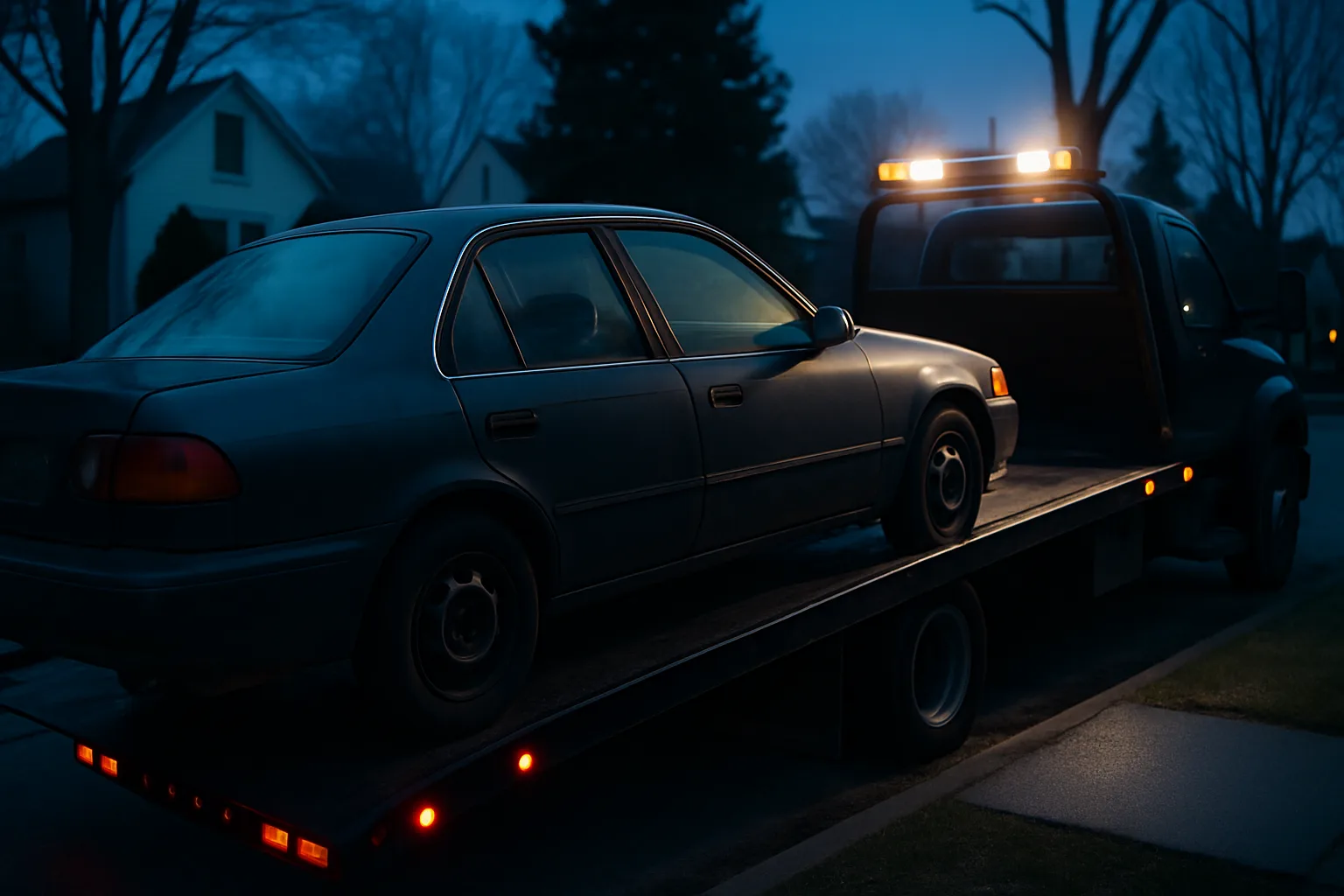
Most people have no idea what their scrap car is actually worth — and the person on the other end of that phone call is counting on that. Whether you've got a 2009 Honda Civic with a blown engine sitting in your Guelph driveway or a rusted-out pickup that hasn't moved since last winter, the scrap value of your vehicle is more nuanced than a single number. Understanding what drives that number puts money back in your pocket.
This is a realistic guide — no inflated promises, no bait-and-switch tactics. Just a straight breakdown of how scrap car removal Guelph pricing actually works, what factors affect your payout, and how to make sure you're getting fair market value when you sell.
What Actually Determines Your Scrap Car's Value
Your car's scrap value isn't random. It's calculated based on a few hard factors that any legitimate buyer will use to arrive at their number. If a buyer can't explain how they got to their offer, that's a red flag.
Here's what moves the needle:
- Vehicle weight and metal content: The biggest factor. A heavier vehicle — full-size trucks, older SUVs, minivans — carries more steel and delivers more raw value at the yard. A compact car might weigh 1,100–1,400 kg. A half-ton pickup can hit 2,000 kg or more. More weight, more metal, more money.
- Catalytic converter: If your vehicle still has its catalytic converter, that single component can be worth a significant portion of the total payout. Catalytic converters contain platinum, palladium, and rhodium — precious metals that yards price separately from bulk steel.
- Current scrap metal market prices: Steel prices fluctuate. When the market is up, your car is worth more. When it's soft, payouts reflect that. Anyone quoting you a fixed price without referencing current rates is either guessing or padding their margin.
- Condition of salvageable parts: An engine that still runs, a transmission in working condition, doors, bumpers, airbags — intact parts have resale value in the used auto parts market. A car that can be parted out before crushing is worth more than one that goes straight to the shredder.
- Year, make, and model: Some vehicles have parts in higher demand. A popular make with a strong used-parts market (think domestic trucks, common Japanese imports) can yield more than an obscure model with no buyer base for components.
- Location and towing logistics: If your vehicle is accessible — on a flat driveway, near a road — removal is cheap and easy. If it's in a field, a garage, or buried under snow, expect that to factor into the net offer.
No two vehicles price out the same. Anyone giving you a firm quote without asking these questions isn't quoting — they're guessing, and that guess usually benefits them.
Realistic Price Ranges: What Scrap Cars Fetch in Ontario in 2026
Let's talk numbers — real ranges, not inflated marketing figures. Scrap car values in Ontario in 2026 are influenced by both local yard pricing and the broader North American steel and non-ferrous metals market. Prices can shift week to week, so treat these as general reference points, not guarantees.
Disclaimer: Scrap metal and vehicle prices fluctuate based on market conditions. Always confirm current rates with a licensed buyer before making decisions.
General ranges for common vehicle types:
- Small sedans and hatchbacks (Honda Civic, Toyota Corolla, Hyundai Elantra): Typically lighter vehicles. Scrap value driven mostly by steel weight and catalytic converter.
- Mid-size sedans and wagons (Toyota Camry, Ford Fusion, Dodge Charger): More metal, stronger part demand on popular models. Converters on V6 and V8 models can add meaningful value.
- SUVs and crossovers: Heavier than sedans, often with dual catalytic converters on larger engines. Part demand varies by model but tends to be solid on mainstream makes.
- Full-size trucks and vans (F-150, Ram 1500, Chevy Silverado, Dodge Ram Van): Among the highest-value scrap vehicles. Heavy steel content, high parts demand, and often multiple converters.
- Luxury and European vehicles: Parts value can be strong, but specialty components sometimes have a narrower buyer pool. Catalytic converters on luxury models can carry significant precious metal content.
The difference between a low-ball offer and a fair one often comes down to whether the buyer is accounting for your converter separately, whether they've checked current market rates, and whether there's any competition in the process. That last point matters more than most sellers realize.
Why Guelph Sellers Often Leave Money on the Table
In Ontario, most people selling a junk car follow the same pattern: search for junk car buyers near me Guelph, call the first result, take the number, done. That's one quote, one buyer, zero competition. The buyer knows they're the only offer on the table. That dynamic doesn't work in your favour.
The scrap car market in Guelph — and across Ontario — has plenty of legitimate buyers. But a single phone call to a single yard tells you nothing about whether that offer reflects the actual market. You have no reference point. You're essentially trusting a stranger to be fair without any mechanism to verify it.
Competitive pricing requires competition. When multiple vetted buyers know they're competing for your load, the price signal you get is closer to the real market. That's basic economics, and it applies to scrap vehicles the same way it applies to anything else.
This is exactly where platforms like Canada's B2B scrap recycling marketplace SMASH come in. SMASH connects sellers and yards through a transparent, auction-based model — the kind of structure that brings real price discovery to a market that has traditionally operated on information asymmetry. For B2B sellers moving volume, the difference that competition creates is significant.
How to Prepare Your Scrap Car to Maximize Your Payout
You don't need to detail the car or replace anything — it's scrap, not a trade-in. But a few simple steps can meaningfully improve your offer and your experience.
- Locate your ownership/title. You'll need proof you own the vehicle to transfer it legally. In Ontario, this is your vehicle permit. Missing paperwork slows the process and can reduce your leverage.
- Check for the catalytic converter. If your cat has been stolen — a common issue with certain makes — disclose that upfront. Buyers who discover missing converters after agreeing to a price often adjust their offer on pickup.
- Remove personal belongings. Obvious but easily missed. Check the trunk, under seats, and in door pockets. License plates come off too — in Ontario, you return or transfer them yourself.
- Document the condition with photos. If you're getting quotes remotely, photos of all four sides, the engine bay, and the interior help buyers assess condition accurately and reduces the chance of a last-minute price adjustment at pickup.
- Note any working parts. Running engine? Functioning transmission? Intact interior? Tell the buyer. Working parts add value and a thorough buyer will factor them in.
- Get more than one quote. This is the most important step. One quote is a starting point, not a market rate.
If you're in the Guelph area, local options for Guelph scrap metal services are worth exploring alongside national buyers — competition between local and national buyers is what produces the best outcome for you.
The Role of a B2B Scrap Metal Marketplace in Getting Fair Prices
Most individual car sellers think of scrap pricing as something that happens behind closed doors at the yard level — a number a buyer pulls from a spreadsheet or gut instinct. The reality is that scrap metal is a traded commodity, and price discovery happens through volume, competition, and transparency.
SMASH operates as a B2B scrap metal marketplace built around that principle. Yards using SMASH to buy and sell loads are operating in a competitive environment where documentation, vetted buyers, and auction-format pricing replace the old single-buyer phone call model. For sellers moving volume — multiple vehicles, dismantled parts, non-ferrous materials — that structure produces meaningfully better price signals than the traditional approach.
When you sell your car for cash across Canada through a service that leverages this kind of market intelligence, you benefit from the same competitive pressure that larger recyclers have been tapping into for years. The individual car seller shouldn't be the last person in the supply chain to benefit from transparent pricing.
Whether you're selling one car in Guelph or managing a fleet of end-of-life vehicles across Ontario, the principle is the same: more buyers, more competition, better price discovery. You can read Canadian car selling guides to dig deeper into how this works at every stage of the process.
Ready to Sell? Here's What the Process Actually Looks Like
Selling your scrap car doesn't have to be complicated. When you work with a reputable buyer — one who is transparent about pricing, picks up on schedule, and handles the paperwork — the process is typically:
- Get a quote. Provide the year, make, model, condition, and location. A good buyer asks questions. A bad one gives you a number before asking anything.
- Schedule pickup. Same-day and next-day pickup is common across major Ontario markets including Guelph.
- Transfer paperwork. Sign over the vehicle permit. The buyer handles the rest.
- Get paid. Cash or e-transfer at pickup, in most cases. Verify the payment method upfront.
No subscription. No waiting. When the deal is done, it's done. If you want to get a free car valuation before you commit to anything, that's the smart first move — know your number before you pick up the phone.
Wherever you are in Canada — from Guelph to Greater Vancouver — the goal is the same: get a fair price, fast removal, and zero hassle. That's what this industry should look like, and that's the standard worth holding every buyer to.
Ready to find out what your vehicle is worth? Sell your car for cash across Canada — get a free quote at cashforcars-canada.ca. No obligation, no pressure — just a real number for your real vehicle.
Frequently Asked Questions
Q: How do I find reliable scrap car removal in Guelph?
Search for licensed buyers who ask detailed questions about your vehicle before quoting — year, make, model, condition, and whether the catalytic converter is intact. Avoid buyers who give a firm number without any information. Getting two or three quotes is always the right move in Guelph's local market.
Q: Does my car need to be running to get a cash offer?
No. Most scrap and junk car buyers across Canada — including Guelph — purchase vehicles in any condition: non-running, damaged, missing parts, or flood-affected. The value is in the metal content and salvageable parts, not whether the engine starts.
Q: How quickly can I get paid for a junk car in Guelph?
Most reputable buyers offer same-day or next-day pickup with payment at the time of removal. Confirm the payment method — cash or e-transfer — before scheduling. Avoid any buyer who asks you to wait days for payment after the vehicle is already gone.
Q: What paperwork do I need to sell my scrap car in Ontario?
In Ontario, you need your vehicle permit (ownership document) to legally transfer the vehicle. Remove your license plates before the buyer arrives — Ontario plates stay with the owner, not the car. If you've lost your ownership, contact ServiceOntario for a replacement before selling.
Q: Why does my scrap car's catalytic converter matter so much to buyers?
Catalytic converters contain platinum, palladium, and rhodium — precious metals that are priced separately from bulk steel at the yard level. A missing or stolen converter can meaningfully reduce your total payout, which is why buyers ask about it specifically. Always disclose converter status upfront to get an accurate quote.
Stay current on scrap metal market trends and recycling industry news — follow SMASH on LinkedIn for regular updates on pricing, regulations, and what's moving the market across North America.