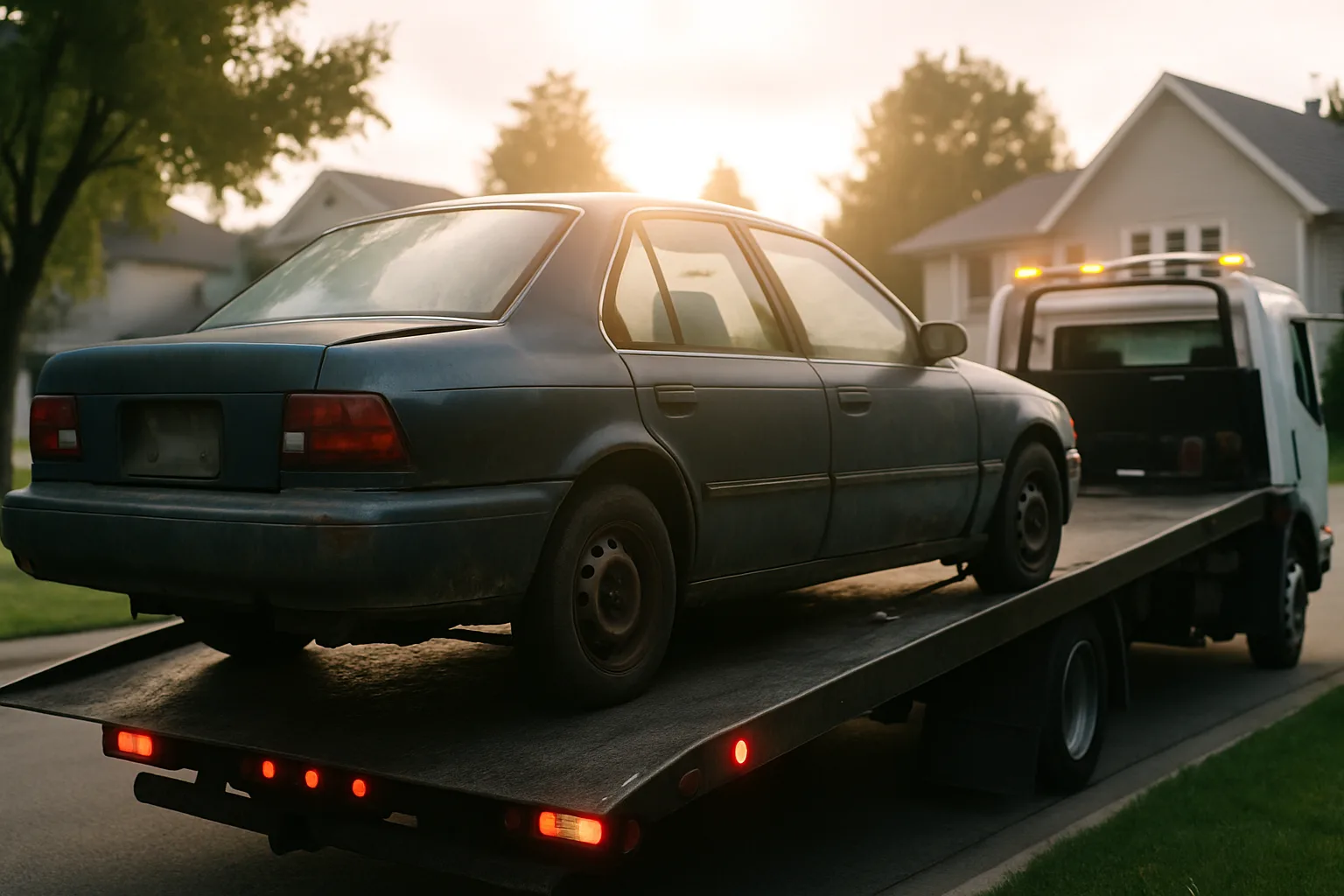
Most people leave hundreds of dollars on the table when they scrap a car — not because the market is bad, but because they didn't do the prep work first. If you're searching for cash for junk cars Regina, there's a smarter way to go into it than just handing over your keys and hoping for the best.
The condition of your vehicle, the parts still on it, and how well you document everything directly affects what buyers will pay. This guide walks you through exactly what to do before your car gets crushed — so you get the most out of it, whether you're in Regina, Saskatoon, or anywhere else across Saskatchewan.
Step 1: Know What Your Scrap Car Is Actually Worth
Before you talk to a single buyer, get a realistic baseline. A scrap car's value depends on several factors — its weight, metal composition, current scrap metal prices, and whether any sellable parts remain. Heavy trucks and SUVs typically return more than compact sedans simply because there's more ferrous metal in them. But a lighter vehicle with a working catalytic converter can sometimes outperform a heavy one with none.
Tools like a scrap car value calculator (free options exist online) can give you a ballpark. The honest answer is: no calculator replaces getting multiple quotes. If you want to know how much is my salvage car worth, the only way to find out is to put it in front of more than one buyer. Platforms that create competition between buyers — rather than leaving you stuck with one offer — tend to surface the real market rate. That's where services like smashrecycling.ca come in. SMASH connects sellers with vetted buyers through a competitive auction format, which means the price you get reflects actual market demand — not a single buyer's best guess on a slow Tuesday.
Know this going in: scrap metal prices fluctuate with global commodity markets. What copper, steel, and aluminum fetched last month may not be what they fetch today. Always check current rates before accepting an offer, and treat any calculator result as a starting point, not a final number.
Disclaimer: All scrap and vehicle prices mentioned in this article are general estimates only. Actual prices vary based on market conditions, vehicle specs, and buyer demand. Verify current rates before finalizing any sale.
Remove Valuables and Personal Documents Before Anything Else
This sounds obvious. It isn't — based on how many people skip it. Before you hand over your vehicle, do a thorough sweep. You'd be surprised what gets left behind in glove compartments, under seats, in door pockets, and in trunk liners.
Here's a checklist of what to pull before the car leaves your driveway:
- Registration and insurance documents — cancel your insurance policy after the sale to stop paying premiums
- Personal items — phone chargers, sunglasses, garage door openers, gym bags
- License plates — in Saskatchewan, you keep your plates; they're tied to you, not the vehicle
- GPS units or dash cams — aftermarket devices you own and can reuse
- Car seats or booster seats
- Tools or emergency kits stored in the trunk
- Any aftermarket upgrades — custom floor mats, subwoofers, etc.
Once the car is picked up, recovering anything left inside becomes your problem, not the buyer's. Don't wait until the tow truck is in your driveway to start looking.
Strip the High-Value Parts First — Or Know What You Have
This is where the real money often lives. If your vehicle still has sellable components, stripping them before scrapping the shell can meaningfully increase your total return. The scrap price you're quoted is for bulk metal — it doesn't account for the individual parts that buyers in the used auto parts market will pay a premium for.
Parts worth evaluating before you scrap:
- Catalytic converter (cat) — contains platinum, palladium, and rhodium. Even a worn cat has value. This is often the single most valuable part on a scrap vehicle.
- Battery — if it still holds a charge, it's worth selling separately
- Rims and tires — steel rims go with the scrap; alloy rims or good tires can be sold used
- Stereo and electronics — aftermarket head units, amplifiers
- Alternator, starter, and other functioning mechanical parts
- Mirrors, headlights, and body panels — if undamaged, these have a strong used parts market
The decision to strip parts yourself versus selling the whole vehicle depends on your time, tools, and how the scrap buyer structures their offer. Some buyers price the vehicle assuming the cat is still on it — confirm this before agreeing to a price. If you're unsure what's on your vehicle and whether it's been removed, SMASH's platform includes photo documentation and serial tracking, which helps buyers assess exactly what they're bidding on. Better documentation = more buyer confidence = stronger offers.
Get Your Paperwork in Order — It Protects You After the Sale
In Saskatchewan, selling a vehicle — including a scrap car — requires you to transfer ownership properly. Failing to do this can leave you liable for anything that happens with that vehicle after it leaves your hands. That means parking tickets, accidents, or bylaw violations charged to a plate or VIN that still shows up under your name.
Here's what you need to handle before or at the time of sale:
- Complete a Bill of Sale — even for a scrap vehicle, document the transaction with buyer name, date, VIN, and agreed price
- Transfer the title — contact SGI (Saskatchewan Government Insurance) to process the ownership transfer
- Cancel your insurance — do this after the sale is complete, not before
- Notify SGI if the vehicle is being scrapped — you may be eligible for a partial registration refund depending on the timing
- Keep copies of everything — Bill of Sale, transfer confirmation, and any buyer receipts
If you're selling to a licensed wrecker or scrap yard in Regina, they'll often walk you through the paperwork. But if you're selling privately or through an online platform, that responsibility falls on you. Don't skip it.
Get Multiple Offers — Competition Is the Point
If you call one buyer and accept the first number they give you, you have no idea whether you left money on the table. The scrap car market isn't one price — it's a range, and where your car lands in that range depends almost entirely on who's bidding.
One offer is a guess. Three offers reveal the market.
This is exactly why auction-based platforms exist. When you sell your car for cash across Canada through a system that puts vetted buyers in competition with each other, price discovery happens naturally. No cold calls, no awkward negotiating, no wondering if the guy on the phone is lowballing you. For Regina sellers and anyone across Saskatchewan, accessing buyers beyond your local area means you're not limited to whoever has capacity that week.
SMASH runs competitive auctions specifically for scrap loads and salvage vehicles — connecting sellers with buyers who are actively looking for inventory. More competition can mean better price discovery. That's not a guarantee, but it's a structural advantage over the one-call approach.
If you want to get a free car valuation before you commit to anything, that's the right first move. Know your number before you negotiate.
What to Expect on Pickup Day in Regina
Once you've accepted an offer, the process is usually fast. Most legitimate buyers in Regina and across Saskatchewan can arrange pickup within one to three business days. Here's what pickup day typically looks like:
- The buyer or tow company arrives with a flatbed or tow truck
- You hand over the keys and signed transfer documentation
- Payment is made — confirm in advance whether it's cash, e-transfer, or cheque
- The vehicle is loaded and removed from your property
- You notify your insurance company to cancel coverage
If the buyer asks you to pay for towing, that's a red flag. Reputable cash for cars Saskatchewan buyers and Regina scrap metal services include pickup in their offer. Free towing is standard — not a bonus. Make sure it's explicitly included before you agree to a price.
Want to dig deeper into how the selling process works across different provinces? Read Canadian car selling guides for more practical breakdowns, including how scrap values compare province to province and what affects your final payout.
Frequently Asked Questions
Q: How much can I get for a junk car in Regina?
It depends on the vehicle's weight, metal composition, remaining parts (especially the catalytic converter), and current scrap metal prices. There's no fixed number — which is exactly why getting multiple offers matters. A competitive auction format tends to surface a more accurate market value than a single phone call ever will.
Q: Do I need the title to sell my scrap car in Saskatchewan?
Yes, in most cases. You'll need proof of ownership to legally transfer the vehicle. If you've lost the title, contact SGI to discuss your options — there's a process for obtaining a replacement. Selling without proper documentation can create legal liability for you after the car leaves your hands.
Q: What's the fastest way to sell my car for cash in Regina?
Have your documents ready, remove your plates and personal items beforehand, and use a platform or service that can connect you with multiple buyers quickly. Most reputable buyers in Regina can arrange same-week pickup once a price is agreed on. Platforms like SMASH help speed up the process by bringing qualified buyers to you instead of making you chase them down one by one.
Q: Should I remove the catalytic converter before scrapping my car?
Possibly — but confirm with the buyer first. Some scrap car buyers factor the cat into their offer price, meaning they expect it to be on the vehicle. Removing it without disclosure could void the agreed price. If the buyer's offer doesn't include the cat value, selling it separately to a core buyer can add meaningful dollars to your total return.
Q: How do scrap car prices in Saskatchewan compare to other provinces?
Scrap metal pricing is largely tied to global commodity markets, so the underlying metal values are similar across Canada. Regional differences come from transportation costs, buyer density, and local demand for specific parts. In larger markets like Ontario or Alberta, there may be more buyers in competition, which can influence offers. Using a national platform like SMASH helps Saskatchewan sellers access a broader buyer pool instead of being limited to local options.
If you've got a vehicle sitting in your driveway that's done its job, don't let it keep costing you insurance money and parking space. Do the prep work, document what you have, and put it in front of buyers who are actually competing for it. When you're ready, sell your car for cash across Canada — get a free quote at cashforcars-canada.ca and see what the market actually says your vehicle is worth.
Stay current on scrap metal market trends and industry updates by following SMASH on LinkedIn — useful intel whether you're scrapping one car or managing a full yard.