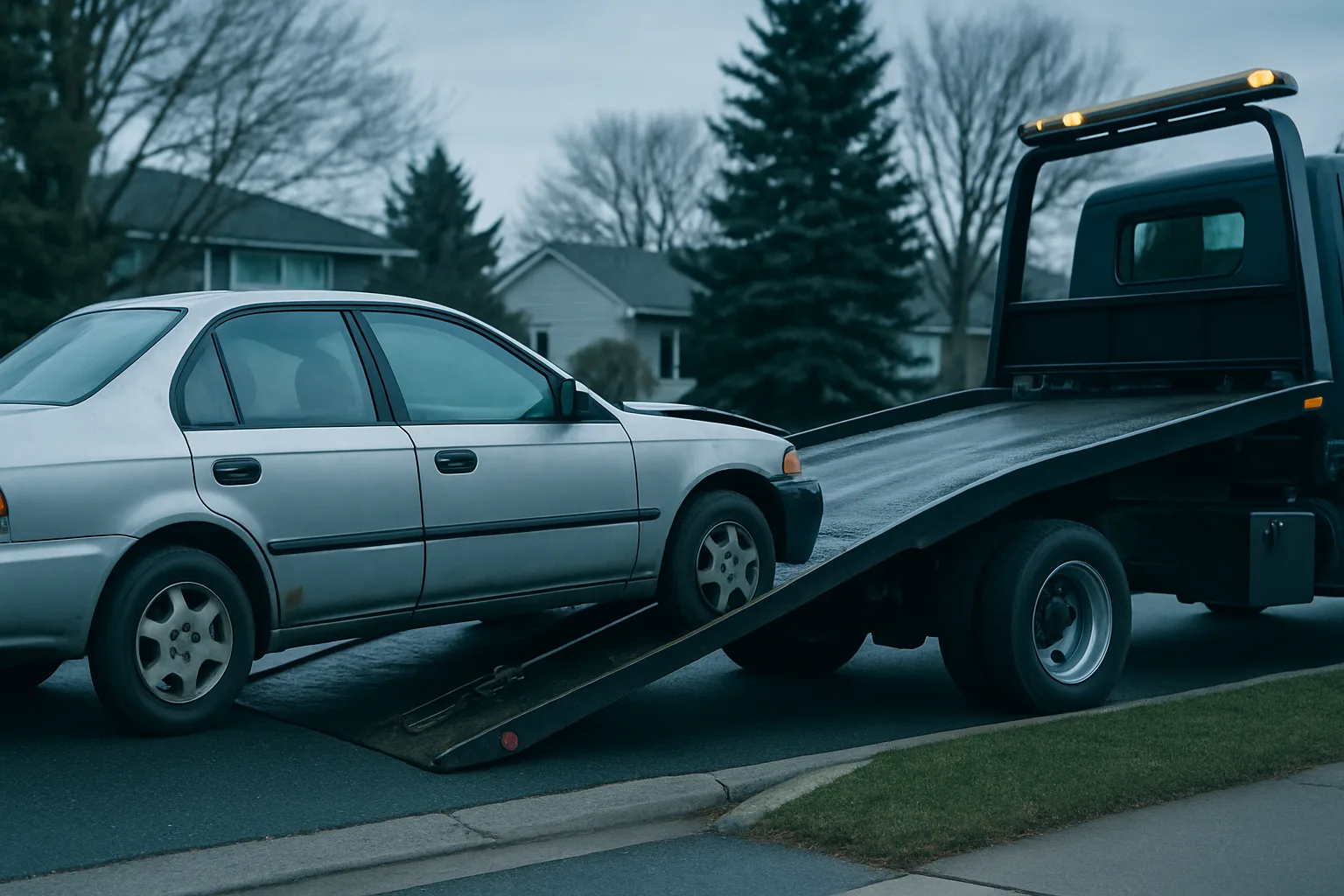
Most people hand over their keys, watch the tow truck pull away, and never think about what happens next. But if you want to understand why sell my car fast St. John's searches lead to real cash offers — not guesswork — it helps to know exactly what goes on behind the gates of an auto recycler. The process is more systematic than most people expect. And understanding it can help you get a better deal.
Whether you're scrapping a rusted-out pickup in St. John's or offloading a flood-damaged sedan in Calgary, the recycling process follows a defined sequence. Every step adds value. Every step affects what buyers are willing to pay.
Ready to see what actually happens after your car leaves the driveway? Here's the full picture.
Step 1: Arrival, Inspection, and De-pollution
The moment your vehicle arrives at a licensed auto recycler, it goes through a formal intake process. Staff log the VIN, record the condition, and assess what's salvageable. This isn't a casual look-over. It's a systematic evaluation that determines how the car gets processed and what it's worth at each stage.
Before anything else happens, the vehicle goes through de-pollution. This is non-negotiable at any legitimate facility — and it's regulated across Canada. Technicians drain and capture all hazardous fluids: engine oil, transmission fluid, brake fluid, power steering fluid, antifreeze, and fuel. Airbag systems are carefully depowered. Mercury switches — still found in older vehicles — are removed and handled separately. Batteries come out. Refrigerants are recovered from AC systems using certified equipment.
Why does this matter to you as a seller? Because a recycler that skips de-pollution is cutting corners on environmental compliance. That's a red flag. Reputable buyers — the kind that offer fair cash for junk cars in St. John's and across Canada — operate within the rules. Sloppy facilities undercut their own ability to handle volume and quality, which ultimately means lower payouts to sellers.
What Happens to Salvageable Parts — and Why It Affects Your Payout
After de-pollution, the vehicle moves to parts harvesting. This is where real value gets extracted — and it's the main reason a 10-year-old car with 280,000 km on the clock is still worth something. Recyclers pull and inventory parts that have resale value: engines, transmissions, doors, hoods, mirrors, electronic modules, seats, and more.
High-demand parts are cleaned, tested where possible, and listed for resale — either directly to consumers doing DIY repairs or to body shops looking for affordable alternatives to new OEM parts. In a province like Newfoundland and Labrador, where shipping costs for new parts can be steep, locally sourced used parts carry real value for buyers on the island.
Parts that don't have strong resale demand still contribute. Tires, rims, and glass often go through secondary processors. Rubber and plastics are sorted for their own recycling streams. Nothing gets wasted at a well-run facility.
Here's the key takeaway: the more usable parts your vehicle has, the higher the upfront offer tends to be. A car with a solid engine and intact interior components is worth more to a recycler than a shell with stripped-out mechanics. When you sell your car for cash across Canada, the condition of your vehicle's components — not just its weight — shapes what you're offered.
Catalytic Converters, Non-Ferrous Metals, and the Scrap Metal Recycling Canada Connection
Once parts harvesting is complete, the vehicle's remaining value comes from its metals. This is where scrap metal recycling Canada intersects directly with the auto recycling world.
Catalytic converters are removed first. They contain platinum group metals — platinum, palladium, and rhodium — that are recovered and refined. The value of a cat fluctuates based on commodity markets, but it's consistently one of the highest-value components on any vehicle. Recyclers track this closely.
Non-ferrous metals come next. Copper wiring harnesses, aluminum radiators, aluminum wheels, and brass fittings all get sorted and separated. Non-ferrous metals command significantly higher prices per kilogram than steel, so careful sorting makes a measurable difference in total recovery value.
What's left after all of that is the ferrous steel shell — the body, frame, and remaining structural components. This goes to the shredder. The shredded steel is sorted magnetically and sold to steel mills for recycling into new product. Steel is the backbone of the scrap market, and vehicle bodies represent one of the largest sources of recycled steel in North America.
For sellers asking about cash for junk cars St. John's, this commodity chain is exactly why prices fluctuate. When steel and non-ferrous metal prices rise, recyclers can offer more. When markets soften, margins tighten. Platforms like SMASH help bring transparency to this process by creating competitive conditions that better reflect actual market value — rather than a single buyer setting a price in isolation.
If your vehicle has already been stripped and you're left with metal components, sell your scrap metal on SMASH Recycling to reach vetted buyers competing for your material.
How Auto Recyclers Handle Documentation and Title
This part of the process is less visible but critically important — especially if you want a clean sale with no liability hanging over you afterward.
When your car is picked up, the buyer should collect your vehicle title (or bill of sale), confirm the VIN matches the documentation, and file the appropriate notification with the provincial motor vehicle registry. In Newfoundland and Labrador, this means the vehicle is officially deregistered. You are no longer the owner on record. That matters for insurance purposes and for any future liability.
Reputable buyers handle this paperwork as part of the service. If a buyer is vague about documentation or asks you to hold onto the title, that's a problem. Proper title transfer protects you. Always confirm this step is completed before the vehicle leaves your property.
Before you finalize any deal, get a free car valuation so you know what your vehicle is actually worth — and you can negotiate from an informed position rather than guessing.
The Full Recycling Timeline — What to Expect After Pickup
The speed of processing varies by facility, vehicle condition, and market demand for parts. Here's a general sequence of what happens and how long each phase typically takes:
- Intake and logging (Day 1): VIN recorded, condition assessed, vehicle assigned to a processing lane.
- De-pollution (Day 1–2): All fluids, hazardous materials, and airbag components removed and handled according to environmental regulations.
- Parts harvesting (Day 2–7): Usable components removed, cleaned, and inventoried for resale. High-demand parts move quickly. Lower-demand parts may sit in inventory.
- Catalytic converter and non-ferrous removal (Day 3–7): Cats and metals sorted and sent to refiners or scrap processors.
- Hulk crushing and shredding (Day 7–30): The remaining shell is crushed, shredded, and sorted. Ferrous steel goes to mills. Residual materials are separated for additional processing.
The full timeline from pickup to shredder can range from one week to several months, depending on how long parts stay in inventory before selling. Either way, once the truck pulls away, the process is in motion.
What This Means for Sellers in St. John's — and Across Canada
Understanding this process changes how you approach selling. You're not just offloading a dead car. You're transferring an asset with real commodity value — metals, parts, and recoverable materials — to someone who knows how to extract and monetize that value. Your job is to make sure you're getting a fair share of it.
That means knowing what you have. A car with an intact drivetrain is worth more than a stripped shell. A vehicle with a working catalytic converter is worth more than one that's been tampered with. Condition details matter. Be honest with buyers about what's there — and expect honest offers in return.
It also means reaching more than one buyer. Whether you're in St. John's, Oshawa, or anywhere else looking at scrap car removal Oshawa or cash for junk cars Calgary, one quote is never the full picture. Competition is how price discovery actually works. SMASH is built on exactly that principle — vetted buyers competing for material, with transparent pricing and no subscription fees.
Want to stay current on scrap metal market conditions and industry insights? Follow SMASH on LinkedIn for regular updates that affect what your vehicle and its metals are worth.
For broader context on vehicle values, read Canadian car selling guides to understand how market conditions affect your payout from province to province.
If you're ready to move, don't wait. Vehicles sitting in a driveway don't gain value — they lose it to rust, weather, and deteriorating components. The best time to sell is when the car is still intact. Get a quote, confirm the paperwork is handled correctly, and put cash in your pocket instead of watching a depreciating liability sit on your property.
Sell your car for cash across Canada — get a free quote at cashforcars-canada.ca and find out what your vehicle is worth today.
Frequently Asked Questions
Q: How long does it take to get paid when I sell my car fast in St. John's?
Most reputable buyers pay on the spot — either at pickup or within the same business day. Confirm the payment method before scheduling your pickup. Cash, certified cheque, and e-transfer are the most common options. Never hand over your keys before payment is confirmed.
Q: Do I need a title to sell my junk car in Newfoundland and Labrador?
Having a title makes the process faster and cleaner. Most buyers require proof of ownership — either a title or a bill of sale — to process the transaction legally and deregister the vehicle. If you've lost your title, contact Service NL to request a replacement before you sell.
Q: What affects the cash offer I get for my junk car in St. John's?
Several factors shape your offer: the vehicle's make, model, year, and weight; the condition of key components like the engine and catalytic converter; current scrap metal prices; and how many buyers are competing for your vehicle. Getting multiple quotes — rather than accepting the first offer — is the most straightforward way to ensure you're getting fair market value.
Q: Can I sell a car that doesn't run in St. John's or elsewhere in Canada?
Yes. Non-running vehicles are bought regularly across Canada. Most buyers offer free towing as part of the deal, so the vehicle's running condition doesn't affect your ability to sell — it may affect the offer amount depending on what's accessible and recoverable. Be upfront about the condition when you request a quote.
Q: How does scrap metal recycling Canada pricing affect what I'm paid for my junk car?
Auto recyclers operate in the same commodity markets as scrap metal processors. When steel, aluminum, copper, and platinum group metals (from catalytic converters) are trading higher, recyclers have more room to offer competitive prices. When markets dip, offers follow. Checking current conditions before you sell — and reaching buyers through competitive platforms like SMASH — helps you time and position your sale better.
```