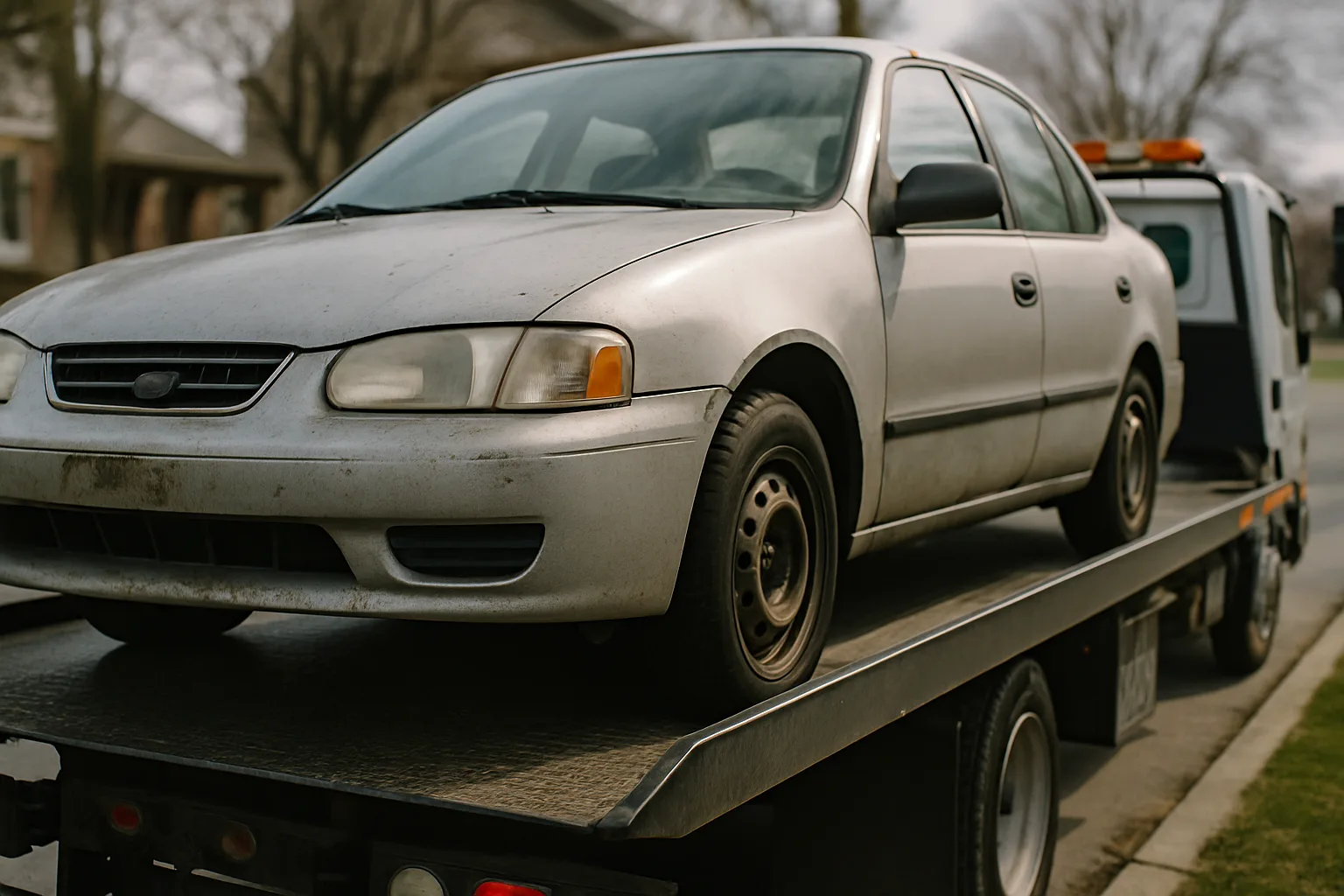
What Happens to Your Car After Scrap Car Removal in Scarborough — Step by Step
Most people hand over their keys, pocket their cash, and never think about it again. But what actually happens to your car after it leaves your driveway? The answer is more organized — and more valuable — than most people expect. Understanding the process can also help you make smarter decisions when it's time to sell your car for cash across Canada.
Whether you're dealing with a rusted-out pickup in Scarborough or a flood-damaged sedan sitting in a parking lot, the recycling pipeline is the same. Here's exactly what happens, from the moment the tow truck pulls away to the day your old car becomes new steel.
Step 1 — The Vehicle Gets Assessed and Catalogued at the Yard
The first stop is the auto recycling yard. Before anything gets touched, the car goes through intake. A yard tech documents the make, model, year, and VIN. This matters for two reasons: it establishes what parts the vehicle carries, and it creates a paper trail that protects everyone in the transaction.
In Ontario, recyclers are required to log vehicles properly — this is part of why legitimate junk car buyers near me Scarborough will always ask for ID at pickup. It's not bureaucracy for its own sake. It protects you from liability once the vehicle changes hands.
At this stage the yard also makes a rough call: is this car worth more parted out, or is it heading straight to the crusher? Higher-value vehicles — even older ones with working engines, transmissions, or low-rust body panels — often get flagged for dismantling first.
Step 2 — Fluids Are Drained and Hazardous Materials Are Removed
Before a single part comes off, trained depollution technicians drain every fluid from the vehicle. This is non-negotiable — regulated in every Canadian province, and for good reason.
Here's what gets extracted:
- Engine oil and transmission fluid — collected and sent to re-refining facilities
- Coolant (antifreeze) — recycled or neutralized
- Brake fluid and power steering fluid — collected separately
- Fuel — drained and either reused or disposed of according to provincial guidelines
- Refrigerant (Freon) — captured with certified equipment; venting it is illegal in Canada
- Battery acid — the battery is removed whole and sent to lead-acid recyclers
Airbag inflators are also removed at this stage. Modern airbags contain sodium azide or similar propellants — they need to be handled as hazardous materials, not crushed alongside scrap steel. Tires come off too. They're shredded for rubber crumb, used in playground surfaces, asphalt, and athletic fields.
This step is where environmental compliance happens. A yard cutting corners here isn't just breaking the law — it's contaminating soil and groundwater. Reputable recyclers in the Scarborough area and across Ontario take this seriously.
Step 3 — Usable Parts Are Pulled and Inventoried for Resale
Once the car is clean and safe, the dismantling begins. Skilled parts pullers work methodically — catalytic converters (cats) come off first because of their precious metal content (platinum, palladium, rhodium). Then engines, transmissions, alternators, starters, doors, hoods, fenders, and glass.
Parts get graded, photographed, and entered into inventory. Many larger yards now use digital cataloguing systems so buyers can search online for the exact part they need. This is the point where your old Civic or F-150 starts paying dividends — a working transmission from a high-demand vehicle can be worth several hundred dollars on its own.
This is also where the B2B side of the scrap industry kicks in. Cores (rebuildable parts like alternators, starters, and brake calipers) get sorted and sold to remanufacturers. Non-ferrous metals — copper wiring harnesses, aluminum radiators, brass fittings — go to specialty buyers who pay by the pound based on current commodity prices.
Platforms like SMASH operate in exactly this space. Rather than a yard calling one contact and hoping for a fair price on a load of non-ferrous material, find the best price for your scrap in Canada through a competitive auction format where vetted buyers actually compete. More competition means better price discovery — that's not hype, it's just how markets work.
Step 4 — The Remaining Shell Gets Crushed and Processed
After everything valuable is stripped out, what's left is the bare metal shell — body panels, frame, and whatever structural steel remains. This goes to the crusher.
Modern auto shredders are massive industrial machines. They can process a full vehicle body in seconds, reducing it to fist-sized chunks of mixed metal called shredder fluff or auto shred. That material then goes through a separation process:
- Magnets pull out ferrous steel — the largest portion by weight, sold to steel mills as scrap feedstock
- Eddy current separators eject non-ferrous metals — aluminum, copper, and zinc fall out separately
- Sensor-based sorters identify specific alloys for higher-value streams
- Residual fluff (foam, plastic, rubber, glass) goes to landfill or, increasingly, to energy recovery
The steel that comes out of this process feeds electric arc furnaces at steel mills across North America. Your car's body panels could end up as rebar in a building, a new appliance, or even parts for another vehicle. The recycling loop is real and it's efficient — modern auto recycling recovers over 80% of a vehicle's material weight.
What About Cars with No Title? Here's What Actually Happens
A lot of people hesitate to call a junk car buyer because they've lost the title or never had one transferred properly. It's one of the most common questions in the scrap car business — and the answer depends on province and situation, but it's usually not a dealbreaker.
If you're looking to sell car for scrap no title, here's the honest breakdown:
- In most Canadian provinces, a recycler can accept a vehicle with alternative proof of ownership — registration documents, insurance records, or a statutory declaration
- The VIN still gets logged and checked against stolen vehicle databases regardless of title status
- Some yards charge a small documentation fee for no-title transactions; others don't
- If the car is in your name and you can prove it, title issues rarely block the transaction
The best move is to call ahead and ask exactly what your buyer requires. Don't assume the deal is dead because the paperwork isn't perfect. Legitimate junk car buyers near me Scarborough deal with title situations regularly — it's part of the job.
For context, search terms like cash for cars no title Portland OR reflect the same reality south of the border — buyers everywhere have figured out how to handle these situations legally. Canada is no different. If the car is genuinely yours, someone will buy it.
How SMASH Connects the Dots for Recyclers Selling the Material
Once your car has been processed, the yard's job shifts from intake to sales. They're now holding pallets of cats, bins of copper wire, bales of aluminum, and loads of shredded steel. Selling that material at the right price is a business unto itself.
This is exactly where SMASH — a B2B scrap metal marketplace — comes in. Yards that used to call the same two or three buyers every week are now putting loads up for competitive auction. Vetted buyers across North America bid. The yard sees real market pricing in real time, not whatever one buyer felt like offering that morning.
SMASH handles inventory documentation, photo uploads, VIN and serial tracking, BOLs, packing lists, and auto-invoicing — the administrative weight that slows yards down. For sellers, there are no subscription fees. SMASH only wins when the seller does.
If you're a yard operator in Ontario or anywhere across Canada, read Canadian car selling guides that break down how the scrap pipeline works from consumer sale to commodity sale — so you can make smarter decisions at every step.
Making the Most of Your Scrap Car Before It's Gone
If you're preparing to hand your vehicle over for scrap car removal Scarborough-area service, there are a few things worth doing first:
- Remove personal belongings — check under seats, in the trunk, and in door pockets
- Cancel your insurance — the day it's picked up, not after
- Remove your plates — in Ontario, plates belong to the owner, not the vehicle
- Take photos of the odometer and VIN for your records
- Get your quote in writing — a reputable buyer will confirm the offer before arrival
And if you want to know what your car is actually worth before you call anyone, get a free car valuation to understand the market before you negotiate. Walking in informed is always better than guessing.
Ready to move it? Sell your car for cash across Canada — whether you're in Scarborough, Calgary, Halifax, or anywhere in between, cashforcars-canada.ca connects you with buyers who are ready to make an offer. No runaround. No lowball calls. Just a straightforward process from pickup to payment.
Frequently Asked Questions
Q: How long does scrap car removal in Scarborough usually take?
Most pickups are scheduled within 24 to 48 hours of accepting an offer. In Scarborough and the broader Ontario market, same-day service is often available depending on the yard's capacity and your location. Once the truck arrives, the actual removal takes under 30 minutes in most cases.
Q: Do I need a title to sell my scrap car in Ontario?
Not always. Many junk car buyers in Scarborough and across Ontario will accept a vehicle with valid registration, proof of insurance, or a statutory declaration in place of a title. Call ahead to confirm what your specific buyer requires — the rules vary slightly by situation, but missing paperwork rarely kills the deal.
Q: What's the difference between what a recycler pays me and what the scrap is actually worth?
The yard pays you based on current scrap metal prices minus their costs — towing, processing, labour, and margin. They then sell the processed material to smelters and commodity buyers, sometimes through platforms like SMASH where competitive bidding helps reveal the real market price. Both transactions are fair when the process is transparent.
Q: Can I sell a car with no engine or missing parts for scrap in Scarborough?
Yes. A car missing an engine or major components still has value as scrap steel, and may still have usable parts remaining. The offer will reflect the condition — expect less than a complete vehicle — but legitimate junk car buyers near Scarborough regularly purchase incomplete vehicles. Be upfront about what's missing so the quote is accurate.
Q: Does the recycler handle the paperwork after pickup, or do I?
In Ontario, once the sale is complete the recycler is responsible for deregistering the vehicle with the Ministry of Transportation. You should still cancel your insurance and return or transfer your plates. Keep a copy of any bill of sale or receipt for your records — it confirms you're no longer the registered owner.
Follow SMASH on LinkedIn for real industry updates, scrap metal market insights, and news from the B2B recycling world: linkedin.com/company/scrap-metal-auction-sales-hub