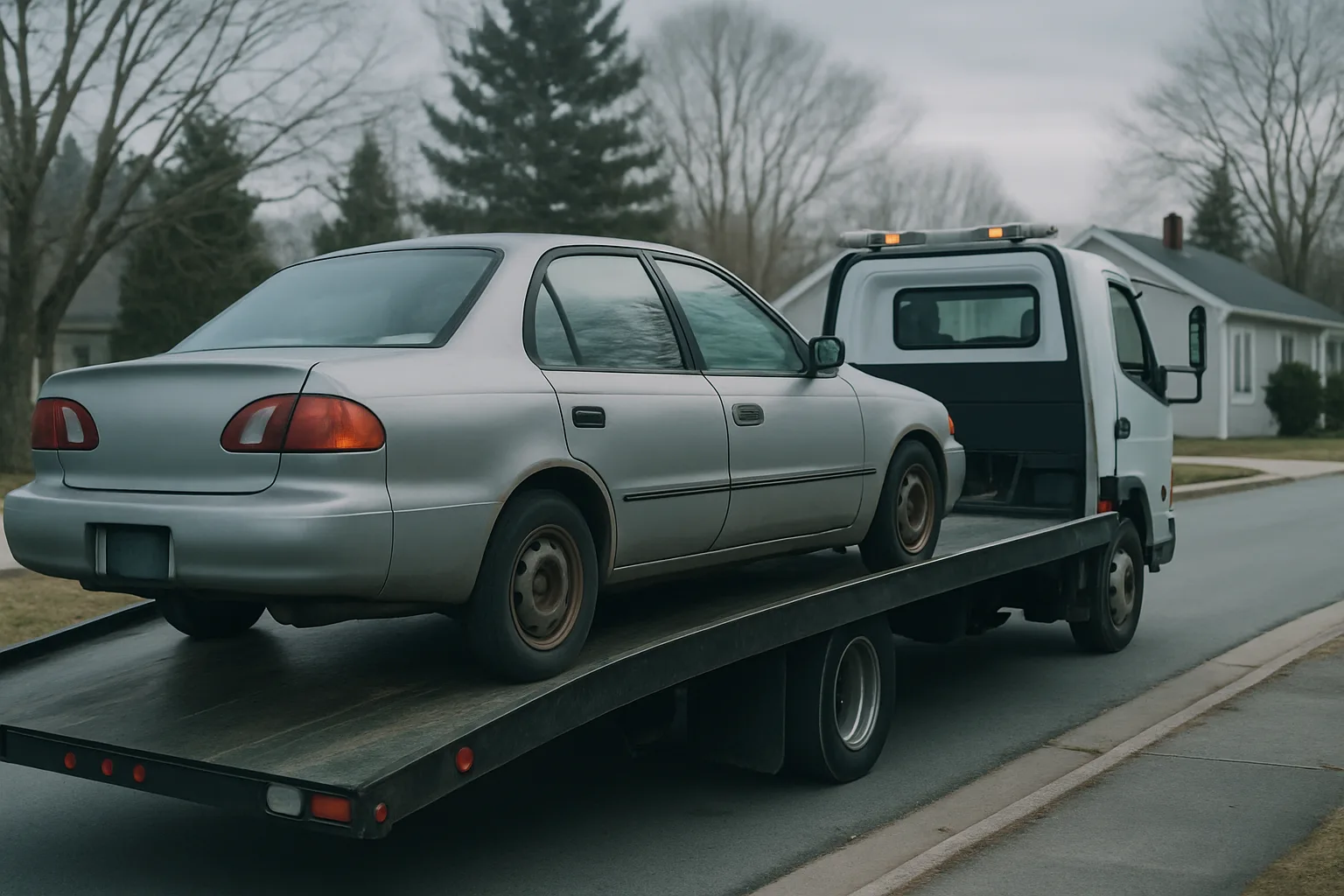
Most people think selling their scrap car is the finish line. It's not. The moment your vehicle leaves the driveway, you're still paying for insurance — unless you cancel it. That oversight costs Canadian car owners real money every month, and it's completely avoidable.
If you're ready to sell your car for cash across Canada, this guide walks you through exactly what to do after the sale. We'll cover when to cancel, how to cancel, what documentation you need, and how to avoid common mistakes that could leave you paying for coverage on a car that no longer exists.
Why Cancelling Your Insurance After Scrapping a Vehicle Actually Matters
Insurance doesn't cancel itself. Once your junk car is hauled away — whether you scrapped it in Dartmouth, Nova Scotia, sold it to a salvage yard in Calgary, or handed it off to a junk car buyer anywhere across Canada — your policy stays active until you tell your insurer otherwise. That means daily or monthly premiums continuing to drain your account for zero coverage you'll ever use.
Beyond the direct cost, there's a secondary issue: timing matters for your refund. Most Canadian insurers charge a short-rate cancellation fee if you cancel mid-term — meaning you won't get back 100% of your unused premium. The sooner you call after the sale, the more you recover. Waiting even two weeks can cost you a meaningful portion of your refund, depending on your insurer and province.
There's also a liability angle. Until your name is off the policy and the vehicle is officially deregistered in your province, complications can arise if the car is somehow involved in an incident during transport or at the yard. Protecting yourself means closing this loop fast.
What to Do Before You Cancel — Get Your Paperwork in Order
Before you call your broker or insurer, gather the documentation that proves the vehicle is gone. Insurers want to see confirmation that you no longer own the car — not just your word for it. The exact documents vary by province, but here's what typically covers you across Canada:
- Bill of sale or receipt from the buyer — Any reputable cash for cars service or scrap yard will provide this. Keep a copy.
- Plate surrender confirmation — In most provinces, you return your plates to your provincial registry before or when you cancel registration. Nova Scotia requires you to surrender plates to Access Nova Scotia before cancelling your registration.
- Deregistration confirmation — Proof that the vehicle is no longer registered in your name. This is the paper that matters most to your insurer.
- Salvage title or transfer documentation — If your car was issued a salvage designation or ownership was formally transferred to a buyer, keep that paperwork.
- Vehicle identification (VIN) — Have your VIN handy. Your insurer will reference it on your policy.
If you sold a car with cash for cars no title no registration arrangements — which some buyers do accept — you'll want to document the sale even more carefully. A signed bill of sale with the buyer's information, the agreed price, and the vehicle description protects you if questions arise later.
How to Cancel Your Car Insurance Step by Step
The process isn't complicated, but it does require you to be deliberate. Here's how to do it cleanly.
- Notify your insurer or broker immediately after the sale. Don't wait until your next renewal date. Call the day the car leaves — or the next business day at the latest. In Dartmouth and across Nova Scotia, most major insurers have phone lines and online portals available five days a week.
- Request written confirmation of cancellation. A verbal confirmation isn't enough. Ask for an email or letter confirming the policy is cancelled, the effective date of cancellation, and the refund amount you're owed.
- Ask about the refund calculation method. Pro-rata cancellation means you get back the exact unused portion. Short-rate means the insurer keeps a percentage as a cancellation fee. Know which applies to your policy before you're surprised by the number.
- Update or cancel your financing or leasing insurer if applicable. If you had a lien on the vehicle, the lienholder was likely named on your policy. Once the car is scrapped and the loan settled, notify the lender as well.
- Check your automatic payments. Cancel any pre-authorized debit or credit card charges tied to your insurance premium. Insurers don't always stop these immediately, and disputes after the fact are frustrating.
- Keep all documentation for at least one year. In the unlikely event of a dispute — an unpaid claim, a registration issue, or a billing error — having your paper trail saves you.
If you're uncertain about the process in your province, read Canadian car selling guides that break down regional requirements from coast to coast.
Selling a Junk Car in Dartmouth — What Local Sellers Should Know
Dartmouth sits right across the harbour from Halifax, and the scrap and salvage market in the Halifax Regional Municipality is active. Whether your car is a blown-engine sedan rusting in your driveway or a high-mileage pickup that finally gave out, junk car buyers near me for cash are accessible across Dartmouth and the surrounding Nova Scotia area.
When you use a service focused on legitimate vehicle purchasing, the paperwork moves faster. Reputable buyers provide a bill of sale on the spot, which is exactly what you need to start your insurance cancellation process. The faster you get that document, the faster you can call your insurer and stop the premium clock.
One thing Dartmouth sellers sometimes overlook: Nova Scotia requires you to remove your license plates before the vehicle is towed or driven to a yard. Plates belong to you, not the vehicle. Return them to Access Nova Scotia to formally cancel your registration — this step is required before your insurer can process the cancellation correctly.
Platforms like SMASH help connect sellers with vetted, serious buyers — which means less back-and-forth, better price discovery, and a cleaner transaction from start to finish. When the buyer is legitimate, the paperwork is legitimate, and that protects you down the line.
What Happens to Your Scrap Car's Value — And Why Documentation Matters
When you get a free car valuation before selling, you're doing more than confirming a price. You're also establishing a documented record of the transaction. Buyers who offer cash and skip documentation entirely are cutting corners — and those corners usually come back to bite the seller, not the buyer.
Documented sales matter for scrap metal inventory management too. At the yard level, every vehicle that comes in needs to be tracked — its condition, its weight, its components, its VIN. This isn't just administrative housekeeping. It's how legitimate buyers operate, and it's how tools like the SMASH Recycling auction platform create a transparent, competitive market for scrap and salvage vehicles across North America.
For the seller, a documented transaction means:
- You can prove you no longer own the vehicle
- You can cancel your insurance with confidence
- You won't be liable if the vehicle is later associated with any incident
- Your provincial deregistration goes smoothly
The scrap value of a vehicle depends on its weight, the current scrap metal market, and what salvageable components it carries. Prices fluctuate with commodity markets — always confirm current rates directly with buyers before agreeing to a sale.
Common Mistakes Sellers Make After Scrapping a Car
Most post-sale problems come from the same handful of mistakes. Knowing them in advance keeps you out of trouble.
Waiting to cancel insurance. Every day you delay costs you money. Some sellers intend to cancel "this week" and end up paying another full month. Call the same day if you can.
Not getting a receipt from the buyer. Verbal agreements aren't enough. If you sell my junk car Dartmouth and hand over the car without a receipt, you have no documentation for your insurer, your provincial registry, or anyone else who asks questions later.
Forgetting to remove plates. In Nova Scotia and most other provinces, plates are your property. Leaving them on the vehicle is a liability — they're tied to your registration and, by extension, to you.
Assuming the buyer handles everything. Some full-service buyers do assist with paperwork, but ultimately the deregistration and insurance cancellation are your responsibility. Don't assume it's handled until you have written confirmation.
Selling to an unvetted buyer for a slightly higher number. An extra fifty dollars isn't worth the paperwork headache that follows an unverified transaction. SMASH operates with a vetted buyer network for exactly this reason — the transaction is clean, and the documentation follows.
Frequently Asked Questions
Q: Can I cancel my insurance the same day I sell my car for cash in Dartmouth?
Yes, and you should try to. As soon as you have a bill of sale or receipt from the buyer, call your insurer. Same-day cancellation is possible with most Canadian insurers. The sooner you cancel, the more of your unused premium you recover. In Nova Scotia, you'll also want to visit Access Nova Scotia to surrender your plates and cancel your registration.
Q: What if I sell my junk car in Dartmouth but don't have the original title?
Some junk car buyers accept vehicles without a clean title — especially scrap-bound vehicles. However, you'll still need to prove ownership transfer to cancel your insurance properly. A signed bill of sale and any registration documents you do have will typically satisfy your insurer and provincial registry. Always confirm what documentation your buyer will provide before the sale.
Q: Will I get a refund on my insurance when I cancel after scrapping my vehicle?
Usually yes, if you have prepaid premiums remaining. The refund amount depends on whether your insurer uses pro-rata or short-rate cancellation. Pro-rata returns the exact unused portion; short-rate deducts a fee. Ask your insurer which method applies before you cancel so you know what to expect.
Q: Does selling a car with cash for cars no title no registration affect my insurance cancellation?
It can complicate things. Without a formal title transfer, your insurer may require additional documentation to confirm you no longer own the vehicle. A detailed bill of sale — signed by both parties, with the vehicle's VIN, description, and sale price — is essential in this situation. Keep your copy in a safe place for at least a year.
Q: How do junk car buyers near me for cash verify my vehicle before making an offer?
Reputable buyers will assess the vehicle's make, model, year, condition, and approximate weight. VIN verification is standard practice at any legitimate yard. Platforms like SMASH use serial tracking and photo documentation to create accurate inventory records, which supports competitive pricing and clean transactions for both the seller and the buyer.
---Scrapping your car is straightforward. Cleaning up the paperwork after the fact is where most people lose time and money. Get your receipt, surrender your plates, cancel your registration, and call your insurer — in that order. If you're ready to move, sell your car for cash across Canada and get the process started today at cashforcars-canada.ca.
Follow SMASH on LinkedIn for scrap metal market updates, industry insights, and news relevant to yards and sellers across North America.