Most people use "junkyard," "salvage yard," and "auto recycler" like they mean the same thing. They don't — and if you're trying to sell scrap car Charlottetown, knowing the difference could mean more money in your pocket and fewer headaches along the way.
These three types of operations look similar from the outside. They all deal in end-of-life vehicles. But how they buy, how they price, and what they do with your car varies significantly. If you're a car owner in Prince Edward Island trying to get rid of an old vehicle, you need to know which type of buyer you're actually dealing with.
Let's break it down plainly.
What Is a Junkyard — and What Are You Actually Selling To?
The word "junkyard" is mostly slang, but it refers to a specific type of operation: a facility that takes in wrecked, worn-out, or unwanted vehicles primarily to crush and sell the metal. These are scrap-focused businesses. They care about your car's weight, not its parts. A 2009 Honda Civic and a 2014 Ford F-150 are both just metal to them — the difference is how much they weigh.
Junkyards typically pay based on the current scrap metal market rate, applied to the vehicle's estimated weight. That rate fluctuates constantly depending on steel and non-ferrous commodity prices. Don't let anyone tell you there's a fixed price per vehicle — there isn't. Rates vary by region, by week, and sometimes by day.
For car owners in Charlottetown looking to offload a vehicle that's truly done — not running, structurally compromised, or missing major components — a junkyard-style buyer is often the most realistic option. The car becomes a commodity. The goal is volume and weight, not resale value.
Salvage Yards: Where Working Parts Have Real Value
A salvage yard (also called a auto dismantler in some provinces) operates differently. These businesses pull usable parts from vehicles before crushing what's left. A car that a junkyard sees as 1,400 kg of steel, a salvage yard sees as a transmission, a set of doors, a catalytic converter, an engine block, and then steel.
This distinction matters if you're selling a vehicle that has working components. A salvage yard may pay you more than a pure junkyard because they're buying the parts value embedded in the car — not just the scrap weight. However, the gap in payout depends entirely on the vehicle's make, model, year, and which parts are in demand. A 2015 Toyota Camry with a functional drivetrain is worth more at a salvage yard than at a scrap-only operation.
The catch? Salvage yards are selective. They don't want everything. If your vehicle is already stripped, flood-damaged beyond part usability, or has zero demand in their resale market, they'll offer you scrap weight pricing anyway. Knowing which type of operation to approach first saves you time and multiple phone calls.
- Catalytic converters: High-value non-ferrous cores — salvage yards track these closely
- Engines and transmissions: Big-ticket items if they're running
- Body panels and glass: Valuable on common models with high accident rates
- Wheels and tires: Move fast in the used parts market
- Electronics: ECUs, infotainment modules — increasingly valuable on newer vehicles
If you want to sell your car for cash across Canada, understanding this parts-versus-metal distinction helps you set realistic expectations before you make the first call.
Auto Recyclers: The Professional Operation Behind the Industry
Auto recyclers are the most regulated and process-driven of the three. In many Canadian provinces, the term "auto recycler" is the official industry designation — the business model that provincial regulators actually license and govern. These operations combine elements of both junkyards and salvage yards, but with documented processes, environmental compliance, and often digital inventory systems.
A certified auto recycler in Prince Edward Island or elsewhere in Canada is required to:
- Properly drain and dispose of automotive fluids (oil, coolant, brake fluid, refrigerants)
- Handle battery disposal according to provincial environmental standards
- Maintain records of acquired vehicles including VINs
- In some provinces, report end-of-life vehicle data to transport authorities
This documentation matters for you as a seller. A legitimate auto recycler will provide a proper bill of sale or transfer document. That protects you from future liability if the vehicle is later flagged for anything. If you're in Charlottetown and a buyer wants to pick up your car without any paperwork, that's a red flag — not a convenience.
Platforms like SMASH work naturally with auto recyclers and vetted scrap buyers because these are the operators who care about documentation, proper vehicle valuation, and competitive bidding. Fly-by-night operations don't fit that model. SMASH Recycling — where verified buyers bid on your metal — is built for the professional tier of this industry.
Why This Matters When You're Selling a Scrap Car in Charlottetown
Charlottetown is a smaller market. That has real implications when you're trying to sell a scrap vehicle. Fewer local buyers means less natural competition. When there's only one or two operations willing to take your car, they don't have much incentive to offer top dollar. You're the one calling them. You're the one without leverage.
That's the old way. One call. One offer. Take it or leave it.
The problem isn't the type of buyer — junkyard, salvage, or recycler. The problem is the lack of competition. Any one of these three operations will price lower when they know you have nowhere else to go. More buyers in the room changes that dynamic entirely. It doesn't matter whether you're selling a running 2018 pickup or a rusted-out 2009 sedan that hasn't moved in two years — competition reveals the actual market value.
This is exactly why a scrap metal auction platform approach works better for sellers. Instead of calling one buyer and accepting whatever they say, your vehicle gets in front of multiple vetted buyers who have to compete for it. The price emerges from actual demand — not from a single buyer's best guess at what you'll accept.
SMASH operates on this principle. No subscription fees. No hidden charges. We only make money when the seller does. If you're curious how that plays out in practice, read Canadian car selling guides that walk through the process step by step.
Free Scrap Car Pickup Charlottetown: What to Actually Expect
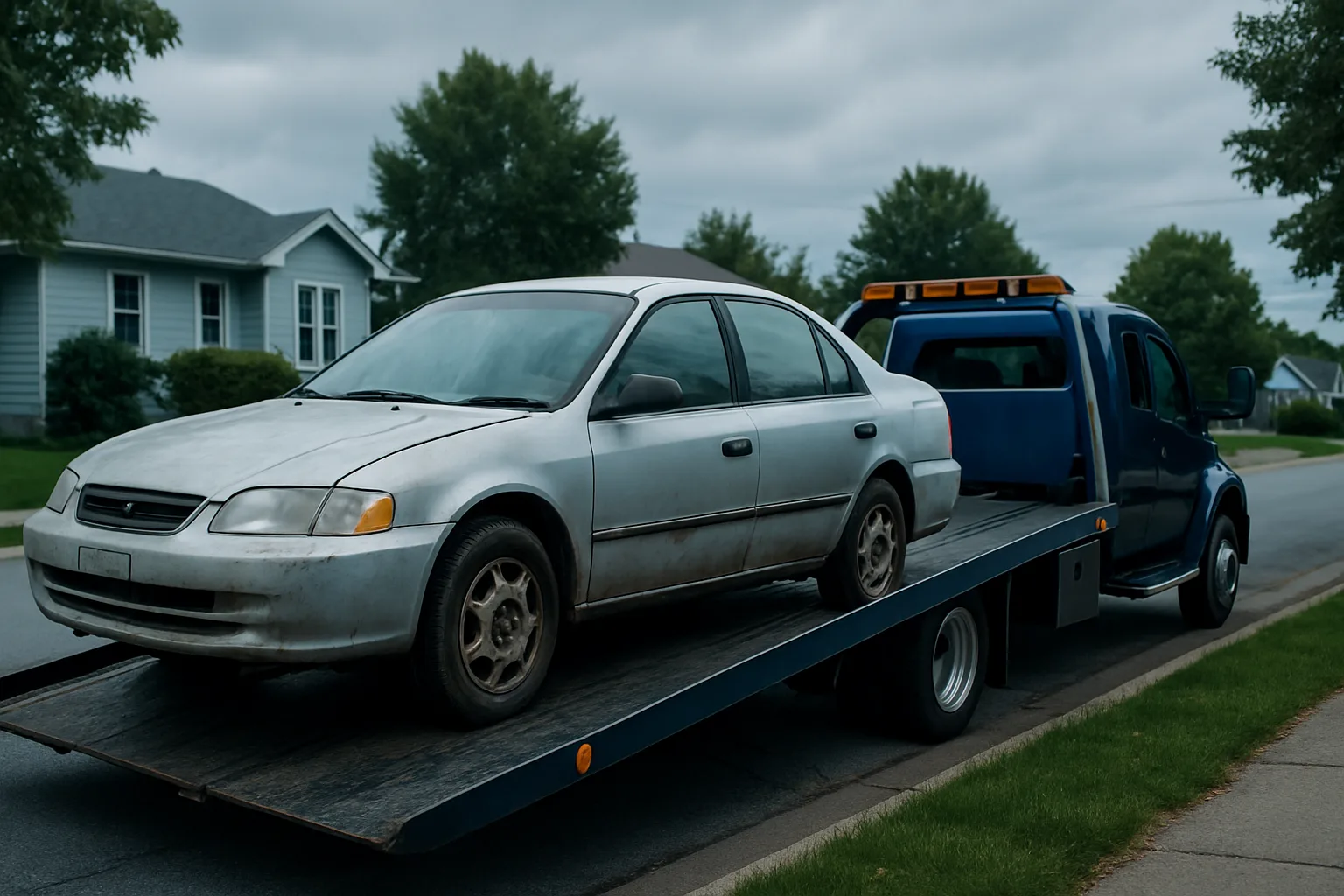
You've probably seen ads promising free scrap car pickup Charlottetown. That part is usually legitimate — most scrap buyers in PEI will tow your vehicle at no cost if they're buying it. The towing is factored into their offer, not added as a fee afterward. But "free pickup" doesn't automatically mean a fair offer.
Here's what to watch for when a buyer offers free pickup:
- Lowball offer, then price drop on arrival: A buyer quotes one number on the phone, then finds reasons to drop it once they see the car in person. This is common and frustrating. Document your car's condition with photos before anyone arrives.
- No paperwork at time of pickup: You need a signed transfer document. If a buyer wants to tow your car and sort out the paperwork later, that's a problem.
- Cash payment only with no receipt: A paper trail protects you. Insist on a receipt or transfer record, even for a small transaction.
- No VIN verification: A legitimate buyer will confirm the VIN matches the vehicle. If they skip this step, ask why.
Getting a quote through a platform where buyers compete — rather than accepting the first offer from whoever picks up the phone — gives you a realistic baseline before anyone shows up at your door. Get a free car valuation before you commit to any pickup.
The Title Question: What If You Don't Have One?
One of the most common search terms in this space is junk car buyers near me for cash no title — because a lot of people have lost the title to an old vehicle, especially one that's been sitting for years. This is a real situation, not an edge case.
In most Canadian provinces, selling a vehicle without a title (ownership document) requires additional steps. You may need to:
- Apply for a replacement ownership through your provincial transport authority
- Provide a statutory declaration confirming ownership
- Have the buyer run a VIN history check to confirm no liens or outstanding issues
Some scrap buyers will work with you on a no-title vehicle, especially if it's clearly end-of-life and the VIN is verifiable. But going through a platform with documented processes — rather than a cash-only operator with no paperwork — is safer for everyone. It also keeps you clear of any future liability tied to the vehicle.
If you're searching for junk car buying near me and you're in PEI without a title, contact the seller network through SMASH. Vetted buyers know how to navigate these situations properly, province by province.
Frequently Asked Questions
Q: What's the fastest way to sell a scrap car in Charlottetown?
The fastest legitimate route is to get your vehicle's details in front of multiple buyers at once rather than calling one at a time. Platforms that connect sellers with vetted buyers — like SMASH — can move the process significantly faster than cold-calling individual junkyards. Most pickups can be arranged within a few business days once a deal is confirmed.
Q: Do I need to have a title to sell a scrap car in Prince Edward Island?
Ideally, yes — having your vehicle ownership document makes the transaction smoother and protects you legally. If you've lost it, you can apply for a replacement through Access PEI. Some buyers will work with a statutory declaration for clearly end-of-life vehicles, but confirm the process with your buyer before pickup day.
Q: Is free scrap car pickup in Charlottetown actually free?
In most cases, yes — the towing cost is absorbed by the buyer and built into their offer, not charged to you separately. However, "free pickup" doesn't guarantee a fair price. Always get your offer confirmed in writing before the tow truck shows up.
Q: What's the difference between calling a junkyard directly and using a scrap metal auction platform?
Calling a junkyard directly gives you one offer from one buyer with no competitive pressure. A scrap metal auction platform puts your vehicle in front of multiple vetted buyers who compete for it — which can result in better price discovery. SMASH operates on this model, with no subscription fees and full transparency throughout the process.
Q: Can I sell a non-running car in Charlottetown for cash?
Yes. Non-running vehicles are sold for scrap every day. The key factors are the vehicle's weight, the current scrap metal market rate, and whether any parts still hold resale value. A legitimate buyer will assess all of this and make an offer based on real market conditions — not a guess. Get more than one offer before you commit.
Whether you're dealing with a rusted-out pickup that's been sitting since 2021, or a newer vehicle with significant damage that isn't worth repairing, understanding what type of buyer you're actually talking to makes a real difference. Junkyards, salvage yards, and auto recyclers each have a role — and knowing which one fits your situation saves you time and money. If you're ready to move forward, sell your car for cash across Canada — get a free quote at cashforcars-canada.ca. No pressure, no obligation, just a real number based on your actual vehicle.
Stay current on scrap metal market trends and industry news by following SMASH on LinkedIn — practical insights for sellers and buyers across the industry.
```