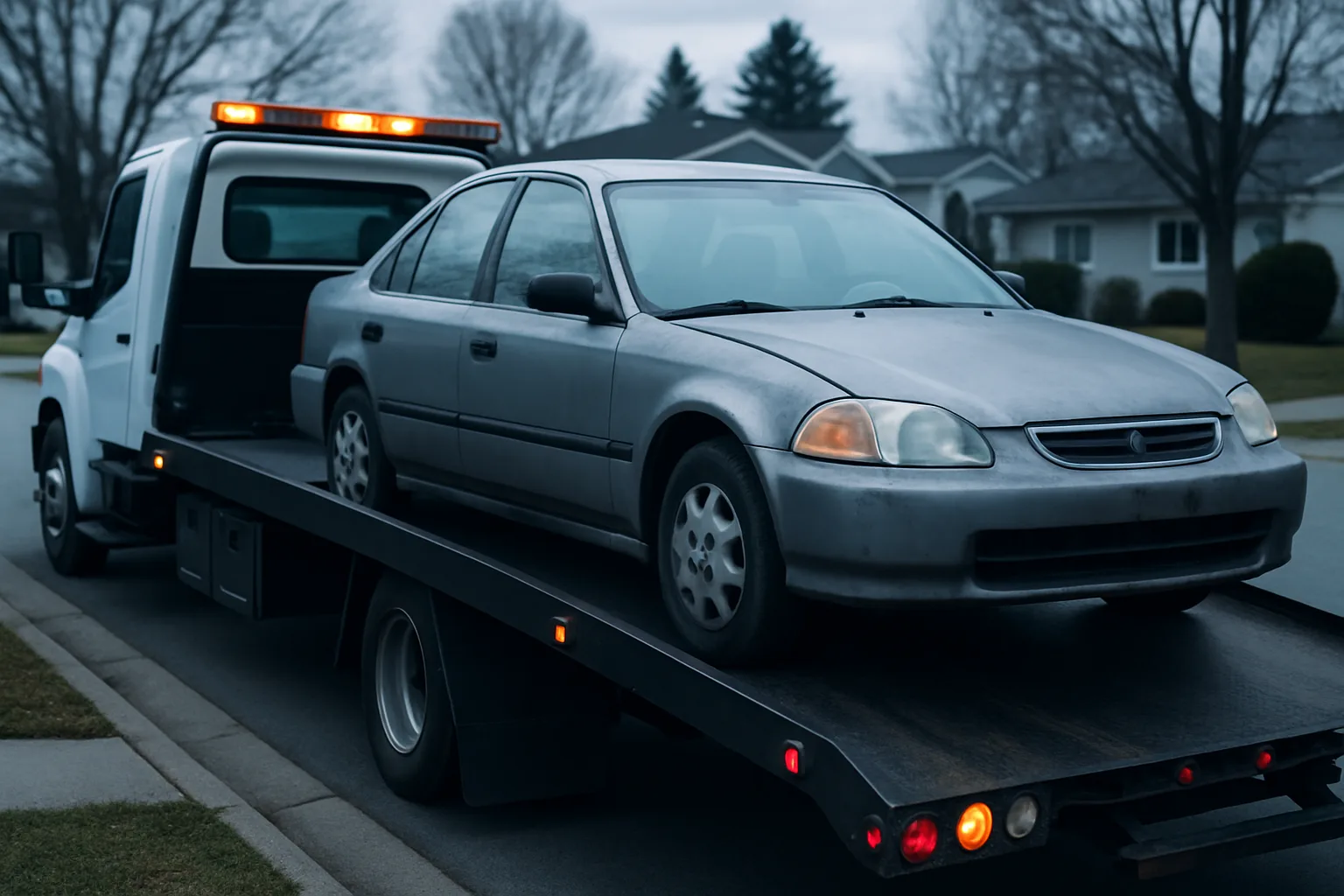
Your scrap car sitting in the driveway isn't worth the same in February as it is in May. Most people don't know that — and it costs them money.
If you're trying to sell my car for cash Halifax, timing matters more than you'd think. Scrap car prices move with global metal markets, but they also shift with the seasons. Weather patterns, regional demand, road conditions, and buyer behaviour all play a role. Understanding those cycles puts more money in your pocket.
This guide breaks down exactly how weather and seasonal patterns affect what you get for a scrap vehicle — and what you can do to work the cycle instead of fighting it. Whether you're sitting on a rusted-out half-ton in Dartmouth or a flood-damaged sedan in the Annapolis Valley, the timing of your sale matters.
Want to get a free car valuation before you commit? Smart move. Knowing the number puts you in control.
Why Scrap Car Prices Don't Stay Flat Year-Round
Scrap metal is a commodity. Like oil, lumber, or grain — it trades on supply and demand. Steel mills and processors adjust what they'll pay for shredder feedstock based on what they need, how full their yards are, and what finished steel is selling for. Those conditions change constantly.
But layered on top of global market forces are seasonal patterns that repeat themselves year after year. Recycling yards in Canada — including those serving Halifax and the broader Nova Scotia market — see predictable swings in vehicle supply and buyer demand depending on the time of year. Some of those swings are tied to weather. Some are tied to the calendar. Most are tied to both.
The result: a car worth $400 in January might net you $550 in April. Same car. Same condition. Different timing.
Season-by-Season Breakdown: What Happens to Scrap Car Prices
Here's a direct look at how each season typically affects the market for scrap vehicles in Canada, with specific relevance to Atlantic Canada and the Halifax region.
Winter (December – February): High Supply, Compressed Prices
Winter is the toughest season to get top dollar for a scrap car. Here's why: salt, cold, and potholes accelerate vehicle deterioration, which means a flood of older cars die in January and February. More supply hitting yards at the same time puts downward pressure on what buyers will pay per unit.
In Nova Scotia specifically, winter road conditions are brutal. Salt exposure on coastal routes around Halifax chews through frames, floor pans, and fuel lines. Cars that were marginal in October are undriveable by February — and their owners all call for pickup at the same time.
- Yard capacity fills quickly in hard winters
- Metal markets often dip in Q1 due to slower construction demand
- Towing and removal gets more expensive (weather delays, road conditions)
- Buyers have leverage — there's no shortage of inventory
That doesn't mean you shouldn't sell in winter. If the car is done, get it gone. But if you have flexibility, holding a few weeks into spring can make a measurable difference.
Spring (March – May): The Best Window to Sell
Spring is consistently the strongest period for scrap car sellers. Construction activity ramps up, steel demand rises, and metal processors start restocking. Buyers are hungry for feedstock. At the same time, vehicle supply stabilizes — the winter rush has passed.
For Halifax sellers, spring also brings another factor: pre-summer vehicle turnover. People who've been driving winter beaters decide to upgrade. Insurance renewals come due. Inspection stickers expire. A lot of vehicles get evaluated for trade-in or scrap at the same time — but buyers are also more active, so the competition for inventory works in your favour.
- Steel prices historically trend higher April through June
- More active buyers competing for available vehicles
- Yards have more room after winter disposal volume clears
- Longer days and better weather make logistics faster and cheaper
If you can time your sale for late March through May, you're likely hitting the best window of the year. Platforms like SMASH help you reach multiple vetted buyers at once — which matters even more when the market is hot and you want competition working in your corner.
Summer (June – August): Stable but Watch the Heat
Summer is generally a stable period for scrap metal prices. Construction is in full swing, manufacturing is active, and demand for processed steel stays consistent. Vehicle supply is lower than winter or spring — fewer cars dying from road salt or failed inspections.
The risk in summer is complacency. Prices feel steady, so sellers don't rush — which is fine. But prolonged heat can accelerate fluid degradation in stored vehicles, and a car sitting on a gravel lot through a hot Maritime summer can lose recoverable parts value if you're not monitoring it.
Summer is also when scrapping a car as part of a seasonal vehicle swap is common. Cottages get sold. RVs replace sedans. People moving after the school year end up with one car too many. If that's your situation, summer timing is perfectly serviceable — just read Canadian car selling guides before you accept the first offer you get.
Fall (September – November): A Mixed Bag
Fall is unpredictable. September can still carry summer's strong pricing. But by October, construction slows, steel demand softens, and buyers start getting cautious heading into winter. Yard operators know they're about to deal with months of compressed margins, so they tighten what they'll pay.
In Halifax and across Atlantic Canada, fall also brings storm season. Vehicles damaged in nor'easters or flooding add unplanned supply to the market. If you're selling a flood-damaged car, fall timing can actually mean more competition for buyers — but don't expect premium pricing. Flood cars are graded differently and buyers know it.
The practical move: if your car is ready to go in September, sell it. Don't wait for October or November hoping for a bump. The trend in fall generally runs against you.
Halifax-Specific Factors That Affect Your Scrap Car Value
Halifax isn't the same as Calgary or Toronto. The local market has its own dynamics, and if you're trying to sell my junk car Halifax, these factors are worth understanding.
Salt exposure is severe. Proximity to the Atlantic means vehicles in Halifax and Nova Scotia face some of the harshest corrosion conditions in Canada. A 10-year-old car here often has more structural rust than a 15-year-old car from inland Alberta. Buyers price that in. The structural metal is still worth something as shredder feedstock, but don't expect parts-value pricing if the frame is gone.
Tidal flooding affects some vehicles. Low-lying areas around the harbour and the Dartmouth waterfront see periodic flooding events. Flood-damaged vehicles need to be declared accurately. Most reputable buyers will inspect and price accordingly.
Local buyer competition matters. Halifax has a smaller buyer pool than Montreal or Vancouver. That's exactly why using a B2B scrap metal marketplace like SMASH levels the playing field — it expands your reach to vetted buyers who compete for your load rather than leaving you dependent on whoever picks up the phone first.
Does Not Having a Title Affect Your Seasonal Timing?
If you're looking to sell car for scrap no title, the season doesn't change the documentation challenge — but it does affect your options. More buyers are active in spring, which means more flexibility in finding one that can work with your situation.
In Nova Scotia, vehicles without titles can often still be scrapped with alternative documentation — a registration, a statutory declaration, or proof of ownership through insurance records. Requirements vary by buyer and municipality. Don't assume a missing title kills the deal; ask the question directly and early.
Across Canada, rules differ by province. If you're selling outside Nova Scotia — say, in Ontario or Alberta — confirm the local requirements before you arrange pickup. Platforms that connect you with experienced, vetted buyers make that conversation easier because the buyers know the rules in their market.
How to Use Seasonal Timing to Get the Best Scrap Car Price
You can't always pick your timing. Sometimes the car dies and it needs to go. But when you do have flexibility, here's how to work the calendar:
- Target March–May if you can wait. Spring is consistently the strongest window for price discovery on scrap vehicles across Canada.
- Don't hold through winter hoping for a spring bump. A car sitting exposed through a Nova Scotia winter loses value fast. The holding cost often exceeds the seasonal gain.
- Get multiple quotes whenever possible. One buyer quoting you in January versus three buyers competing for your car in April is a completely different outcome. Sell your car for cash across Canada by reaching more buyers at once.
- Document your vehicle properly before listing. Photos, VIN, known condition issues — buyers who have complete information bid more confidently. That means better offers for you, regardless of season.
- Watch scrap metal index reports. Prices for shredded steel and non-ferrous metals are publicly tracked. A quick check before you list tells you whether you're in a high or low cycle.
- Use a platform that creates competition. SMASH connects scrap vehicle sellers with vetted buyers who bid on your inventory — so the market sets your price, not a single buyer's gut feel.
Disclaimer: Scrap metal and vehicle prices fluctuate based on global commodity markets, regional supply and demand, and vehicle condition. Always check current rates before committing to a sale.
Frequently Asked Questions
Q: When is the best time of year to sell my car for cash in Halifax?
Spring — roughly March through May — tends to be the strongest window. Steel demand rises with construction activity, buyer competition increases, and vehicle supply stabilizes after the winter surge. If you have flexibility on timing, targeting this window in Halifax gives you the best chance at stronger price discovery.
Q: Does the weather in Nova Scotia affect what my scrap car is worth?
Directly and indirectly. Atlantic weather accelerates corrosion due to road salt and coastal moisture, which affects the structural condition of your vehicle. Weather also influences buyer logistics — pickups during winter storms cost more and take longer. Both factors can affect the final number you're offered.
Q: Can I sell my junk car in Halifax without a title?
In many cases, yes. Nova Scotia buyers often accept alternative documentation such as a vehicle registration, insurance records, or a statutory declaration. Requirements vary by buyer, so confirm before you book a pickup. Using a platform that connects you with experienced buyers makes it easier to find one who can handle your specific situation.
Q: How do I find scrap car removal near me in Halifax?
Start by getting multiple quotes — not just one. Local yards are a starting point, but a broader marketplace like SMASH exposes your vehicle to more vetted buyers who compete for it. More competition typically means better price discovery. You can also explore Halifax scrap metal services for local options.
Q: Do scrap car prices in Halifax follow the same patterns as the rest of Canada?
Broadly yes, with regional differences. Halifax follows the national steel market cycle, but local factors — salt corrosion, storm season, smaller buyer pool — create some variation. Spring and early summer tend to be the strongest periods nationally, and that generally holds for Atlantic Canada as well.
If your vehicle is ready to go, don't leave money on the table by selling blind. Check where the market sits, document your car properly, and put it in front of buyers who compete — not just the first number someone gives you over the phone. When you're ready, sell your car for cash across Canada through a process built around transparency, not guesswork. Visit cashforcars-canada.ca for a free quote.
Stay current on scrap metal market trends and industry insights by following SMASH on LinkedIn — practical updates for sellers and buyers who want to stay ahead of the market. And visit smashrecycling.ca to learn how competitive auctions change the way scrap gets sold.