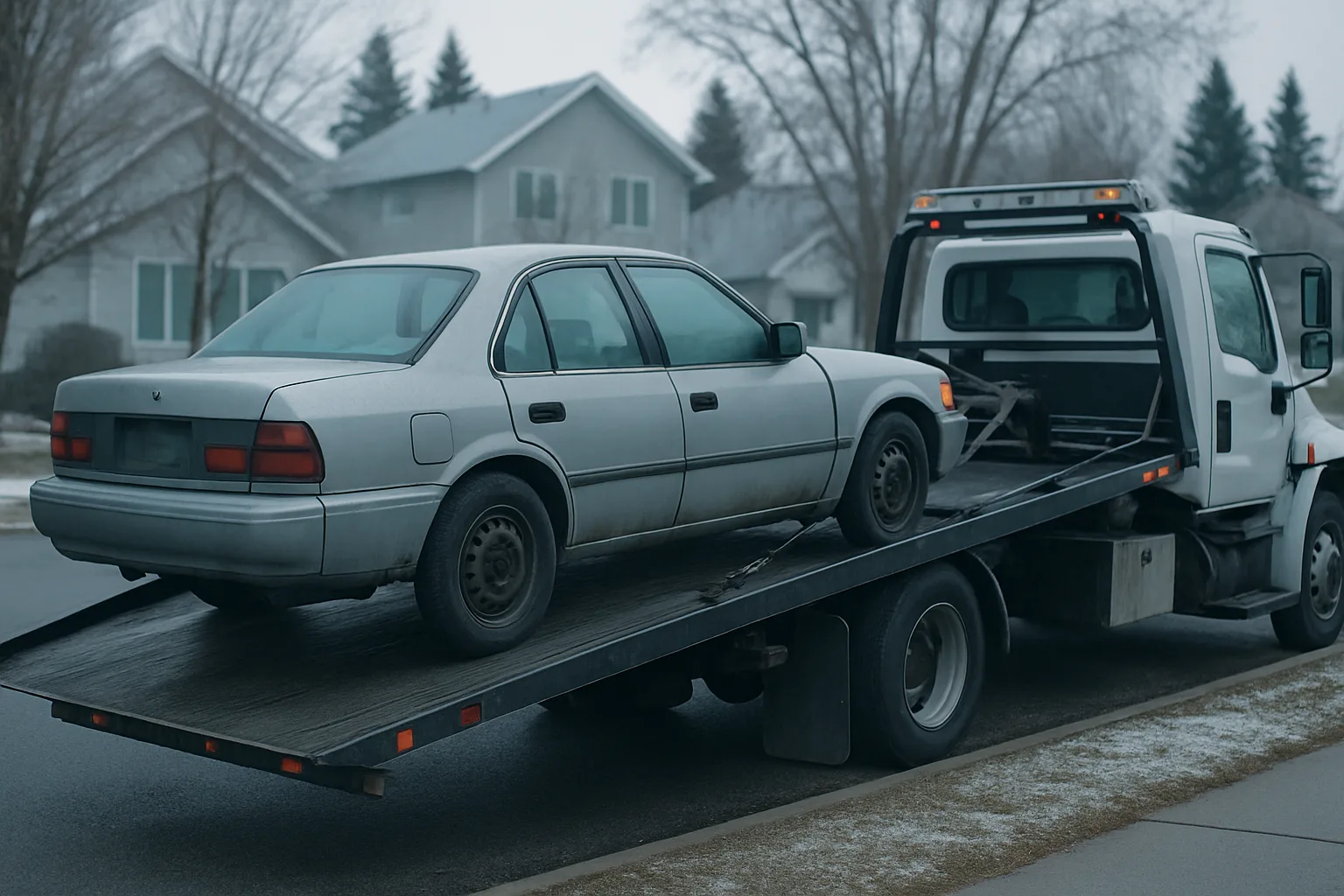
What Actually Happens to Your Junk Car After Pickup — And Why It Matters More Than Ever
Most people assume their old car gets crushed and that's the end of it. The reality is far more involved — and in 2026, far more regulated. If you're looking at junk car removal in Calgary, understanding what happens downstream isn't just interesting. It directly affects how much your vehicle is worth and who you should be selling it to.
Alberta's recycling and environmental standards have tightened considerably. Buyers who cut corners on fluid disposal, refrigerant recovery, and hazardous material handling are operating outside compliance — and that creates liability that can land on you as the original vehicle owner. Selling to a reputable junk car buyer isn't just about the best price. It's about doing it right.
The Eco-Friendly Car Disposal Process — Step by Step
A properly run vehicle recycling operation follows a strict sequence before a single piece of metal gets shredded. Here's what that looks like in practice:
- Depollution: Every vehicle must be drained of all hazardous fluids before dismantling. This includes engine oil, transmission fluid, brake fluid, power steering fluid, antifreeze, and fuel. These aren't just poured out — they're captured, catalogued, and sent to certified processors.
- Refrigerant recovery: Vehicles with functioning air conditioning systems contain refrigerants (typically R-134a or the newer R-1234yf) that are tightly controlled under federal environmental regulations. Certified technicians recover these using approved equipment — venting them into the atmosphere is illegal.
- Battery removal: Both traditional lead-acid batteries and lithium-ion packs from EVs and hybrids require separate handling. Lead-acid batteries are one of the most successfully recycled products on the planet — over 95% of the material gets recovered. EV battery packs are more complex and typically go to specialized facilities.
- Mercury switch removal: Older vehicles — generally pre-2003 — contain mercury switches in trunk lights and hood lamps. These are captured and sent to provincial mercury recycling programs.
- Tire and glass removal: Tires go to certified rubber recyclers. Glass, particularly laminated windshields, requires separation from metal before shredding.
- Parts harvesting: Before the shell goes to the crusher, usable components — engines, transmissions, doors, seats, electronics — get pulled and catalogued for resale. This extends vehicle life cycles and reduces demand for new manufactured parts.
- Shredding and metal separation: What's left goes through an industrial shredder. Ferrous and non-ferrous metals get sorted magnetically and by density. The output — steel, aluminum, copper, and other metals — goes to mills and foundries.
This process, done correctly, diverts the vast majority of a vehicle's mass from landfill. A modern car is roughly 75–80% recyclable by weight. The metals alone — steel, aluminum, copper wiring, catalytic converter metals — represent real value. That's scrap car value you should be capturing, not leaving on the table.
Alberta's Environmental Standards and What They Mean for Calgary Sellers
In Alberta, vehicle recyclers must comply with provincial environmental protection legislation as well as federal requirements under Canada's Environmental Protection Act. The province has specific standards around hazardous waste management, soil contamination prevention, and the handling of end-of-life vehicles. These aren't suggestions — non-compliant operators face significant penalties.
For Calgary residents, this means the yard or buyer you choose matters. A legitimate junk car buyer operating in Calgary will carry the appropriate provincial licenses, handle depollution on-site or at a certified partner facility, and provide documentation confirming proper disposal. If a buyer can't tell you where your vehicle goes after pickup, that's a red flag.
The good news: Alberta has a strong network of certified recyclers, and sell your car for cash across Canada has never been easier when you're working with reputable buyers who compete for your vehicle rather than set the price unilaterally.
How Competitive Bidding Affects Your Scrap Car Value Today
Here's the piece most sellers miss. Scrap car value today isn't a fixed number — it's a market. Steel prices fluctuate. Non-ferrous metal prices move with global commodity markets. The value of your catalytic converter changes week to week depending on platinum group metal spot prices. A buyer quoting you a price over the phone based on "what we're paying this week" is giving you their number, not the market number.
That's exactly the problem platforms like SMASH were built to fix. Instead of one buyer, one phone call, and a take-it-or-leave-it offer, SMASH connects sellers with vetted buyers who compete for loads. Competition reveals what a vehicle is actually worth. It's basic economics — and it works.
If you want to find the best price for your scrap in Canada, you need more than one buyer at the table. Documented inventory — photos, VIN lookup, accurate weights, parts condition — gives buyers the confidence to bid higher because they're not pricing in unknowns.
For a Calgary seller with a junk car sitting in the driveway, this matters in dollars. A vehicle with a documented catalytic converter, confirmed working parts, and accurate weight data consistently attracts stronger offers than one listed with vague descriptions and no photos. SMASH's inventory tools are built specifically for that kind of documentation.
Selling a Junk Car Without a Title in Calgary — What You Need to Know
One of the most common questions from sellers: can I sell my junk car if I don't have the title? It's also one of the most searched — "junk car buyers near me for cash no title" pulls significant volume across Alberta and the rest of Canada.
The short answer: it depends on the buyer and the circumstances. Here's how it typically breaks down in Alberta:
- Lost title: If you're the registered owner and simply lost your title, a replacement can usually be obtained through Alberta Registries. This is the cleanest path and removes any complications.
- Inherited vehicle: If you inherited a vehicle and the title is in the deceased's name, estate documentation and a death certificate are typically required. Some buyers will work with this. Others require a clean title transfer first.
- Old vehicles: Very old vehicles sometimes have unclear title histories. Buyers will typically run a VIN check to confirm the vehicle isn't stolen and isn't carrying liens.
- Liens on the vehicle: If there's an outstanding loan or lien registered against the vehicle in Alberta, that needs to be resolved before sale. The buyer's proceeds may go directly to the lienholder.
The key is transparency upfront. Reputable junk car buyers in Calgary deal with these situations regularly. They're not going to disappear because the paperwork is complicated — but they do need accurate information to make a legitimate offer. For more context on navigating the selling process, read Canadian car selling guides that walk through common scenarios.
Why More Calgary Sellers Are Moving to Online Platforms to Sell Scrap Metal
The shift to selling scrap online isn't just a pandemic-era habit that stuck around. It reflects a genuine structural change in how scrap metal markets work. Selling scrap metal online gives sellers access to a broader buyer pool, real-time price transparency, and documentation workflows that protect both parties.
For a yard or individual seller in Calgary, the old approach — calling the same buyer you've always used, taking whatever they offer — leaves money on the table. Not because that buyer is dishonest, but because without competition, there's no mechanism for price discovery. You don't know if you're getting market rate. You're just guessing.
SMASH changes that equation. Vetted buyers across North America compete for loads. Sellers document inventory with photos, serial tracking, and accurate descriptions. Auto-invoicing removes the administrative friction. And there are no subscription fees — SMASH only earns when the seller earns. That alignment matters.
Whether you're selling one junk car or moving regular loads of non-ferrous material, a transparent auction format produces better outcomes than a single cold call. If you want to get a free car valuation and see what competition can do for your number, the process starts online.
Calgary's Calgary scrap metal services have evolved significantly — sellers no longer have to accept the first offer they hear.
Frequently Asked Questions
Q: How do I get junk car removal in Calgary if my car doesn't run?
Most reputable junk car buyers in Calgary offer free towing for non-running vehicles. You don't need to move the car yourself. Confirm towing is included when you get your quote — it should be factored into the offer, not billed separately afterward.
Q: What is my scrap car worth in Calgary right now?
Scrap car value depends on the vehicle's weight, metal composition, catalytic converter condition, and current commodity prices — all of which fluctuate. The best way to find out is to get competing offers rather than accepting the first quote. Prices fluctuate — always check current rates before committing to a sale.
Q: Can I sell a junk car in Alberta without a title?
Some buyers will work with titleless vehicles depending on the circumstances, but it varies. Lost titles can be replaced through Alberta Registries. Inherited or lien-encumbered vehicles require additional documentation. Be upfront with buyers about the title situation before pickup is arranged.
Q: Does the car need to be driveable to sell it for cash in Calgary?
No. Junk car buyers in Calgary purchase vehicles in any condition — non-running, flood-damaged, accident-damaged, or simply too old to repair. The value is in the metal and recoverable parts, not whether the engine starts.
Q: Is eco-friendly car disposal required by law in Alberta?
Yes. Alberta environmental regulations require certified depollution, proper fluid disposal, and compliant handling of hazardous materials like refrigerants and mercury switches. Sellers should confirm their buyer follows these standards — improper disposal can create liability that traces back to the original owner.
Selling a junk car in Calgary doesn't have to be a frustrating, one-sided transaction. You have a vehicle with real metal value, and you deserve to know what that value actually is — not just what one buyer decides to offer. That's why transparent, competitive platforms like SMASH exist. If you're ready to move forward, sell your car for cash across Canada and get a free quote at cashforcars-canada.ca. The market should work for you, not against you.
Stay current on scrap metal market trends and industry updates by following SMASH on LinkedIn: follow SMASH on LinkedIn.