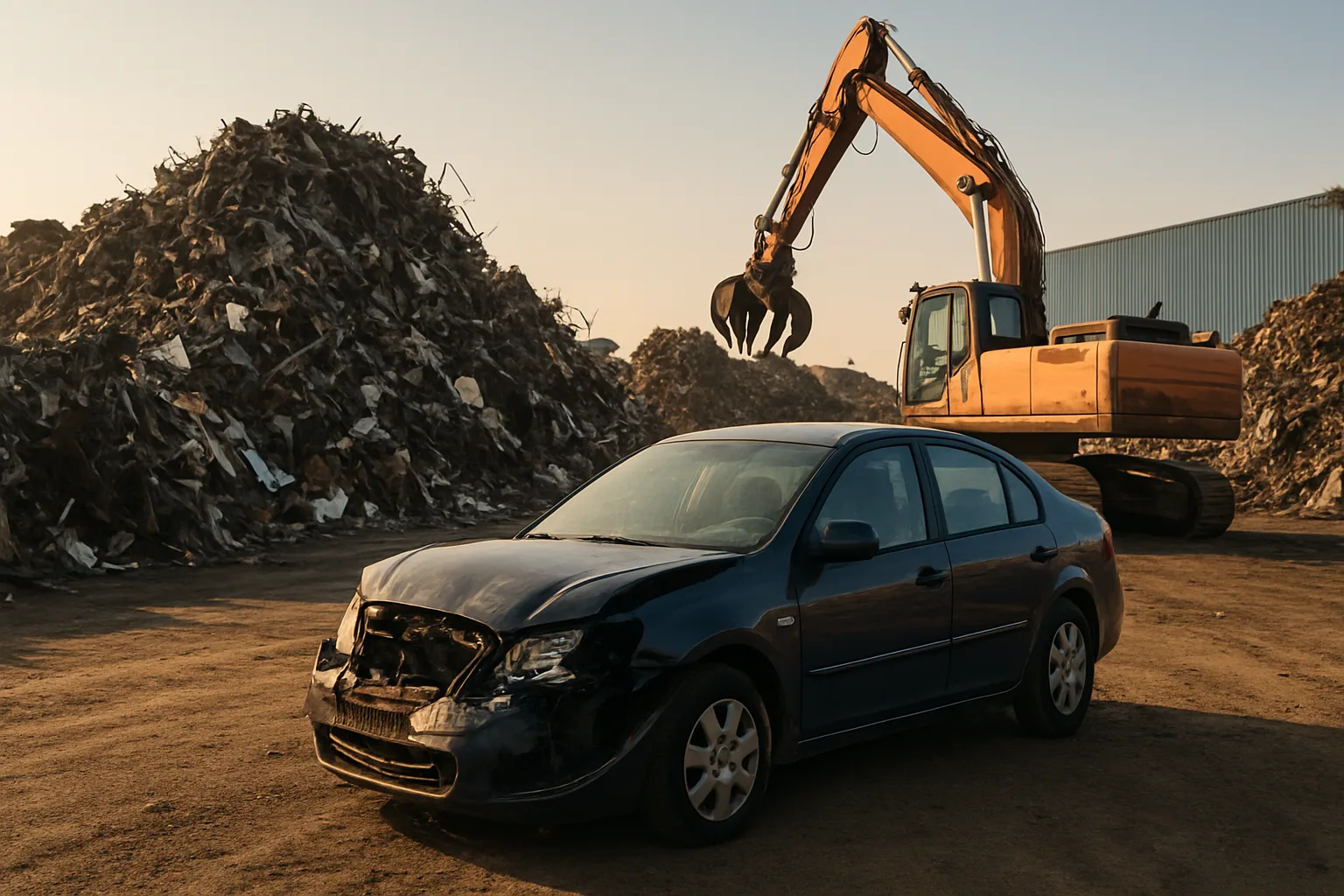
What Happens to Your Car After an Accident — and How to Get Cash for It Fast
Your car got hit. Or maybe you hit something. Either way, the repair estimate came back higher than the car is worth, and now you're stuck with a damaged vehicle taking up space in your driveway. You're not alone — thousands of Canadians scrap accident-damaged vehicles every year, and many of them leave money on the table because they don't understand the process. This guide walks you through exactly what to do, step by step, so you can sell my car fast Trois-Rivières or anywhere else across Canada without the runaround.
Whether the airbags deployed, the frame is bent, or the car is a total write-off sitting in your backyard in Trois-Rivières, Quebec — there's still value in that vehicle. You just need to know how to extract it.
Step One: Understand What "Total Loss" Actually Means for Scrap Value
Insurance companies declare a vehicle a total loss when the cost to repair it exceeds a certain percentage of its actual cash value — typically between 70% and 80% depending on your province. In Quebec, the threshold can vary depending on your insurer and policy terms. But here's what most car owners don't realize: a total loss declaration doesn't mean the car is worthless. It means the insurer doesn't want to pay to fix it.
The scrap value of an accident-damaged vehicle depends on several factors:
- Curb weight: A full-size SUV or truck has significantly more scrap metal than a compact sedan. More metal means more money.
- Catalytic converter condition: If it survived the crash intact, it can be worth more than the steel on the rest of the car combined, depending on the vehicle.
- Salvageable parts: Doors, hoods, transmissions, engines, and electronics that weren't damaged in the collision still have resale value.
- Make and model demand: High-volume vehicles with common parts (think Honda, Toyota, Ford F-series) attract more interest from salvage buyers.
Don't let an insurance company's write-off number be your only data point. Get an independent quote from a junk car buyer before you sign anything over. Platforms like SMASH Recycling — where verified buyers bid on your metal connect sellers with buyers who compete for your vehicle, which means you're getting market-rate offers rather than a single lowball number.
Sorting Out the Title and Insurance Paperwork Before You Sell
This is where a lot of people get tripped up. If your vehicle was in a collision, the title situation can get complicated — especially if the insurer takes ownership as part of a total loss settlement.
Here's what you need to clarify before you try to sell:
- Did insurance pay out? If yes, the insurer may now hold the title. You'll need a release or the branded title before you can transfer ownership to a scrap buyer.
- Is there a lien on the vehicle? If you were still making payments when the accident happened, your lender has a claim on the car. The lien must be cleared before the sale.
- Do you have a salvage or rebuilt title? In many provinces, a car that's been declared a total loss receives a branded title. This doesn't prevent you from selling it for scrap — it just needs to be disclosed.
- What if you don't have the title at all? Search terms like sell my junk car no title are common for a reason. Some buyers will still purchase a vehicle without a title if you can provide other proof of ownership — registration, insurance documents, and photo ID. Requirements vary by province, so confirm with the buyer before proceeding.
In Quebec specifically, the Société de l'assurance automobile du Québec (SAAQ) governs vehicle registration and ownership transfers. If your vehicle was insured under the SAAQ's public plan (as all Quebec residents are for bodily injury), understand the distinction between the public bodily injury coverage and your private insurer's property damage coverage. Get your paperwork sorted with both before you approach a scrap buyer. It saves time and prevents deals from falling apart at the last minute.
How to Get the Best Price for a Wrecked Car in Canada
The single biggest mistake sellers make is calling one buyer and accepting the first offer. That's not a negotiation — that's a donation. The scrap and salvage market is competitive. Metal prices fluctuate with global commodity markets. Catalytic converter values track precious metal spot prices. Demand for used auto parts shifts constantly. A car that gets you one number from a single buyer might get you a meaningfully different number if three or four buyers are competing for it.
That's exactly the problem that SMASH was built to solve. Instead of calling around blindly, you list your vehicle, document what you have — condition, VIN, photos — and let verified buyers come to you with competing offers. The competition does the work. You get price discovery instead of price guessing.
A few practical tips for maximizing your return:
- Document everything before the car leaves: Take photos of every panel, the VIN plate, the catalytic converter location, tires, and any parts that look undamaged. Buyers pay more when they have confidence in what they're buying.
- Know your car's weight class: A half-ton pickup truck weighs roughly 4,500 lbs at curb weight. At current scrap steel rates, that's a meaningful number. Know what you're bringing to the table.
- Strip what you legally can, if time allows: Batteries, wheels, and certain electronics can be sold separately for more than their scrap-in-car value — provided you have the time and the right buyer lined up.
- Don't wait: Scrap metal prices move. A vehicle sitting in your driveway doesn't gain value over time — it loses it to weather, theft of catalytic converters, and parts degradation.
If you're in Trois-Rivières or anywhere else in Quebec, the process is the same. Sell your car for cash across Canada — the market reaches every corner of the country, not just major urban centres.
Scrap Metal Recycling Canada: Where Your Wrecked Car Actually Goes
It's worth understanding what happens after you sell. Most people picture a crusher and that's the end of the story. The reality is more layered — and it explains why the price you get matters to more than just your wallet.
When a wrecked vehicle enters the scrap metal recycling Canada supply chain, it typically moves through several stages:
- De-pollution: Fluids — engine oil, coolant, brake fluid, transmission fluid, refrigerant — are drained and processed. This is regulated and must happen before shredding in every Canadian province.
- Parts salvage: Usable components are pulled and catalogued for resale. A door handle from a 2019 Civic has real demand in the used parts market.
- Shredding: The remaining body goes through an industrial shredder. What comes out is classified by metal type — ferrous (steel, iron) and non-ferrous (aluminum, copper, zinc).
- Sorting and export: Sorted metals are baled or containerized and sold to steel mills and smelters, often internationally. Canadian scrap metal is a genuine commodity traded on global markets.
This is a real, regulated industry — not a grey market. When you get a free car valuation from a licensed buyer, you're entering a supply chain that feeds North American manufacturing. Your wrecked car in Trois-Rivières becomes raw material somewhere else. That's not a small thing.
For more context on how the selling process works at every step, read Canadian car selling guides covering everything from paperwork to pickup logistics.
What to Expect on Pickup Day — and How to Protect Yourself
Once you've agreed on a price, the logistics are usually straightforward — but a few things are worth confirming before anyone shows up with a tow truck.
Before pickup, confirm:
- The agreed price is in writing (email or text is fine — just have a record).
- Payment method — cash, e-transfer, or certified cheque. Know before they arrive, not after.
- Who handles the de-registration with the SAAQ (if you're in Quebec) or the equivalent provincial body. In most cases, the seller is responsible for cancelling the registration and plates.
- Whether the buyer handles the tow or you arrange it. Most reputable junk car buyers include towing in the offer.
- Remove all personal belongings and your license plates before the truck arrives. Plates belong to you, not the car.
After the sale: Notify your insurance company immediately. Cancel coverage on the vehicle so you stop paying premiums. Keep your bill of sale or transfer documentation — you may need it for tax purposes or if a question arises about the vehicle later.
If a buyer shows up and tries to renegotiate the price at the door — a tactic called a "lowball and switch" — you are under no obligation to accept the new number. Walk away. Reputable buyers honour the offer they made.
Frequently Asked Questions
Q: Can I sell my car fast in Trois-Rivières even if it was in a serious accident?
Yes. Accident-damaged vehicles are bought and sold for scrap and salvage every day. The condition affects the price, but it doesn't prevent the sale. As long as you can demonstrate ownership and the vehicle hasn't been completely crushed, there are buyers in the market for it — including in Trois-Rivières and across Quebec.
Q: What if I don't have the title for my wrecked car?
Some buyers will purchase a vehicle without a title if you can provide valid registration, proof of insurance, and government-issued ID. Requirements vary by province, so confirm directly with the buyer before you proceed. In Quebec, SAAQ documentation can sometimes support a transfer even when the original title is unavailable.
Q: How long does it take to sell a junk car in Canada?
With the right buyer and your paperwork in order, the process can move in as little as 24 to 48 hours from first contact to pickup. Delays usually come from title issues, lien clearances, or scheduling the tow. Having your documents ready in advance speeds everything up significantly.
Q: Are junk car prices in Canada affected by U.S. market rates?
Yes, indirectly. Scrap metal and salvage markets in Canada are connected to North American commodity prices, which are influenced by U.S. demand, steel mill activity, and global metal prices. Prices fluctuate — which is why getting multiple competing offers, rather than accepting the first number, matters.
Q: What's the difference between selling to a junk car buyer versus a salvage auction?
A direct junk car buyer gives you one offer. A salvage auction or competitive bidding platform — like SMASH — puts your vehicle in front of multiple verified buyers who compete for it. Competition tends to produce better price discovery. For higher-value vehicles or those with intact parts, the difference can be significant.
A wrecked car sitting in your driveway isn't a dead end — it's an asset you haven't converted yet. Whether you're in Trois-Rivières, Toronto, Calgary, or anywhere in between, the market for accident-damaged vehicles is real and active. Get your paperwork straight, document your vehicle honestly, and let buyers compete for it instead of accepting the first offer that shows up. If you're ready to move, sell your car for cash across Canada and get a free quote at cashforcars-canada.ca — no pressure, no guessing, just a real number for your real situation.
Disclaimer: Scrap metal and salvage prices fluctuate based on commodity markets, vehicle condition, and regional demand. Always check current rates before making a decision.
Stay current on scrap metal market trends and industry news — follow SMASH on LinkedIn for regular updates from inside the recycling industry.