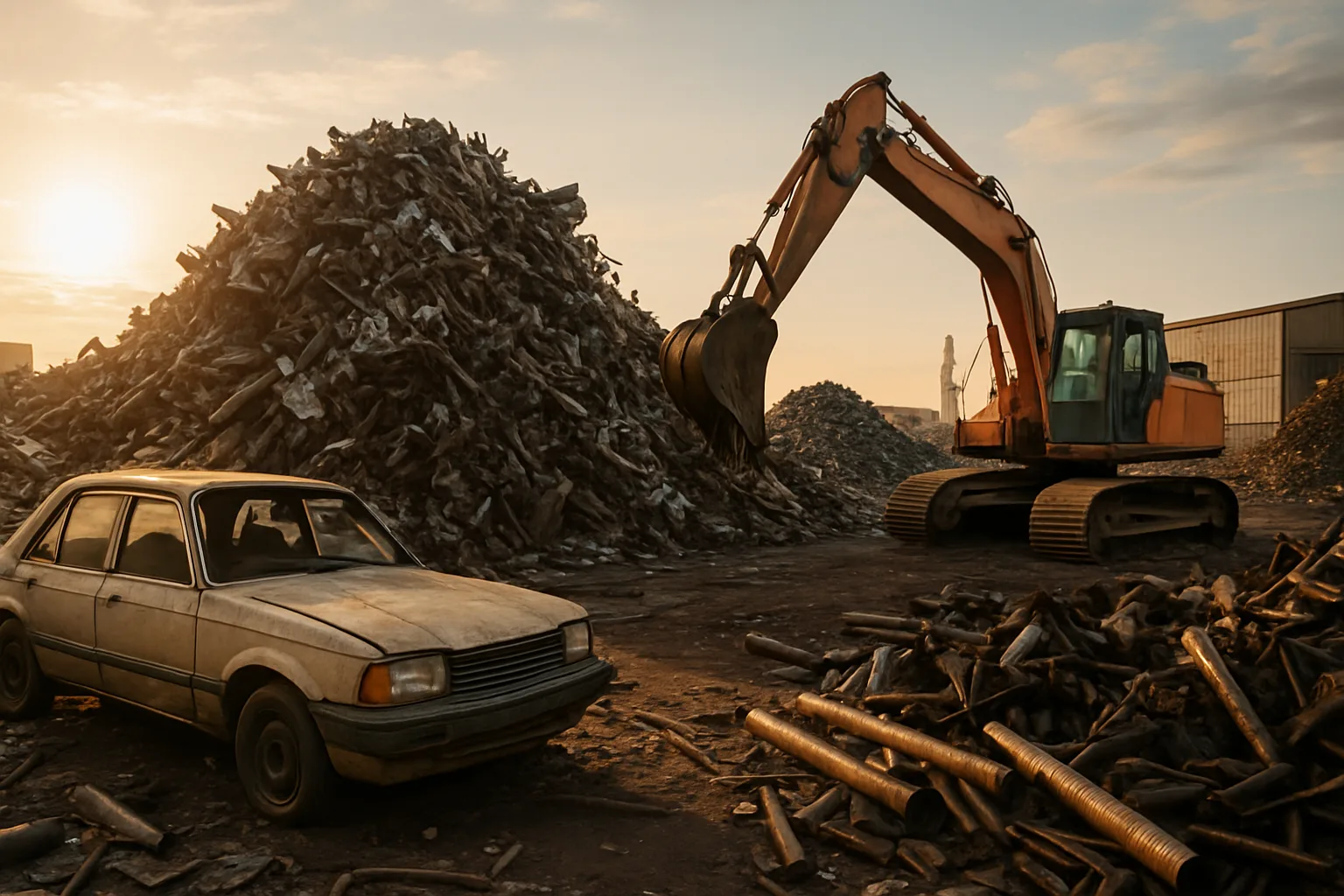
Most people don't think twice about where a car goes after its last road trip. But from the moment it rolls off the assembly line to the day it gets crushed into a bale of steel, every vehicle follows a surprisingly predictable path — and knowing that path helps you understand scrap car value today and why timing matters when you decide to sell.
Whether you're sitting on a rusted-out pickup in a New Brunswick driveway or a high-mileage sedan that just failed its inspection in Moncton, understanding the full lifecycle of a vehicle puts money back in your pocket. Here's how it all works — from factory floor to scrap yard gate.
Stage 1: Manufacturing and the Raw Materials That Start It All
A typical passenger vehicle contains roughly 900 to 1,000 kilograms of steel, plus aluminum, copper wiring, platinum-group metals in the catalytic converter, and a range of plastics and fluids. Automakers source these materials globally. The moment that car is built, its material value is already baked in — it just takes decades to reclaim it.
Steel is the backbone. It shows up in the frame, the doors, the roof, the suspension components. Aluminum handles the engine block, wheels, and increasingly the body panels on newer models. Copper runs through every electrical circuit. That catalytic converter sitting quietly under the car holds palladium, platinum, and rhodium — metals worth serious money at a recycler. None of this disappears when the car stops running. It just changes hands.
Stage 2: The Working Life of a Vehicle — Where Value Drains
From the dealership lot to your driveway, the clock starts ticking. The average Canadian vehicle stays on the road somewhere between 12 and 15 years before it reaches end-of-life status. During that time, depreciation is relentless. A new car can lose 15–20% of its value in the first year alone. By year ten, most vehicles retain only a fraction of their original sticker price.
What's happening underneath is equally important. Rust sets in — especially in New Brunswick and other Atlantic provinces where road salt is a winter staple. Engines accumulate wear. Transmissions slip. Suspension components corrode. Each of these mechanical failures chips away at resale value and pushes the vehicle closer to scrap territory. The tipping point comes when repair costs outrun what the car is worth as a running vehicle.
Key factors that accelerate the slide toward scrap value include:
- Collision damage that exceeds the vehicle's market value
- Rust-through on structural components (frame, subframe, floor pans)
- Engine or transmission failure with high repair estimates
- Flood or fire damage
- Expired registration combined with failed safety inspection
- High mileage with deferred maintenance history
Once the car crosses that line, private sale becomes unlikely. The scrap yard becomes the realistic destination — and that's not a bad thing if you understand how to approach it.
Stage 3: End-of-Life — What Happens at the Scrap Yard
When a vehicle arrives at an auto recycler or scrap yard, it doesn't just get crushed immediately. A trained dismantler evaluates it first. The goal is to strip every component that still has resale value before the carcass goes to the shredder.
Here's the general sequence at most North American recycling operations:
- Depollution: Fluids are drained first — engine oil, coolant, brake fluid, transmission fluid, refrigerant, and fuel. This is a legal requirement across Canada and most U.S. states. It's also where safety and environmental compliance begins.
- Parts harvesting: High-value components get pulled — catalytic converters, alternators, starters, batteries, intact body panels, doors, hoods, wheels, and usable tires. These move into the used parts market.
- Fluid and battery recycling: Hazardous materials go to licensed processors. Lead-acid batteries are almost entirely recyclable and have their own commodity value chain.
- Shredding: What's left gets fed into an industrial shredder. The output is shredded steel (also called shred or #1 Shredded), mixed with some non-ferrous metals and fluff (plastics, rubber, foam).
- Metals separation: Magnetic separators pull out the ferrous steel. Eddy current separators recover aluminum and other non-ferrous metals. The clean shred goes to steel mills as a feedstock for new steel.
What comes out the other end is raw material — ready to become new cars, appliances, rebar, and structural steel. A single end-of-life vehicle contributes hundreds of kilograms of recyclable steel back into the supply chain. The lifecycle closes.
What Determines Scrap Car Value Today in Moncton and Across Canada
This is the question every car owner actually cares about. Scrap car value today is driven by several variables — some you can control, most you can't. Steel prices fluctuate with global demand, which is influenced by construction activity, manufacturing output, and trade policy. When steel mills are buying aggressively, scrap prices climb. When demand softens, prices drop. It's a commodity market, not a fixed-rate system.
Beyond the market itself, your specific vehicle's value depends on:
- Weight: Heavier vehicles (trucks, SUVs, vans) yield more scrap metal by the kilogram and typically command higher payouts than compact cars.
- Catalytic converter: If it's intact and still on the car, it can add significant value. Platinum-group metals are priced separately from steel.
- Non-ferrous content: Aluminum-heavy vehicles — think late-model trucks with aluminum beds and hoods — recover better non-ferrous yields.
- Condition of harvestable parts: A car that arrives with intact, sellable components is worth more to a full-service recycler than a stripped shell.
- Location: Towing fees affect your net payout. Sellers in Moncton dealing with local buyers avoid the long-haul tow costs that rural sellers sometimes face.
- Title and documentation: Clear ownership documentation speeds up transactions and protects both parties.
The single biggest mistake sellers make is calling one buyer and accepting the first number they hear. Without competition, you have no price discovery. You're guessing — or worse, you're accepting a lowball offer because you don't know better. Platforms like SMASH let you compare scrap metal bids from Canadian buyers instead of relying on a single phone call to a single yard.
How SMASH Fits Into the Scrap Car Lifecycle
Here's where the lifecycle story gets practical. Once your car is at or near end-of-life, your job as the seller is to extract the maximum value from the materials in that vehicle. That means getting multiple buyers competing for your load — whether it's a single car, a batch of cores, or a full trailer of non-ferrous material.
SMASH is a scrap metal auction platform built for exactly this moment. Instead of calling one yard, describing your car over the phone, and hoping the number sounds fair, you list your inventory on SMASH. Vetted buyers across North America bid on it. You see real market competition playing out in real time. That's price discovery — not guesswork.
For yards and dealers in the Atlantic region handling end-of-life vehicles coming out of New Brunswick, SMASH also brings scrap metal inventory management tools that matter at scale. VIN lookup, photo documentation, serial tracking, auto-invoicing — the paperwork that used to eat hours now happens as part of the listing process. That's not a minor convenience when you're moving multiple vehicles a week.
If you're a car owner selling directly, platforms like SMASH help you understand what the market is actually paying before you commit to any single buyer. More buyers means better price discovery. That's not a slogan — it's how commodity markets work.
You can also get a free car valuation to understand what your specific vehicle is worth before you pick up the phone. And if you want to dig deeper into how the process works from the seller's side, read Canadian car selling guides that walk through each step without the runaround.
Getting the Most Out of Your End-of-Life Vehicle in Moncton
If you're in Moncton or anywhere in New Brunswick, the process of selling a scrap car for cash follows the same steps as anywhere else in Canada — with a few local nuances worth knowing. Atlantic provinces deal with heavy road salt corrosion, which often accelerates vehicle degradation. That means many vehicles in this region reach scrap status earlier than equivalents in drier climates. It also means local yards see high volume, which creates real buyer competition if you approach it right.
Here's a practical checklist before you sell:
- Locate your vehicle ownership documents (title or registration)
- Check whether the catalytic converter is still in place — it affects your quote
- Note any recently replaced parts (new tires, battery, alternator) — some buyers factor this in
- Get at least two or three quotes before accepting any offer
- Confirm whether towing is included in the quoted price or billed separately
- Ask how payment is made — cash, e-transfer, or cheque
For Moncton scrap metal services, local buyers are active and accessible. The goal is making sure they're competing for your vehicle — not setting the price in a vacuum.
When you're ready, you can sell your car for cash across Canada through a process that puts the market to work for you. No guessing. No single-buyer pressure. Just competition and transparency.
The car's lifecycle ends at the scrap yard. What you get out of that ending is up to how well you navigate the selling process. Now you know how it works — use that knowledge.
Frequently Asked Questions
Q: How is scrap car value today calculated in Canada?
Scrap car value is primarily based on vehicle weight, current steel and non-ferrous metal prices, the condition of the catalytic converter, and any harvestable parts remaining on the car. Prices fluctuate with global commodity markets, so the number you get today may differ from what the same car would fetch next month. Always get multiple quotes to understand what the current market is actually paying.
Q: How do I sell my junk car online in Moncton?
Start by gathering your ownership documents and taking a few clear photos of the vehicle — including the undercarriage if there's visible rust. Submit your vehicle details through an online buying service or auction platform to receive competitive quotes from vetted buyers. Platforms designed for scrap inventory make this process faster and more transparent than calling individual yards one at a time.
Q: Does a non-running car still have scrap value?
Yes. A vehicle doesn't need to run to have scrap value. The steel, aluminum, copper, and catalytic converter are present regardless of engine condition. In many cases, a non-runner with an intact catalytic converter and full weight is still worth a meaningful payout. Towing fees may apply, so confirm whether pickup is included in your quoted price.
Q: What happens to my car after I sell it to a scrap yard?
After pickup, the yard typically depollutes the vehicle first — draining all fluids legally and safely. Then high-value parts are harvested for the used parts market. What remains goes to a shredder, and the output metal is sorted by type and sold to steel mills and non-ferrous processors. The materials eventually re-enter manufacturing supply chains as recycled raw material.
Q: Are junk car prices near me affected by what's happening in global steel markets?
Directly, yes. Scrap steel prices in Canada follow global mill demand, which shifts based on construction activity, trade policy, and manufacturing output. When mills are buying heavily, local yards pay more for end-of-life vehicles. When demand softens, per-tonne prices drop and that flows through to what you're offered at the gate. Checking current market conditions before you sell is always worth the few minutes it takes.
Ready to turn that end-of-life vehicle into cash? sell your car for cash across Canada — get a free quote at cashforcars-canada.ca and find out what your car is worth in today's market.
Stay current on scrap metal market trends and pricing shifts by following SMASH on LinkedIn — practical industry updates, no filler.