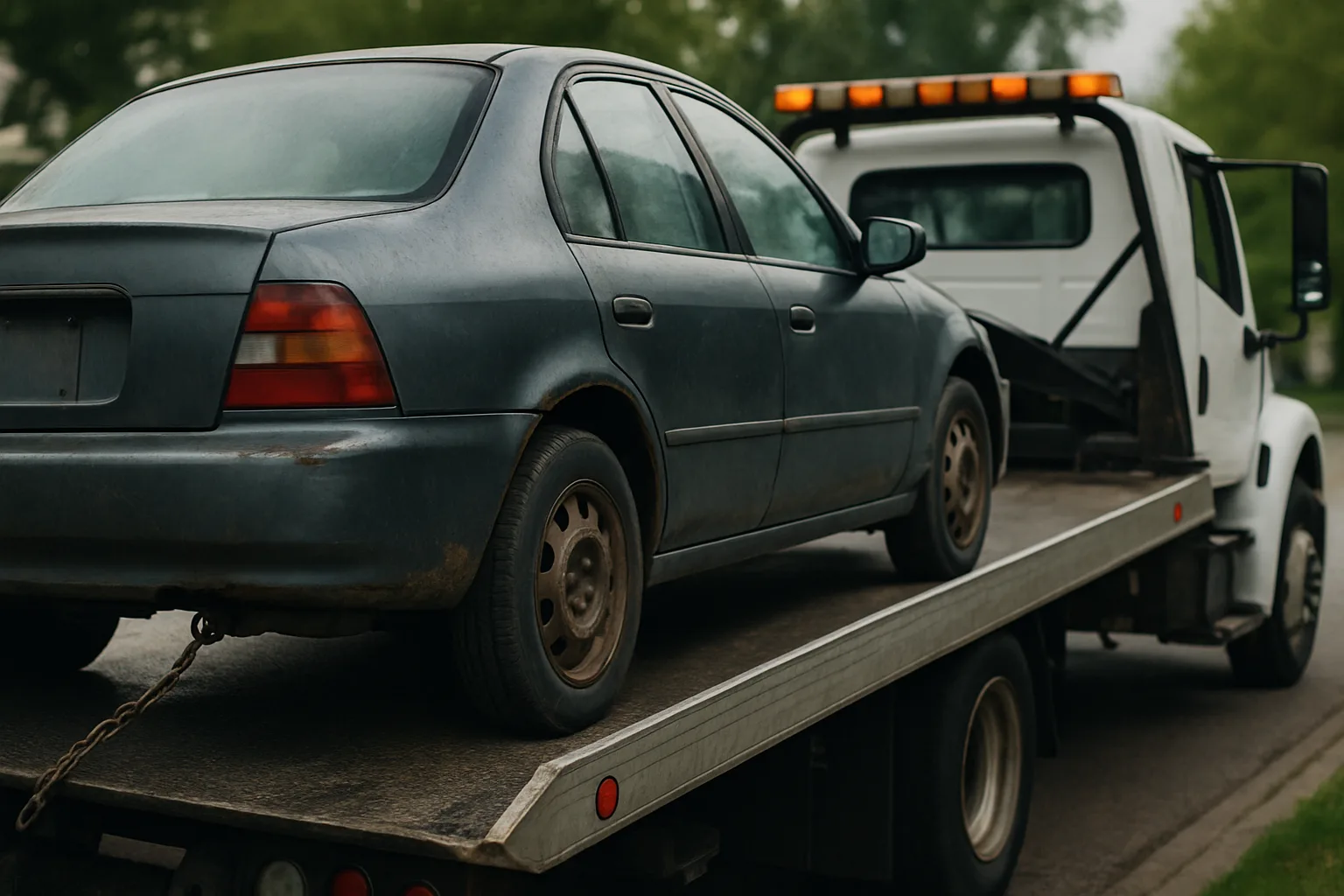
Most people assume their old beater is worth almost nothing. They're wrong — but not always by much. The scrap car market in 2026 is more volatile than ever, and knowing what actually drives your vehicle's value is the difference between leaving money on the table and walking away satisfied. Whether you're sitting on a rusted-out half-ton in Regina or a flood-damaged sedan in suburban Saskatchewan, there's real money in that driveway — if you know how to find it.
This guide breaks down exactly how scrap car pricing works, what affects your number, and how platforms like the SMASH Recycling auction platform are changing how sellers get paid. No guesswork. No runaround. Just the real picture.
What Determines the Value of a Scrap Car in 2026
Your car isn't priced like a used vehicle with Carfax and a showroom shine. Scrap car value comes down to a handful of hard factors, and buyers run through all of them before they quote you a number.
The biggest driver is weight. Steel prices fluctuate weekly, and scrap yards pay by the tonne. A full-size pickup or SUV with a heavy steel frame will almost always bring more raw scrap value than a compact hatchback — even if the compact runs. Current scrap steel prices in Canada swing based on global demand, so what your neighbour got last spring may not reflect today's market at all.
Beyond weight, buyers look at:
- Catalytic converter presence: If your cat is still intact, it can be worth more than the steel in the whole car combined — depending on the vehicle. Platinum, palladium, and rhodium inside converters track precious metal spot prices. A catalytic converter auction through a platform like SMASH can unlock far more competitive pricing than a single buyer offering a flat rate.
- Reusable parts: Working engines, transmissions, alternators, and body panels all add value above base scrap weight.
- Make and model: Some vehicles have parts that are in high demand. A 2010 Ford F-150 in rough shape still has parts people want.
- Condition of metals: Aluminum, copper wiring, and other non-ferrous metals bring higher prices per pound than steel. A car with an aluminum hood or engine block adds to the total.
- Location and accessibility: A car in a backyard in Regina that's easy to tow will cost less to move than something stuck in a ditch in a rural Saskatchewan township — and that affects what a buyer will offer.
Free Scrap Car Pickup Regina — What You Need to Know Before You Book
Free scrap car pickup in Regina is genuinely available — but it's not universally free. Buyers who offer free towing are factoring that cost into their offer. That's not a criticism; it's just how the math works. If someone offers you a higher number but charges a tow fee, run the actual numbers before you decide.
When you call for a free scrap car pickup, have this information ready:
- Year, make, and model
- Approximate weight or trim level (helps them estimate steel tonnage)
- Whether the catalytic converter is present
- Location — street address, not just "Regina"
- Whether the car has a title in your name
- Keys — do you have them?
Speaking of which — if you don't have a title or keys, you can still often sell scrap car in Saskatchewan through a licensed buyer. Requirements vary by province and by buyer, but cash for cars no title no keys situations are handled regularly. You may need to provide other proof of ownership or a statutory declaration. Don't assume a missing title kills the deal — ask the buyer directly.
Regina scrap buyers typically cover the city and surrounding areas including White City, Pilot Butte, and surrounding rural municipalities. If your car is outside Regina proper, confirm coverage before you get attached to a quote. For a trusted local option, check out Regina scrap metal services to get the process started in your area.
How the Catalytic Converter Changes Everything
This is the part most sellers don't understand — and it's costing them real money. Your catalytic converter is loaded with platinum group metals (PGMs): platinum, palladium, and rhodium. These metals track international commodity markets, and in 2026, they remain among the most valuable materials in a scrap vehicle.
A standard passenger car converter might bring a modest amount. A converter from a diesel pickup or a hybrid can be worth several hundred dollars on its own. The exact value depends entirely on the vehicle and what's inside the unit — and that's where most single-buyer transactions fall short. A buyer offering a flat rate for your whole car may low-ball the converter value to protect their margin.
This is why SMASH was built. The SMASH Recycling auction platform creates competition among vetted buyers, which means your converter and your car get evaluated against real market demand — not just one buyer's internal pricing. A catalytic converter auction approach means the market, not a single call, determines what you get. More buyers seeing your load equals better price discovery. That's not a promise of a higher number — it's how markets work.
If you want to sell your car for cash across Canada and your vehicle still has its catalytic converter, make sure that's clearly documented when you list or quote. A photo of the undercarriage showing the cat is still in place adds buyer confidence and can affect your offer meaningfully.
Scrap Car Prices — What's Realistic Right Now
Let's be direct: we won't invent specific prices here because scrap metal markets move constantly, and any number we publish today could be misleading by next month. What we can tell you is how to think about value ranges.
In general terms, a full-size car or truck in scrap condition — no working parts, stripped converters — is worth its weight in steel. Heavier vehicles earn more. A lighter compact earns less. Add value back for:
- Intact catalytic converter (significant, varies by vehicle)
- Aluminum components (hood, rims, engine block)
- Working drivetrain components
- Good body panels with reuse value
- Low-mileage running engines
Subtract from your expected value for:
- Missing catalytic converter (buyers factor this in immediately)
- Significant fluid leaks (environmental handling adds cost)
- Fire or flood damage (affects safety and salvage recovery)
- Remote location requiring long-distance towing
- Missing title or ownership documentation complications
Disclaimer: Scrap metal and vehicle prices fluctuate based on commodity markets, location, and individual vehicle condition. Always get a current quote and check today's rates before making any decisions based on this guide.
To get a realistic number for your specific vehicle, get a free car valuation based on your actual make, model, year, and condition — not a generic calculator that ignores the converter and the aluminum rims.
Selling a Scrap Car Without a Title or Keys in Saskatchewan
This question comes up constantly, and the answer is nuanced. Saskatchewan has its own provincial rules around vehicle ownership transfer, and buyers working in Regina and across the province deal with title issues regularly.
Here's the short version: no title doesn't automatically mean no sale. Buyers in Saskatchewan who deal in end-of-life vehicles are experienced with statutory declarations and alternative ownership verification. The process may take slightly longer, but it's workable.
No keys is even simpler. Tow trucks don't need the ignition — the car goes on a flatbed or a wheel-lift and it moves. Some buyers may adjust their offer slightly for a no-key vehicle (dolly fees, for example), but it's rarely a deal-breaker.
What actually kills a scrap car deal is contested ownership, active liens, or a vehicle reported stolen. Assuming none of those apply, a missing title or keys is a paperwork and logistics issue — not a hard stop. Be upfront with the buyer about what you have and what you don't, and let them tell you the actual impact on your offer.
If you're new to this process, read Canadian car selling guides that walk through the documentation requirements province by province — including Saskatchewan.
Why Getting Multiple Offers Actually Matters
The old way of selling a scrap car: call one yard, take their number, wonder if you got a fair deal. That system benefits buyers, not sellers. It's not personal — it's just how one-sided markets work when sellers don't have information.
The SMASH approach flips that dynamic. When your vehicle or its high-value components — like that catalytic converter — go through a competitive process, buyers have to sharpen their bids. You see what the actual market will pay, not what one buyer decided to offer on a Tuesday morning.
This matters most for higher-value vehicles or loads with significant non-ferrous content. If you have a loaded diesel truck, a hybrid, or a fleet of end-of-life vehicles, a single phone call is almost certainly leaving money behind. Competition is how markets find fair prices. SMASH is built to give sellers that competition, whether you're in Regina, Red Deer, or Rimouski.
Ready to stop guessing? Sell your car for cash across Canada — get a free quote at cashforcars-canada.ca and find out what your vehicle is actually worth in today's market.
Frequently Asked Questions
Q: How much can I get for a scrap car in Regina right now?
Scrap car values in Regina depend on the vehicle's weight, condition, whether the catalytic converter is present, and current steel and precious metal prices. Heavier vehicles with intact cats are worth significantly more than stripped-out compacts. Get a current quote based on your specific vehicle — don't rely on general estimates that may be months out of date.
Q: Can I sell a scrap car in Saskatchewan without a title?
Yes, in many cases. Saskatchewan buyers who deal in end-of-life vehicles regularly handle situations where the seller no longer has the original title. You may need to provide a statutory declaration or other proof of ownership. Be upfront with your buyer about what documentation you have, and they'll walk you through the options.
Q: Does free scrap car pickup in Regina actually cost me anything?
Technically, no — but buyers who offer free towing factor that cost into their offer. It's still a legitimate deal if the net amount is fair. When comparing quotes, always look at the final amount you receive after any fees, not just whether towing is advertised as free.
Q: What happens to the catalytic converter when I sell my scrap car?
The catalytic converter is typically one of the most valuable parts of a scrap vehicle because it contains platinum group metals. Buyers may process it separately through a catalytic converter auction or a specialty recycler. If your cat is still intact, make sure your buyer is accounting for it in your offer — it can represent a significant portion of your vehicle's total scrap value.
Q: Can I sell a scrap car in Regina if I don't have the keys?
Yes. Most scrap car buyers use flatbed or wheel-lift tow trucks that don't require the ignition to move the vehicle. Some buyers may make a small adjustment for the added handling, but missing keys rarely prevents a sale. Confirm with your buyer when you get your quote.
Stay current on scrap metal market trends and industry news — follow SMASH on LinkedIn at linkedin.com/company/scrap-metal-auction-sales-hub for regular updates on pricing, auctions, and what's moving in the North American recycling market.