5 Myths About Scrap Car Removal That Are Costing You Money
Nearly half of Canadian car owners who look into selling a junk vehicle walk away from the deal — not because the offer was bad, but because they believed something that wasn't true. Misinformation about scrap car removal Etobicoke residents deal with every day keeps real money sitting in driveways. Let's kill these myths one by one.
If your car doesn't run, has rust eating through the floor, or has been sitting behind your garage since 2021, you still have something worth selling. You just need to know the facts before you pick up the phone.
Myth #1: Your Junk Car Isn't Worth Anything
This is the biggest one. People look at a car that won't start, has a blown transmission, or failed its last safety inspection and assume it has zero value. That assumption is wrong — and it's costing them cash.
A junk vehicle has weight. Steel, aluminum, copper wiring, catalytic converters, and recoverable fluids all carry market value. Even a completely destroyed car can yield scrap metal returns based on its weight alone. A typical mid-size sedan weighs between 1,300 and 1,600 kilograms. At current scrap metal rates, that's real money — not pocket change.
Beyond the metal, buyers also look at:
- Usable parts (engines, transmissions, doors, mirrors)
- Catalytic converter content (platinum, palladium, rhodium)
- Tires and rims in resellable condition
- Battery value
- Glass and interior components
Platforms like the SMASH Recycling auction platform exist precisely because junk vehicles have real, competitive value. When multiple vetted buyers bid on a load, you see what the actual market is willing to pay — not just what one buyer decides to offer on a slow Tuesday.
Myth #2: You Need a Clean Title to Sell a Junk Car in Ontario
This one stops a lot of people cold. They assume that without a clean title, no one will touch the car. The reality is more nuanced — and more seller-friendly than most people expect.
In Ontario, requirements vary depending on whether you're selling for salvage and scrap versus resale. Many junk car buyers near me Etobicoke searches lead to buyers who specifically handle vehicles with missing, damaged, or complex ownership situations. The key is being upfront about what you have. A reputable buyer will walk you through what paperwork is actually needed.
What you should have ready, if possible:
- Your vehicle registration or ownership documents
- A government-issued photo ID
- Keys (but not always required)
- Any known history of liens or financing
Missing one of these doesn't automatically end the conversation. It means you need a buyer who knows how to handle it. That's what separates experienced scrap car buyers from the guy posting on a community board.
Myth #3: All Junk Car Buyers Offer the Same Price
This might be the most expensive myth on this list. If you call one buyer, get a number, and accept it — you've left money on the table. Full stop.
Scrap car pricing is not standardized. It moves with commodity markets. Steel prices fluctuate weekly. Catalytic converter values shift based on platinum group metal spot prices. A buyer who called you last month with one number might give you a completely different quote today — higher or lower depending on what the market is doing.
More importantly, different buyers have different needs. A yard that's short on a specific vehicle type might bid aggressively to get it. A buyer focused on parts dismantling values a car differently than a straight scrap buyer who just wants the metal weight. That difference in perspective translates directly into price variation between buyers.
This is why competitive pricing matters. When you sell your car for cash across Canada through a platform that creates real buyer competition, you stop guessing what your car is worth and start seeing what the market actually pays. More buyers means better price discovery — that's not a marketing line, it's basic economics.
Using a scrap car value calculator Canada tool can give you a general benchmark, but a calculator is just a starting point. Real offers from multiple buyers is where you find the actual number.
Myth #4: Junk Car Removal Takes Forever and Involves a Ton of Paperwork
A lot of car owners in Etobicoke put off selling a junk car because they picture a drawn-out process — multiple calls, waiting weeks for a tow, piles of forms, and back-and-forth negotiation. For most sellers, none of that is accurate in 2026.
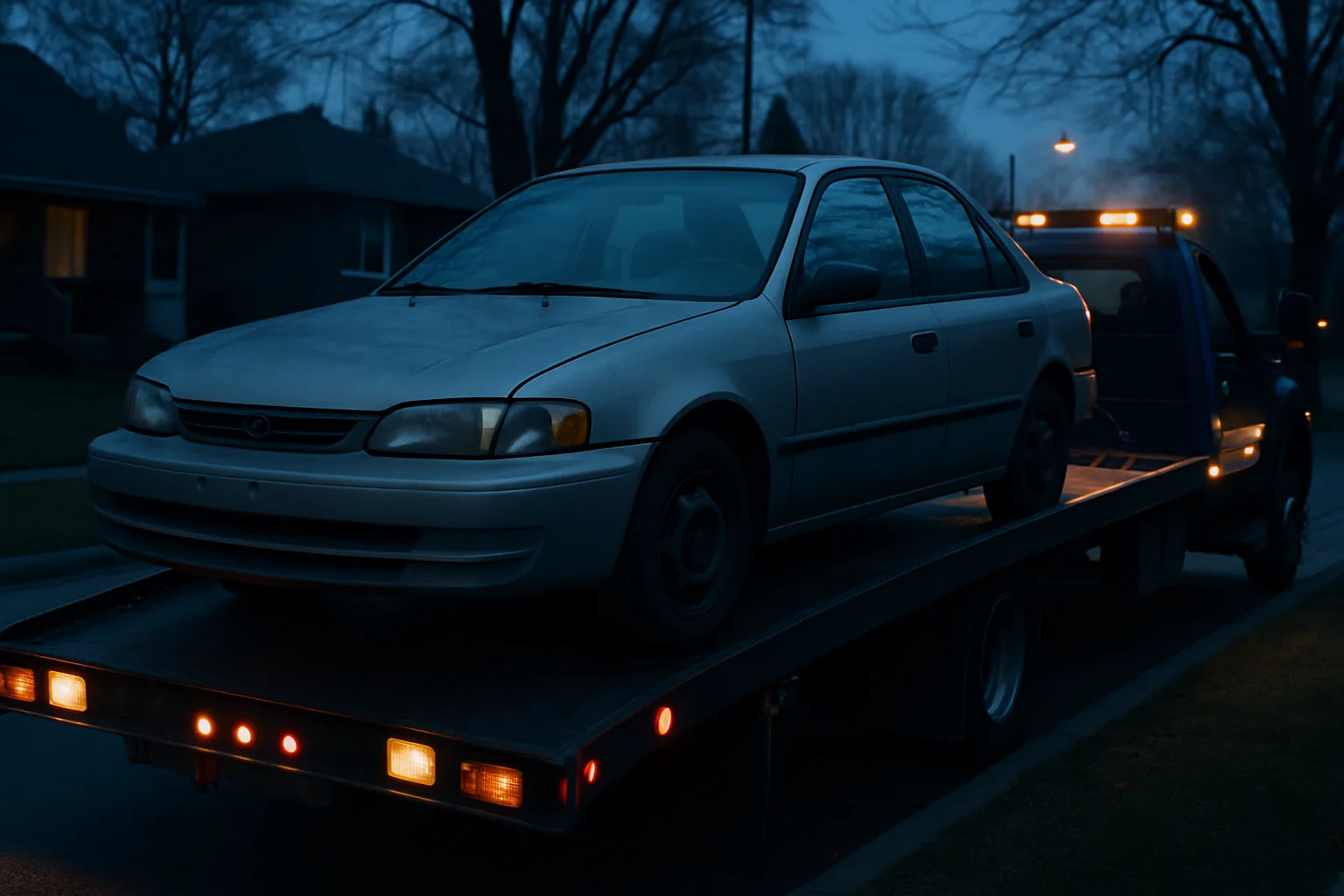
The process has gotten significantly faster. Most reputable scrap car buyers offer same-day or next-day pickup. You get a quote, you agree on a price, they come to your location, they pay you on the spot, and they handle the tow. Start to finish, many sellers complete the entire transaction in under 24 hours.
What actually slows things down:
- Not having your registration or ID ready
- Outstanding liens that haven't been resolved
- Cars in hard-to-access locations (underground parking, behind fences)
- Working with a buyer who isn't organized or fully vetted
SMASH helps solve the last point directly. Buyers on the platform are vetted, which means less back-and-forth, cleaner transactions, and faster turnarounds. When you work with buyers who do this professionally and at volume, the process runs smoothly because they've done it hundreds of times.
Ontario sellers especially benefit from working with buyers who understand provincial regulations around vehicle deregistration and environmental handling of fluids like oil, coolant, and refrigerants. A professional buyer already knows the rules. You don't have to.
Myth #5: Location Determines Whether You Can Get a Good Deal
Some sellers in Etobicoke assume they're at a disadvantage compared to sellers in downtown Toronto or closer to major scrap yards. Others in rural Ontario think the opposite — that city sellers always get better offers. Neither is reliably true.
What actually determines your offer is buyer access and market competition, not your postal code. If only one buyer services your area, you're stuck with whatever they offer. But if multiple buyers are competing for your vehicle — which is exactly what a B2B scrap metal marketplace model creates — your location becomes far less of a factor.
The other piece that matters is documentation. A well-documented vehicle — clear photos, accurate description of condition, VIN confirmed, known history — gives buyers more confidence to bid higher. Uncertainty drives prices down. Clarity drives them up.
Etobicoke sits within one of the most active vehicle and scrap markets in the country. There's no shortage of buyers. The question is whether you're reaching enough of them, and whether you're giving them what they need to make a strong offer.
Want to understand how transparent, auction-based pricing works? Get a free car valuation and see what competitive pricing actually looks like for your vehicle.
What You Should Actually Do Before Selling Your Junk Car
Now that you know what's not true, here's what actually moves the needle when you're ready to sell.
Document the vehicle properly. Take clear photos of all four sides, the interior, the engine bay, and any major damage. Note the mileage, the VIN, and any parts you know are still functional. The more you give a buyer, the more confidently they can price it.
Know what's in the car before it leaves. Catalytic converter still attached? That matters. Newer tires? Mention it. Working alternator? Note it. These details change the offer. Don't let a buyer discover them after the fact — disclose upfront and price accordingly.
Get more than one offer. This isn't negotiating in bad faith. It's understanding your market. If you only call one junk car buyer, you have no idea whether the offer is fair. Call two or three, or use a platform that brings multiple buyers to you. Read Canadian car selling guides to understand what fair pricing looks like for different vehicle types and conditions.
Don't wait too long. A car that sits degrades. Tires go flat and develop flat spots. Mice get in. Fluids leak and contaminate. Rust spreads. The car you have today is worth more than the same car six months from now after another Ontario winter.
Whether you're in Etobicoke, somewhere else in Ontario, or anywhere else across Canada — you have options. The market for junk vehicles is active and competitive. You just need to access it the right way.
Ready to stop leaving money in your driveway? Sell your car for cash across Canada — get a free quote at cashforcars-canada.ca and find out what your vehicle is actually worth today.
Disclaimer: Scrap metal and vehicle prices fluctuate based on commodity markets, vehicle condition, and buyer demand. Always check current rates before finalizing any sale.
Frequently Asked Questions
Q: How does scrap car removal in Etobicoke actually work?
You request a quote, provide vehicle details and photos, receive an offer, and schedule a pickup time. A licensed buyer comes to your location in Etobicoke, pays you in cash or e-transfer, and tows the car away. Most transactions complete within 24-48 hours.
Q: Do I need the title to sell my junk car in Ontario?
Having your vehicle registration or ownership documents makes the process smoother, but missing paperwork doesn't always disqualify you. Reputable buyers who regularly handle scrap and junk vehicles in Ontario can often work with alternative documentation. Be upfront about what you have.
Q: How do I find reliable junk car buyers near me in Etobicoke?
Look for buyers who are licensed, provide written quotes, handle towing, and have a clear payment process. Platforms like SMASH connect sellers with vetted buyers specifically, which removes a lot of the uncertainty around who you're actually dealing with.
Q: Is there a scrap car value calculator for Canada I can use?
Several tools exist online that estimate scrap car value based on weight, make, model, and current metal prices. These are useful for ballpark estimates, but an actual offer from a live buyer will give you a more accurate number — especially if your vehicle has recoverable parts or a catalytic converter with value beyond just its scrap weight.
Q: Does the condition of my car affect how fast it sells?
Condition affects price, not necessarily speed. Even severely damaged, non-running vehicles sell regularly in markets like Etobicoke because buyers are purchasing the metal and parts, not the car as a driver. Clear documentation and accurate descriptions tend to speed things up regardless of condition.
Follow SMASH on LinkedIn for industry updates, scrap metal market insights, and platform news: linkedin.com/company/scrap-metal-auction-sales-hub