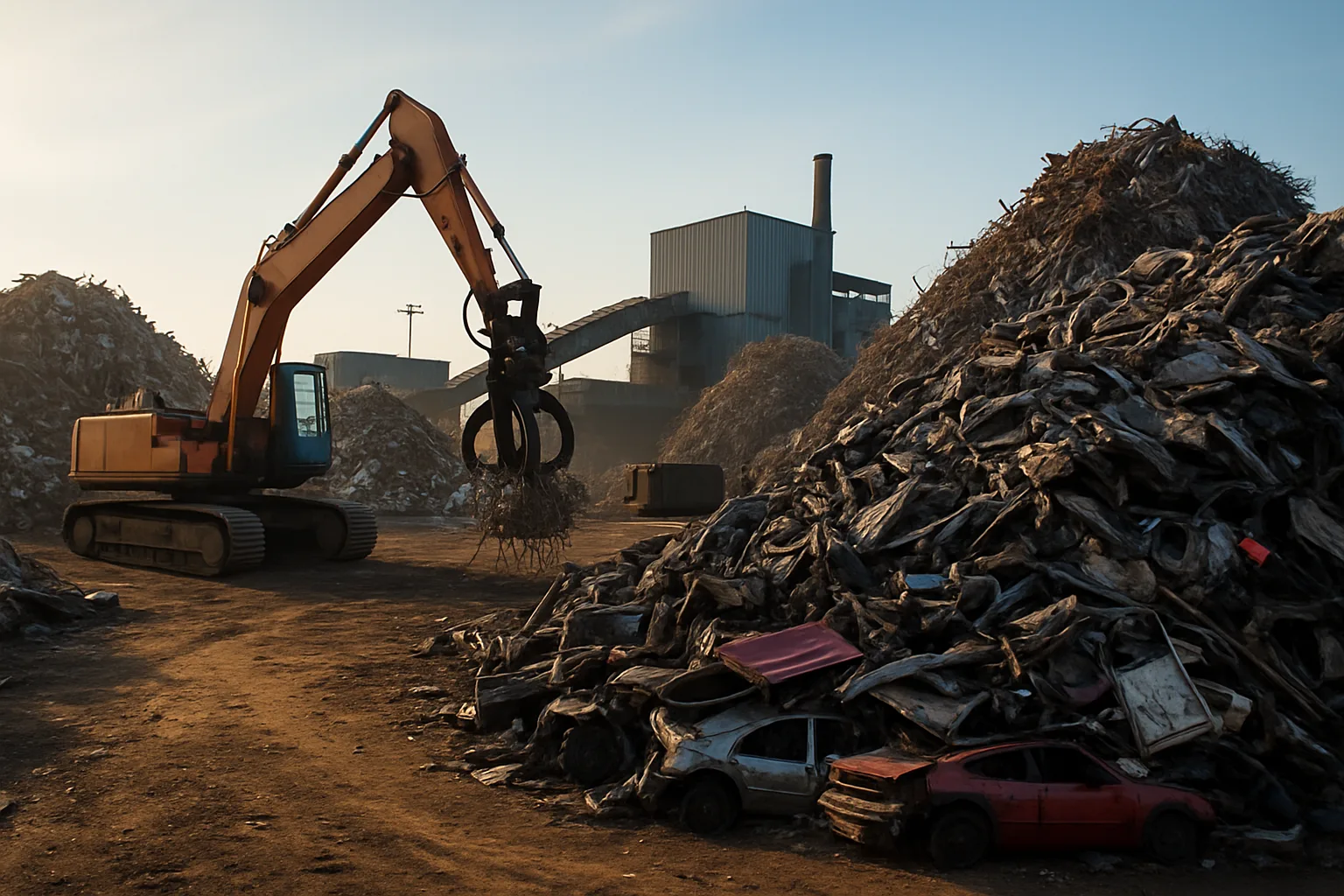
Most cars don't get a eulogy. They just disappear — traded in, abandoned in a driveway, or quietly towed away while the owner watches from the front step. But every vehicle that ever rolled off an assembly line has a story, and that story ends at a scrap yard. Understanding the full lifecycle of a car isn't just interesting — it tells you exactly why free scrap car pickup Markham services exist, what happens to your vehicle after it leaves your property, and how the scrap metal recycling system actually works in Canada.
Here's the full picture, from the first bolt torqued on the factory floor to the last ton of shredded steel loaded onto a flatbed.
Stage One: Manufacturing — Where the Materials Begin
A modern vehicle contains roughly 25,000 individual parts. Most of the weight — typically 60–70% — is steel and iron. The rest is a mix of aluminum, copper wiring, rubber, glass, plastics, and precious metals buried inside the catalytic converter. Every one of those materials was mined, refined, and shaped before it ever became part of your car.
Automakers source steel from mills, aluminum from smelters, and platinum-group metals (platinum, palladium, rhodium) from mines as far away as South Africa and Russia. The energy cost of manufacturing a single passenger vehicle is substantial. That's part of why recycling at end-of-life isn't just environmentally responsible — it's economically rational. Recovering steel from a scrapped car takes a fraction of the energy needed to produce virgin steel from raw ore.
- Steel and iron: Make up the frame, body panels, suspension components
- Aluminum: Engine blocks, wheels, and increasingly body panels on newer models
- Copper: Wiring harnesses throughout the vehicle
- Precious metals: Concentrated in catalytic converters (platinum, palladium, rhodium)
- Plastics and rubber: Interior panels, hoses, seals, tires
All of this material eventually returns to the market. The question is how efficiently — and at what price.
Stage Two: The Working Life of a Vehicle
The average Canadian vehicle stays on the road for about 12–14 years before it's considered end-of-life. During that time, it changes hands multiple times, racks up hundreds of thousands of kilometres, and burns through parts, fluids, and tires at a steady pace. Maintenance keeps it going. Eventually, the repair costs outpace the vehicle's value — and that's the tipping point.
For a lot of car owners in Ontario, including those in Markham and the surrounding suburbs, that moment arrives without much warning. A transmission fails. The frame rusts through. An accident write-off leaves you holding a car that insurance covered at market value — but that no private buyer will touch. At that point, the vehicle isn't a transportation asset anymore. It's a liability sitting in your driveway.
That's where the lifecycle pivots. The car that once took your kids to school or got you through winter commutes on Highway 407 is now a candidate for junk car removal Markham services. And the materials inside it are about to start a second life.
Stage Three: Depollution — What Happens Before the Shredder
Before a scrap vehicle gets anywhere near a shredder, it goes through depollution. This is a regulated process required across Canada under provincial environmental rules. Every licensed auto recycler has to drain and safely dispose of fluids before a vehicle can be crushed or shredded. Skip this step, and you're looking at serious fines.
Here's what gets removed during a proper depollution process:
- Engine oil and transmission fluid — drained and sent to recycling or reprocessing
- Coolant (antifreeze) — recovered and often reclaimed
- Brake fluid and power steering fluid — removed separately
- Gasoline — siphoned from the tank before crushing
- Refrigerants (A/C systems) — captured with certified equipment; illegal to vent to atmosphere
- Mercury switches — found in older vehicles; require special handling
- Airbag inflators — deployed or removed before shredding
- Tires and batteries — diverted to their own recycling streams
After depollution, valuable parts get pulled — catalytic converters, engines, transmissions, alternators, starters. Anything with resale value in the used parts market comes off before the shell gets crushed. A well-picked vehicle might yield hundreds of dollars in parts before the steel ever gets weighed.
Stage Four: Crushing, Shredding, and Sorting — The Industrial End
Once stripped and depolluted, the vehicle body gets crushed into a compact block or fed directly into an industrial shredder. Large shredding facilities can process hundreds of vehicles per day. The output — called shredded scrap or "shred" — gets sorted by type using magnets, eddy current separators, and optical sorters.
Ferrous metal (steel and iron) gets separated magnetically. Non-ferrous metals like aluminum and copper get sorted out and baled separately — they're worth significantly more per tonne than steel. What's left after sorting is called "auto shredder residue" or fluff — a mix of plastics, foam, glass, and rubber that historically went to landfill but is increasingly being processed through fluff recovery systems.
This is the point where scrap metal recycling Canada connects to global commodity markets. The steel from a scrapped Markham minivan might end up in a rebar mill in Hamilton. The aluminum might go to a secondary smelter in Quebec. The copper wiring, sorted and baled, might be exported. Every load that moves through this system gets priced against live metal markets — which is why scrap prices change week to week.
That volatility is exactly why platforms like SMASH exist. If you're a recycler or scrap yard operator, you already know how much price discovery matters. Canada's B2B scrap recycling marketplace — SMASH — brings vetted buyers to your material through a competitive auction format, so you're not selling based on one phone call and a guess. The load gets priced by competition, not just by whoever picks up the phone first.
Stage Five: How Vehicle Owners Connect to This System — Selling a Scrap Car in Ontario
Here's where it gets practical for the average car owner. If you're in Markham, Burlington, Ottawa, or anywhere else in Ontario, and you've got a vehicle that's past its useful life, you have options. The question is whether you access those options efficiently or leave money — and material — on the table.
The traditional path: call around to local yards, get wildly inconsistent quotes, argue about towing fees, and eventually settle for whatever the one buyer who called back was willing to pay. It's slow, opaque, and almost always leaves you wondering if you got a fair price.
The better path is to sell your car for cash across Canada through a service that understands the full lifecycle — one that knows what your vehicle is actually worth at the metal level, not just as a number pulled from thin air. A proper cash-for-cars service offers free pickup, handles the paperwork, and gives you a transparent quote before the tow truck shows up.
If you want to understand what your car might be worth before you call anyone, get a free car valuation and compare it against what local yards are offering. You might be surprised by the gap.
For deeper research on how the Canadian car selling process works — including what documentation you actually need and what to watch out for — read Canadian car selling guides before you commit to any buyer.
SMASH and the B2B Side of Scrap Car Recycling
Most car owners interact with the retail side of this industry — the cash-for-cars buyer who quotes your vehicle, arranges pickup, and handles the transfer. But behind that transaction, there's a wholesale market where recyclers, dismantlers, and scrap processors buy and sell material in volume. That's the market SMASH was built for.
When a scrap yard in Ontario processes hundreds of vehicles a month, they're not just selling individual cars. They're moving loads of shredded steel, baled aluminum, sorted copper, and catalytic converters — each priced against live market benchmarks. The SMASH auction platform brings competitive buyers to those loads, creating real price discovery instead of guesswork. No subscription fees. SMASH only wins when the seller wins.
For the car owner reading this, that matters because a healthier wholesale market means more competitive prices at the retail level too. When scrap yards can sell their processed material at better prices, they have more room to pay more for incoming vehicles. The whole system is connected — from your driveway in Markham to the steel mill that buys the shred.
Whether you're a homeowner with one car to sell or a yard operator moving tons of material weekly, the lifecycle of every vehicle eventually runs through this system. The only question is how efficiently you connect to it.
Ready to close the loop on your vehicle? If you've got a car that's done its job, don't let it sit and rust. Sell your car for cash across Canada — get a free, no-obligation quote at cashforcars-canada.ca and let the pickup crew handle the rest.
Frequently Asked Questions
Q: How does free scrap car pickup in Markham actually work?
You request a quote, provide basic details about your vehicle (year, make, model, condition), and a buyer gives you a cash offer. If you accept, a tow truck comes to your location in Markham at a scheduled time, pays you on the spot, and takes the vehicle away at no cost to you. The whole process usually takes 24–48 hours from first contact to pickup.
Q: Do I need a title or ownership document to sell my scrap car in Ontario?
In Ontario, having your vehicle ownership (pink slip) makes the process smoother and typically results in a higher offer. Some buyers will still purchase vehicles without a title, but they may offer less and require additional verification. Always confirm documentation requirements with the buyer before scheduling pickup.
Q: What factors affect how much I get for a junk car in Markham?
The main factors are the vehicle's weight (more steel = more value), current scrap metal prices (which fluctuate with global markets), whether the catalytic converter is intact, and whether any parts can be resold. A running or recently non-running vehicle with an intact cat will typically fetch more than a heavily stripped or fire-damaged shell.
Q: Is scrap car recycling in Canada actually environmentally responsible?
Yes — licensed auto recyclers in Canada are required to depollute vehicles before processing, which means draining all fluids and removing hazardous components safely. Steel recycling from scrap cars uses significantly less energy than producing virgin steel, and most of the material in a modern vehicle is recoverable. It's one of the more genuinely circular industries in the country.
Q: How do I know if I'm getting a fair price for my junk car near Markham?
Get multiple quotes. Prices vary significantly between buyers depending on their processing capacity, current inventory, and how they sell processed material downstream. Using a transparent service that explains how your vehicle is valued — and platforms like SMASH that bring competitive buyers to processed scrap loads — helps ensure the market is working in your favour, not just the buyer's.
Follow SMASH on LinkedIn for scrap metal market updates, industry insights, and news from Canada's B2B recycling marketplace.