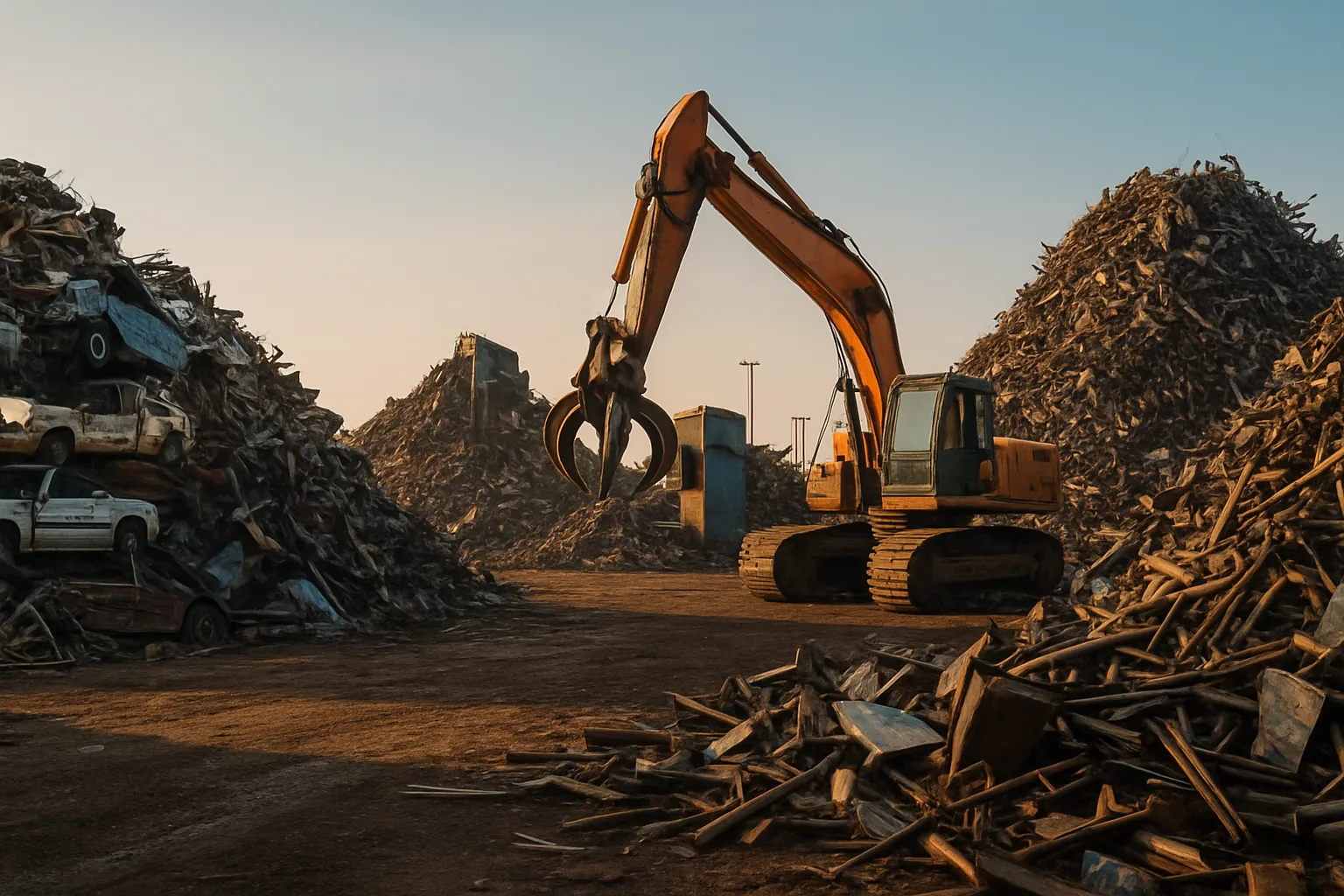
Not All Junk Cars Are Worth the Same — Here's Why
Two identical-year vehicles sit in a Saskatoon driveway. Same rust. Same dead engine. One gets a significantly higher offer than the other. Sound unfair? It's not. Scrap car value today is driven by a specific set of variables — make, model, condition, and market timing — and understanding them puts money back in your pocket.
Most car owners assume scrap yards work off a flat rate per pound. Sometimes that's true for pure scrap. But the real money comes from how much a buyer can recover before the car ever hits the shredder. Catalytic converters, drivetrains, body panels, electronics — these parts have independent market value. Your car's make and model determines exactly what's recoverable and what isn't.
This guide breaks down the key factors that move the needle on scrap car value, so you stop guessing and start negotiating from a position of knowledge. If you're ready to sell your car for cash across Canada, this is where you start.
Factor 1: Make and Model — The Biggest Price Driver
Not all steel is created equal, but more importantly, not all scrap cars are primarily sold for their steel. The make and model of your vehicle determines what components are still in demand on the used parts market. A high-demand truck model with a still-sought-after engine block is worth considerably more than a discontinued compact sedan with no parts ecosystem left to support it.
Here's what buyers are actually evaluating when they look at your car's make and model:
- Catalytic converter content: Certain makes — particularly Japanese imports and larger V6/V8 trucks — carry catalytic converters with higher concentrations of platinum, palladium, and rhodium. These metals have real commodity value, and your specific vehicle's converter can swing your quote by hundreds of dollars.
- Parts demand: If your make and model has a large active vehicle population on the road, there's a live market for its parts. A common pickup truck or SUV with strong Canadian registration numbers commands more than a discontinued import with no repair demand.
- Drivetrain complexity: All-wheel drive systems, turbocharged engines, and specialty transmissions can add recoverable value — or complicate the stripping process and reduce the offer.
- Aluminum vs. steel body panels: Newer trucks and SUVs with aluminum-intensive builds carry more non-ferrous metal weight. Aluminum pays more per pound than steel, which shifts the math in your favour.
Bottom line: two cars at the same weight, same age, different makes — different quotes. Always. Read Canadian car selling guides to understand what buyers are actually paying attention to before you pick up the phone.
Factor 2: Vehicle Condition Changes Everything — And Not Always How You'd Expect
Sellers often assume "it's all going to the crusher anyway, so condition doesn't matter." That's the wrong read. Condition affects which revenue streams a buyer can access from your vehicle. A car that rolls and has a working engine gets treated very differently than one that's been sitting in a Saskatchewan field for six years, stripped by thieves, and filled with water.
Here's how condition breaks down into real pricing categories:
- Running and driving: Maximum value. The buyer has options — retail sale, auction, parts pull, or scrap. Competition exists across all those channels.
- Non-running but complete: Still strong value if the drivetrain is intact and the body is solid. Catalytic converter present. Engine and transmission accessible. Parts buyers will bid.
- Non-running, partially stripped: Moderate value. Whoever stripped it already took the high-margin components. You're mostly selling steel weight at this point.
- Flood or fire damaged: Significant drop in recoverable value. Water-damaged electronics are worthless. Fire damage can compromise structural metal integrity and create processing complications.
- Crushed or severely damaged frame: Often pure scrap weight. You'll be quoted on tonnage, not parts recovery.
Condition also affects logistics costs. A car that can't be driven or towed conventionally costs the buyer more to move. That cost comes off your quote. Transparency about your vehicle's actual condition upfront saves everyone time — including yours.
Factor 3: Steel and Metal Markets Move — So Does Your Quote
Scrap car value today is tied to commodity markets that trade globally. Steel, aluminum, copper, and precious metals (specifically the platinum-group metals in catalytic converters) all fluctuate based on industrial demand, trade policy, and currency exchange rates. A quote you got six months ago may be meaningfully different from what you'd get today.
This is why platforms like SMASH exist. Find the best price for your scrap in Canada by putting your inventory in front of vetted buyers who are actively competing — rather than accepting whatever a single buyer offers on a single phone call.
A few metal market realities that directly affect scrap car pricing in 2026:
- Steel scrap prices are sensitive to North American manufacturing demand cycles. When mills are buying aggressively, prices climb. When inventory is high, they pull back.
- Catalytic converter pricing is increasingly tracked and documented due to theft-related regulations. Serial tracking and photo documentation of converters — features built into tools like SMASH — help legitimate sellers prove provenance and access full market value.
- Aluminum prices from automotive-grade body panels often track slightly separately from commodity aluminum. Knowing what your vehicle's non-ferrous content actually is makes a difference.
- Currency movements between CAD and USD affect cross-border competitiveness. Saskatchewan yards compete with buyers on both sides of the border for certain commodities.
Disclaimer: Metal and scrap car prices fluctuate daily based on commodity markets. Always check current rates before finalizing any sale.
How Saskatoon Sellers Can Get a More Accurate Quote
If you're trying to sell scrap car in Saskatoon, you have more leverage than you think — but only if you show up prepared. The old way is calling one local yard, accepting the first number, and hoping it's fair. The problem is you have no reference point. You don't know if that number reflects current steel prices, your car's actual parts value, or just what that buyer feels like paying today.
Here's how to approach it differently:
- Know your VIN: Your Vehicle Identification Number tells a buyer exactly what they're getting — engine size, trim level, factory options. Buyers using tools with VIN lookup capability can generate more accurate offers faster. Vague descriptions get conservative quotes.
- Document what's still on the car: Catalytic converter present? Both front seats? Working windows? All four wheels? Every complete component has recovery value. Photo documentation gives buyers confidence and gives you proof of what you're selling.
- Don't assume the first offer is the market: In Saskatoon and across Saskatchewan, getting your vehicle in front of multiple buyers — through an auction format rather than a single call — creates the competition that reveals actual market value.
- Get the paperwork right: A clean title or clear ownership documentation removes friction from the transaction. Complications slow the process and can reduce your net.
Platforms like SMASH put structure around this process. Vetted buyers, auction-style bidding, inventory tools with VIN lookup and photo documentation — it's the difference between guessing and knowing. If you want to get a free car valuation with real data behind it, that's the direction to move.
Why Selling Through a Competitive Platform Beats One Cold Call
Here's the old way: you call a single yard, describe your car over the phone, get a number that may or may not reflect what the market is actually paying, and accept it because you don't know what else to do. That's how sellers leave money behind — not through bad luck, but through lack of competition.
The SMASH model is built on a simple truth: more vetted buyers competing for your vehicle means better price discovery. Not a guaranteed higher price — markets don't work that way. But competition reveals what buyers are actually willing to pay right now, not what one buyer wants to offer in a vacuum.
This matters for how much is my salvage car worth questions especially. Salvage vehicles have wildly variable value depending on what's recoverable and who needs those specific parts at that specific time. An auction format surfaces that demand. A single phone call to a single buyer does not.
Additional features that create real value in the transaction process:
- Auto-invoicing: Documentation is generated automatically. No paper trail gaps, no disputes about what was sold and for what.
- GST/HST/PST handling: Proper tax treatment built into the transaction. Important for Saskatchewan sellers operating any kind of volume.
- Serial tracking for catalytic converters: Regulatory compliance isn't optional anymore. Having documentation built into the process protects the seller.
- No subscription fees: SMASH wins when you win. The incentive is aligned.
For Saskatchewan sellers, Saskatoon businesses managing multiple vehicles, or anyone wondering what the Saskatoon scrap metal services market looks like right now — this is the framework that gets you a defensible number instead of a guess.
Frequently Asked Questions
Q: What determines scrap car value today in Canada?
Scrap car value is determined by the vehicle's make, model, weight, condition, and current commodity prices for steel, aluminum, and catalytic converter metals. Market conditions in 2026 mean prices can shift week to week, so a quote today may differ from one you received several months ago. Always verify current rates before committing to a sale.
Q: How much is my junk car worth in Saskatoon right now?
There's no universal answer — your specific vehicle's value depends on its weight, what recoverable parts remain, and what buyers are actively paying in Saskatchewan right now. The best way to find out is to get multiple quotes through a competitive platform rather than relying on a single offer from one yard.
Q: Does a missing catalytic converter significantly reduce my car's scrap value?
Yes, significantly. Catalytic converters contain platinum-group metals that have real commodity value independent of the vehicle's steel weight. A missing converter can reduce your quote by a meaningful amount depending on the vehicle. Document what's present on your car before any sale.
Q: Why do two similar cars get different scrap quotes?
Because buyers aren't just buying metal — they're buying recoverable parts, converter content, and processing simplicity. Two cars of similar age can have very different parts demand, different catalytic converter configurations, and different conditions. All of that adds up to different quotes. Make and model matter more than most sellers realize.
Q: Is it better to sell to one local buyer or use an auction platform in Saskatchewan?
A single buyer gives you one data point. An auction platform gives you competition — multiple vetted buyers bidding on your vehicle, which helps surface what the market is actually willing to pay right now. For higher-value vehicles or loads, the difference between a single offer and a competitive process can be substantial.
Ready to stop guessing what your vehicle is worth? Whether you're in Saskatoon, somewhere else in Saskatchewan, or anywhere across the country, you can sell your car for cash across Canada with a process built on real data and real competition. Get a free quote at cashforcars-canada.ca and find out what your car is actually worth today.
Stay current on scrap metal market shifts and industry insights — follow SMASH on LinkedIn for regular updates from inside the industry.