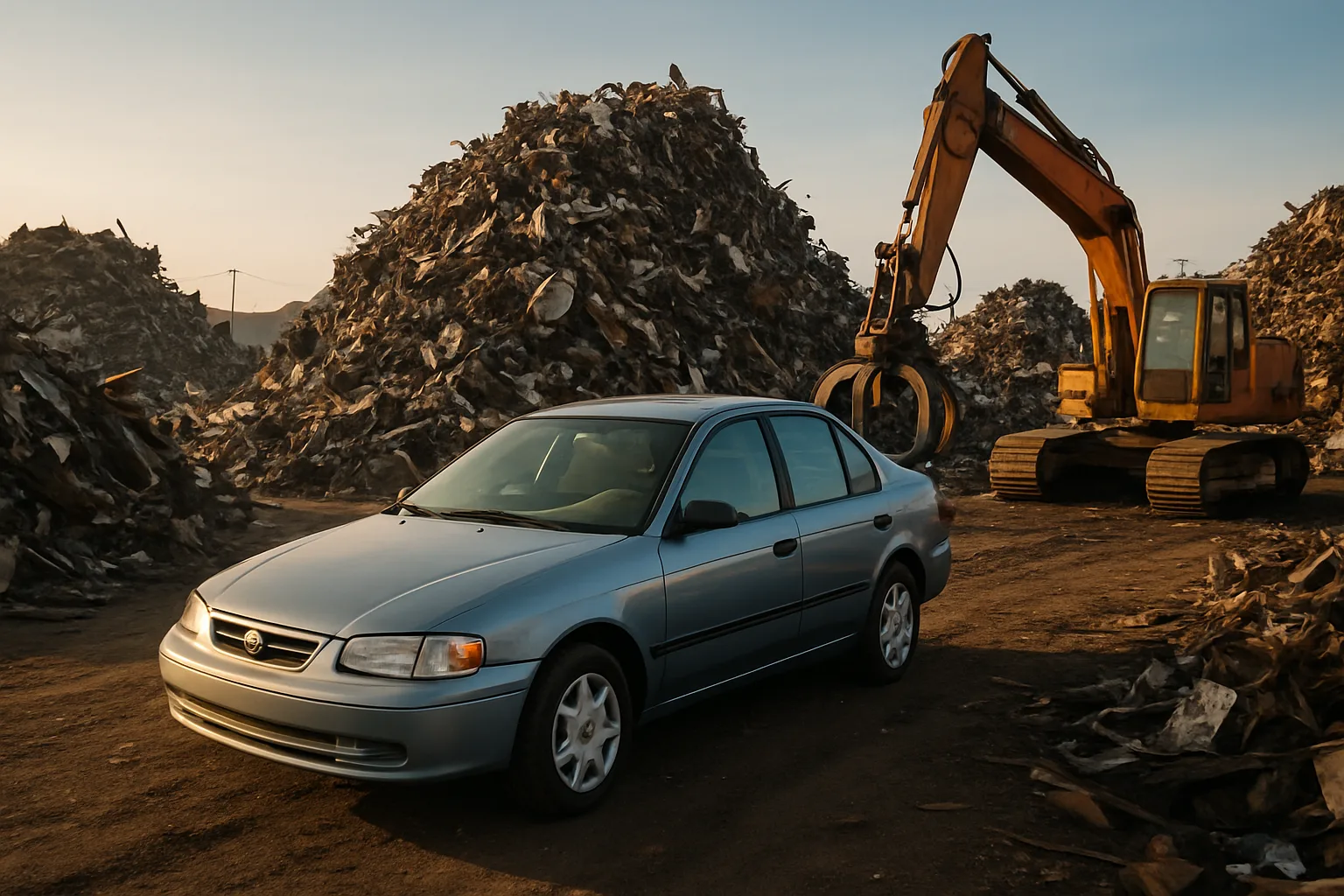
Most people leave hundreds of dollars on the table when they scrap a vehicle — not because the market is bad, but because they skip four or five steps that take less than an hour total. If you're trying to sell my car fast Prince George or anywhere else in British Columbia, what you do before you make that first call matters more than you think.
This isn't about squeezing every last cent out of a rusted-out sedan. It's about walking into the process informed, documented, and ready — so you get a fair offer instead of the first lowball number someone throws at you.
Here's exactly what to do before your vehicle gets towed away.
Step 1: Strip the Car Before You Call Anyone
Before you sell your car for cash across Canada, walk around it with fresh eyes. Not as the owner — as a buyer. What's still worth something? What can you pull off in 20 minutes with a basic socket set?
You'd be surprised what adds up:
- Floor mats and seat covers — especially aftermarket ones
- Aftermarket stereo or speakers — the stock head unit has almost no value; a decent aftermarket unit does
- Spare tire and jack — a full-size spare in good condition sells locally
- Battery — a relatively new battery is worth pulling if you have a use for it
- Tool kit or emergency kit — anything you put in, take out
- Personal documents — registration, insurance slips, anything tucked in the visor or glovebox
The catalytic converter is a different conversation. It has real non-ferrous value — platinum, palladium, rhodium. But removing it yourself isn't always practical or legal without the right tools and context. Know what's on your car before you negotiate, though. A buyer who knows your cat is there will price accordingly. You should too.
Step 2: Pull Your Paperwork Together
A missing title doesn't automatically kill a deal in British Columbia, but it slows everything down and gives buyers a reason to drop their offer. Get your documentation in order before you start getting quotes.
At minimum, you want:
- Vehicle registration — confirms you're the legal owner
- Photo ID — required for any legitimate transaction
- Title or ownership documents — critical for salvage title vehicles especially
- Any recent repair records — even on a scrap car, documented work adds credibility
- Lien release documentation — if the vehicle had financing, confirm it's clear
If you're wondering how much is my salvage title car worth, the honest answer is: it depends heavily on the metal weight, the condition of drivetrain components, and whether any parts have resale value. A salvage title reduces what a private buyer will pay, but a scrap buyer is pricing the material — not the title status. Clean up your paperwork and that distinction works in your favour.
Step 3: Understand What Your Vehicle Actually Weighs and Contains
Scrap buyers price vehicles largely on weight and material composition. A full-size pickup truck in Prince George carries significantly more ferrous steel than a compact hatchback. That difference shows up in the offer.
Typical vehicle weights by class:
- Compact cars — roughly 1,100–1,400 kg
- Mid-size sedans and SUVs — roughly 1,400–1,900 kg
- Full-size trucks and vans — roughly 2,000–3,000+ kg
- Heavy-duty work trucks — can exceed 3,500 kg
Beyond steel weight, know what non-ferrous material is on your vehicle. Aluminum wheels, copper wiring harnesses, brass fittings — these all carry higher per-pound value than the structural steel. Platforms like SMASH help yards and buyers price this more accurately by using detailed inventory documentation rather than rough estimates over the phone. That transparency benefits sellers too, because it reduces the gap between what you're quoted and what the load is actually worth.
You can get a free car valuation before committing to anything — knowing the baseline puts you in a stronger negotiating position.
Step 4: Get More Than One Quote — and Know Why That Matters
This is where most sellers leave money behind. They call one buyer, accept the first number, and move on. That works fine when the market is strong and buyers are competing hard. It works against you when it isn't.
Scrap metal prices today fluctuate based on commodity markets, regional demand, export conditions, and what individual yards currently have too much or too little of. A yard sitting on a lot of crushed steel this week may offer less than one that's running lean. You have no way to know that unless you get multiple quotes.
This is exactly the problem SMASH was built to solve. Instead of cold-calling yards one by one and hoping you hit the right one at the right time, SMASH creates competitive bidding between vetted buyers. More competition means better price discovery — not a guarantee, but a real structural advantage over the old way of doing things.
For sellers in northern British Columbia, where the buyer pool is smaller than in Metro Vancouver or the Lower Mainland, this kind of access to a broader market can make a meaningful difference. If you're in Prince George and you've only ever called the two local yards, you may not know what the actual market looks like.
Want to see how competitive bidding works for scrap loads? Get competitive bids for your scrap in Canada and see what the market actually says your material is worth.
Step 5: Photograph Everything Before Pickup
This step protects you. Once your vehicle leaves your property, any dispute about its condition, contents, or completeness becomes a your-word-against-theirs situation. Photos eliminate that.
Take photos of:
- All four corners of the exterior
- The interior, front and back
- The engine bay
- The odometer reading
- The VIN plate (dashboard and door jamb)
- Any parts you've already removed
- Any damage that was pre-existing
Good photo documentation also speeds up the process with serious buyers. SMASH's inventory tool is built around photo documentation for exactly this reason — documented loads get more confident bids because buyers aren't pricing in uncertainty. The same logic applies when you're selling a single vehicle: the more clearly you can show what you have, the faster and cleaner the transaction goes.
For guidance on the full process, read Canadian car selling guides that walk through documentation, title transfers, and what to expect on pickup day.
Step 6: Cancel Insurance and Transfer the Plates
This is administrative, but skipping it costs real money. In British Columbia, once a vehicle is sold or scrapped, you need to:
- Remove your licence plates — in B.C., plates belong to the owner, not the vehicle
- Cancel or transfer your ICBC insurance — you may be entitled to a refund on unused coverage
- Complete the Transfer/Tax form — this formally transfers ownership and protects you from future liability
- Notify ICBC — especially if the vehicle is being scrapped rather than resold
Don't hand over the keys and walk away without completing the paperwork. If a buyer drags that vehicle somewhere and something happens before the transfer is registered, you could still be on the hook. Do it right, do it the same day, and keep your copies.
Whether you're in Prince George, Prince Rupert, or anywhere else across British Columbia, the provincial process is the same. The Prince George scrap metal services page has local context specific to sellers in that region.
What Happens When You Skip These Steps
Here's the real cost of going in unprepared. A buyer shows up, sees the car hasn't been stripped, the title isn't ready, and there's no documentation. They drop their offer — and they're not wrong to. From their side, an undocumented, unprocessed vehicle carries more risk and more admin work. They price that in.
You accept it because you just want the car gone. That's understandable. But an hour of prep work on the front end typically pays off more than negotiating harder on the back end.
The sellers who consistently get stronger numbers — whether they're moving a single junk car or a full load of cash for junk cars Prince George buyers compete for — are the ones who show up documented, photographed, and informed about what they actually have.
If you're ready to get a real number on your vehicle, the process starts with a free quote. Sell your car for cash across Canada — whatever condition it's in, wherever you are — and find out what the market actually says it's worth at cashforcars-canada.ca.
Frequently Asked Questions
Q: How do I sell my car fast in Prince George without getting lowballed?
Get at least two or three quotes before accepting anything. Scrap prices vary between buyers depending on their current inventory and local demand. Coming in with your paperwork ready, photos taken, and any removable parts already pulled signals to buyers that you know what you have — that alone tends to produce more serious offers.
Q: Does a salvage title affect how much I get for a scrap car in British Columbia?
For scrap purposes, a salvage title matters less than it does in a private sale. Scrap buyers are primarily pricing steel weight and salvageable components, not resale value. That said, clean paperwork always speeds up the transaction and reduces the chance of a buyer using title issues as leverage to drop their offer.
Q: What's the best way to find cash for junk cars in Prince George?
Start with local yards, but don't stop there. Platforms like SMASH connect sellers with vetted buyers across a broader network, which is especially useful in northern British Columbia where local competition is thinner. More buyers competing for your vehicle means better price discovery than a single cold call.
Q: Do scrap metal prices today affect what I get for my car?
Yes, directly. Vehicle scrap value is tied to commodity steel and non-ferrous metal prices, which change regularly based on global demand, trade conditions, and regional supply. Getting a quote today doesn't lock in next week's price — if you're planning to scrap, move on it rather than waiting for prices to improve. Markets move in both directions.
Q: What do I need to cancel after scrapping my car in British Columbia?
Remove your licence plates before handing over the vehicle — in B.C., plates stay with the owner. Cancel or transfer your ICBC insurance policy, complete the ownership transfer paperwork, and keep copies of everything. If you skip the insurance cancellation, you may lose out on a refund for unused coverage.
Follow SMASH on LinkedIn for scrap metal market updates, industry insights, and news relevant to recyclers and buyers across North America.
```