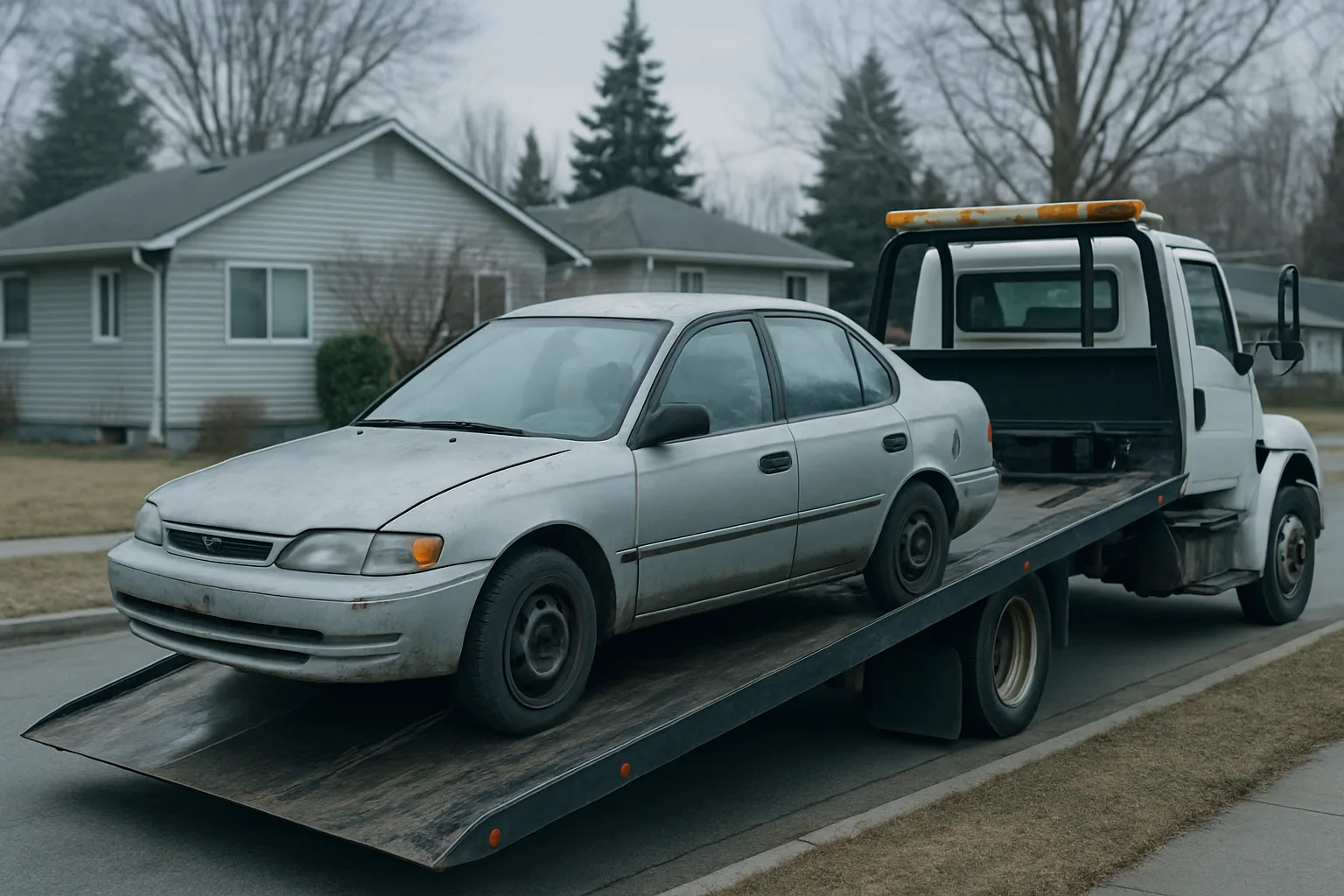
Most car owners leave money on the table when they scrap a vehicle. Not because the market is bad — but because they didn't know how the process actually works. If you want to understand scrap car value today and walk away with the most cash possible, what you do before you make that first call matters more than you think.
Whether you're in Nanaimo, Calgary, or Halifax, the principles are the same. The market rewards preparation. And right now in 2026, with scrap metal markets shifting and buyers competing harder for quality inventory, informed sellers have a real edge.
Here's what you need to know.
---What Actually Determines Scrap Car Value Today
Your car isn't just a pile of steel. Buyers look at a combination of factors — and understanding them helps you negotiate from a position of strength instead of guessing. Scrap car value today is driven by the global scrap metal market, your vehicle's specific composition, and what local buyers are actively bidding on.
The biggest variables in 2026:
- Vehicle weight: Heavier vehicles — trucks, SUVs, full-size vans — yield more scrap metal by the tonne. A full-size F-250 will return more base scrap value than a compact sedan, all else being equal.
- Catalytic converter condition: Cats contain platinum, palladium, and rhodium. A functioning, intact catalytic converter adds meaningful value. A missing or damaged cat costs you.
- Non-ferrous components: Copper wiring, aluminum wheels, and brass fittings are priced separately from steel. Vehicles with more non-ferrous content return better rates.
- Completeness of the vehicle: Missing parts, stripped interiors, or harvested engines reduce your offer. A complete car is worth more than one that's been picked over.
- Current steel scrap prices: The per-tonne rate for shredded steel fluctuates based on global demand. It directly affects your base payout.
No single buyer or phone call will give you an accurate picture of what you should expect. That's the problem with the old way of selling — one quote, take it or leave it. Platforms like the SMASH Recycling auction platform exist precisely to fix this. When multiple vetted buyers compete for your vehicle, you get actual market price discovery instead of a low-ball offer dressed up as a favour.
---How to Prepare Your Vehicle to Maximize Scrap Car Value
Preparation isn't complicated. But it separates sellers who get fair value from sellers who don't. Before you list your car or call a buyer, take 30 minutes and work through this checklist.
Document What You Have
Photograph everything — all four sides, the undercarriage if you can access it, the interior, the engine bay, and the catalytic converter location. Good photo documentation gives remote buyers confidence to bid higher. It also protects you from disputes after the fact. Buyers using platforms like SMASH use photo documentation and VIN lookup to verify what they're bidding on. That transparency benefits you as the seller.
Know Your Vehicle's Identity
Have your VIN ready. Serious buyers use VIN data to confirm year, make, model, engine size, and trim level. Serial tracking on major components — especially on late-model vehicles — can confirm whether a catalytic converter is original to the car. That detail affects your offer. If you're in Nanaimo or anywhere else in British Columbia, this documentation step is the same regardless of where you're located.
Remove Personal Valuables, Not Parts
Take your personal belongings out of the car. But don't pull parts off the vehicle unless you know the exact value of what you're removing and have a confirmed buyer for those parts. Stripping a car yourself, without knowing the market, often reduces your net return.
Check the Catalytic Converter
Your cat is one of the highest-value components on a scrap vehicle. If it's intact, mention it specifically. If it's been stolen or removed — a common issue in 2026 with cat theft still elevated across Canadian cities — be upfront about that. Hiding it costs you credibility with serious buyers.
---Sell Scrap Car in Nanaimo: What the Local Market Looks Like
Nanaimo sits in a unique position on Vancouver Island. It's a mid-size city with active scrap buyers, but it's also geographically separated from the Lower Mainland. That geography matters. Buyers factor in transport costs when bidding on vehicles in Nanaimo, which can affect your net offer depending on the buyer's location and logistics setup.
That's exactly why competition matters more here, not less. A single local buyer with no competition has no incentive to sharpen their offer. When you open your vehicle to multiple vetted buyers — including buyers on the mainland who want your load and will pay freight to get it — the dynamic changes. You can explore Nanaimo scrap metal services to understand what's available locally and how to get connected to buyers who actually serve this area.
In British Columbia, scrap car transactions also involve deregistration with ICBC. Before your vehicle leaves your property, confirm the buyer handles the paperwork or walk you through what you need to submit. A legitimate buyer will have a process for this. If they don't, that's a red flag.
---Scrap Metal Inventory Management: Why It Matters for Sellers
This sounds like a yard operator's problem, not a private seller's. But understanding how buyers think about scrap metal inventory management makes you a better seller.
Buyers are looking for complete, well-documented loads. When a yard or private seller shows up with clear inventory records — what's there, what's missing, what condition the major components are in — buyers can make faster, more confident decisions. That confidence translates into stronger bids.
SMASH was built around this principle. The platform includes inventory tools, VIN lookup, serial tracking, and photo documentation specifically because documented inventory gives buyers more confidence. Higher buyer confidence means more competitive bids. That's not marketing language — it's how auctions work. More information reduces buyer risk, and reduced risk unlocks better offers.
Even as a private seller with one vehicle, you can apply this logic. A detailed, honest description of your car — with photos, VIN, and an honest condition assessment — will outperform a vague listing every time. Read Canadian car selling guides for more practical advice on how to document and present your vehicle effectively.
---Junk Car Prices Near Me: How to Stop Guessing and Start Knowing
One of the most searched phrases in the scrap vehicle space is some version of "junk car prices near me" — and for good reason. Prices vary. They vary by location, by metal market conditions, by vehicle type, and by how many buyers are competing for your car at any given moment.
The honest answer is this: there is no single number that applies to every junk car in every city in Canada on any given day. What you can control is how many buyers you're putting in front of your vehicle. One call to one buyer gives you one data point. That's not a market — that's a guess.
In 2026, the sellers who consistently walk away with the best value are the ones using competitive platforms instead of relying on cold calls and word of mouth. SMASH connects scrap sellers to vetted buyers across North America through an auction format. No subscription fees. No guessing. The platform only works when sellers win — that's the model.
You can sell your car for cash across Canada through a process that puts competition to work for you instead of against you. Whether you're in Nanaimo, Edmonton, Toronto, or anywhere in between, the principle is the same: more buyers means better price discovery.
---What to Watch for in the 2026 Scrap Car Market
The scrap metal market in 2026 is active, but not without volatility. A few factors every Canadian seller should be aware of:
- Steel demand cycles: Global steel production drives shredded scrap prices. When manufacturing demand is strong, scrap prices rise. When it softens, prices follow. Timing your sale when demand is elevated — rather than distressed — can make a real difference.
- Catalytic converter regulations: Provinces across Canada have tightened documentation requirements for cat transactions in recent years. Make sure any buyer you work with is operating within current provincial regulations, especially in British Columbia.
- EV component recycling: As more electric vehicles enter the end-of-life cycle, battery pack recovery is becoming a meaningful part of scrap vehicle value. If you're scrapping a hybrid or EV, ask buyers specifically about battery valuation — this is an area where uninformed sellers can leave real money behind.
- Transport costs: Fuel costs and logistics affect what buyers in your region can afford to offer. Understanding your local market versus broader demand helps you interpret quotes accurately.
Staying current on these factors is part of getting maximum value. If you want to get a free car valuation without committing to a buyer, start there — it gives you a baseline before you negotiate.
Disclaimer: Scrap metal prices fluctuate based on global commodity markets and local demand. Always verify current rates before committing to a sale. The figures and market conditions described here reflect general 2026 conditions and may change.
---Frequently Asked Questions
Q: How is scrap car value calculated today?
Scrap car value is based on the vehicle's weight, metal composition, condition, and current steel and non-ferrous commodity prices. Catalytic converters and aluminum components often add significant value beyond the base steel price. The best way to know what your specific car is worth is to get multiple offers from vetted buyers — not just one call.
Q: Can I sell my junk car without a title in British Columbia?
In British Columbia, vehicle transfers require proper documentation. Most legitimate scrap buyers will need proof of ownership to process the transaction legally. If you've lost your title, contact ICBC to request a replacement before initiating a sale. Be cautious of buyers who say documentation doesn't matter — that's a red flag.
Q: What's the best way to sell a scrap car in Nanaimo?
Document your vehicle thoroughly — photos, VIN, honest condition notes — and put it in front of multiple buyers rather than accepting the first offer. Local buyers in Nanaimo are a starting point, but mainland buyers may compete for your vehicle too, especially for heavier or more complete loads. Competition is what drives fair value.
Q: How long does it take to sell a scrap car for cash?
With the right buyer and proper documentation, most scrap vehicle transactions complete within one to three business days. Some buyers offer same-day or next-day pickup. Having your VIN, photos, and ownership documents ready speeds the process up significantly.
Q: Does SMASH handle scrap car sales for private sellers?
SMASH is primarily built for recycling yards and volume sellers, but the platform's auction format and vetted buyer network raise the bar for the entire market. Private sellers benefit when the buyers they're dealing with are operating in a competitive environment. If you're a yard or high-volume seller, SMASH is worth exploring directly.
---Ready to stop guessing and start getting real value for your vehicle? The market rewards sellers who show up prepared and put their car in front of genuine competition. Whether you're in Nanaimo, Vancouver, Toronto, or anywhere else in Canada — sell your car for cash across Canada and find out what your vehicle is actually worth. Get your free quote at cashforcars-canada.ca.
Follow SMASH on LinkedIn for ongoing scrap metal market insights, industry news, and updates that help sellers and buyers stay ahead of the market.