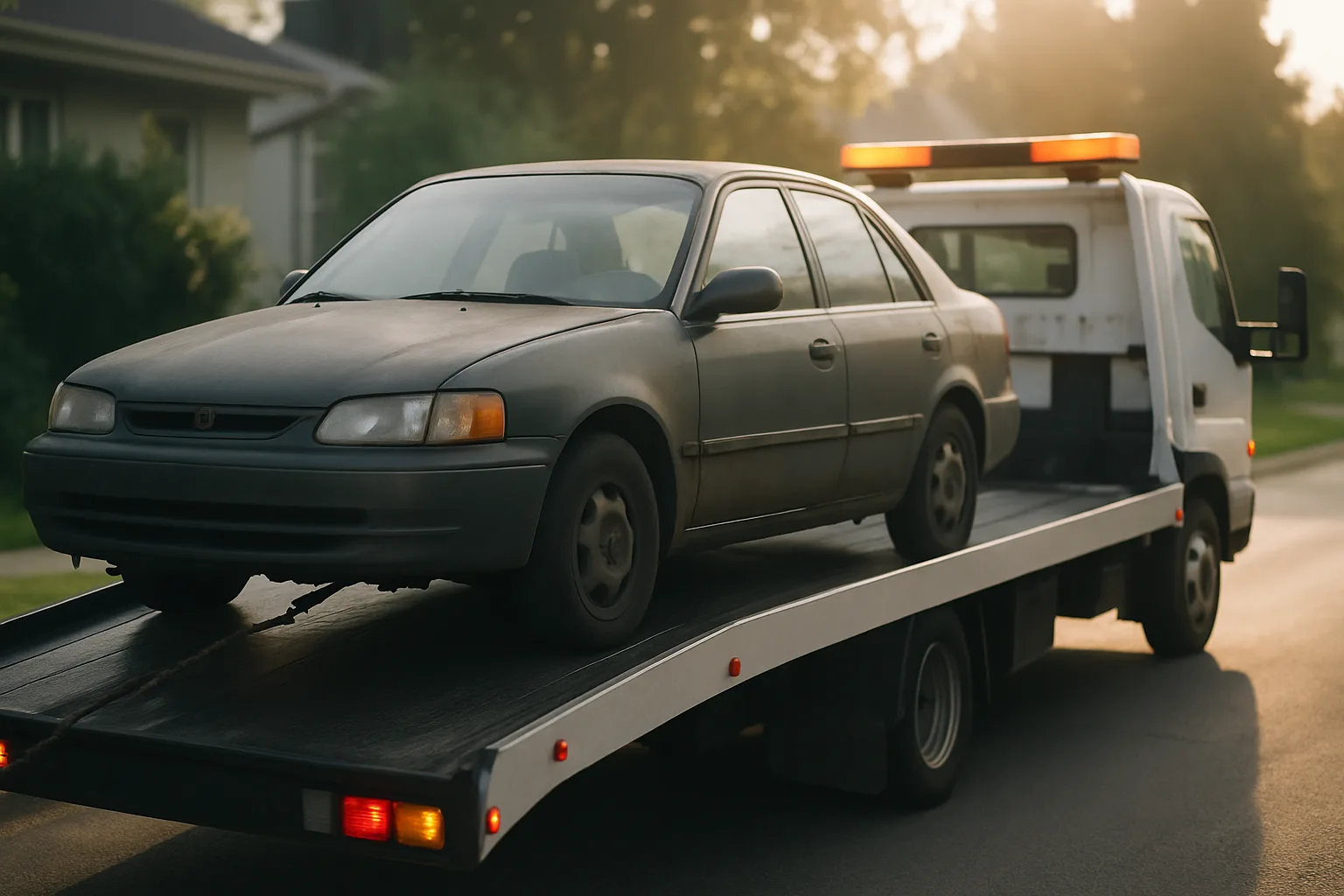
Most cars spend their final years sitting in a driveway, bleeding oil, and costing more to fix than they're worth. If you're in Fredericton staring at a rusted-out sedan that hasn't moved since last winter, you're not alone — and you're not stuck. Understanding the full lifecycle of a vehicle helps you make smarter decisions about when to sell, what you're actually sitting on, and how to get paid fairly for it. If you want to sell your car for cash across Canada, knowing where your vehicle sits in its lifecycle is the first step.
---Stage One: Birth — Steel, Stamping, and the Assembly Line
Every vehicle starts as raw material. Steel, aluminum, copper wiring, rubber, glass, and dozens of engineered plastics get shaped, stamped, welded, and assembled into something that weighs between 1,200 and 2,500 kilograms depending on the model. A standard passenger car contains roughly 900 kg of steel alone. That number matters later — it's a big reason why scrap buyers care about what they're picking up.
At the factory, manufacturers embed thousands of components that have independent value. The catalytic converter is one of the most significant. Loaded with platinum, palladium, and rhodium, a single OEM cat can carry anywhere from a modest scrap value to several hundred dollars depending on the vehicle make and model. Luxury and large-displacement engines carry richer converters. Economy cars carry leaner ones. This is why buyers and catalytic converter auction platforms care about VIN numbers — the specific vehicle tells you the specific cat.
The factory also installs the copper harnesses, aluminum radiators, stainless exhaust components, and lead-acid battery that all become recoverable at end of life. A brand-new vehicle is essentially a bundle of commodities with a temporary use case attached.
---Stage Two: Working Life — Depreciation, Maintenance, and the Slow Decline
The average Canadian vehicle stays on the road for roughly 12 to 15 years. In that time, it accumulates wear, rust, and repair history that chips away at resale value. The first three years see the steepest depreciation — often 40 to 50 percent of the purchase price. After that, the slide is slower but relentless.
In harsher climates — and New Brunswick qualifies — road salt accelerates frame and underbody corrosion significantly. A car that would still fetch trade-in value in a drier region may already be a structural write-off in Fredericton after ten winters. That's not a knock on the region. It's just reality. Salt and freeze-thaw cycles eat metal. Buyers know this. The earlier you move a declining vehicle, the more you typically recover.
Common turning points where vehicles shift from "worth repairing" to "worth scrapping" include:
- Transmission failure on a high-mileage vehicle (repair cost often exceeds vehicle value)
- Structural rust that fails safety inspection
- Collision damage where the repair estimate exceeds 70–80% of book value
- Engine seizure or catastrophic oil loss
- Airbag deployment combined with significant body damage
When you hit one of those thresholds, the math changes. You're no longer holding a car — you're holding a commodity.
---Stage Three: End of Life — What Your Scrap Car Is Actually Made Of
When a vehicle reaches the end of its useful life, it doesn't disappear. It gets broken down into recoverable materials that re-enter the manufacturing cycle. A typical end-of-life vehicle, once processed, yields approximately:
- 65–70% steel — the dominant material, processed into shredded scrap and sold to mills
- 8–10% aluminum — wheels, engine block in many modern vehicles, radiators
- Copper wiring — stripped and sold as #1 or #2 copper depending on insulation and gauge
- Catalytic converter — processed separately for platinum group metals (PGMs)
- Lead-acid battery — recycled separately; lead and sulfuric acid are both recoverable
- Fluids — oil, coolant, transmission fluid, and refrigerant drained and processed before shredding
The catalytic converter typically gets removed before the vehicle hits the shredder. That's where the real commodity value concentrates in a single component. Platforms like SMASH handle this side of the equation — connecting sellers of cats and non-ferrous materials with vetted buyers through a transparent auction format, rather than a single-buyer phone call where you're guessing whether you got a fair price.
If your vehicle has been sitting in a Fredericton driveway for a few years, the catalytic converter is still there. It still has value. Don't let it walk away for less than it's worth.
---Stage Four: The Scrap Yard — Processing, Pricing, and Who Actually Wins
Most people imagine a scrap yard as a disorganized pile of rust. The modern reality is different. Registered auto recyclers in New Brunswick and across Canada operate under environmental standards that govern fluid handling, parts inventory, and material processing. Many yards pull usable parts for resale before anything goes to the shredder — doors, engines, transmissions, interior components. This secondary market for used auto parts extends the lifecycle of components even after the vehicle is gone.
Once the salvageable parts are pulled, the hulk gets crushed and shredded. Shredder output — a mix of ferrous and non-ferrous material — gets sorted by density and magnetic separation. The ferrous fraction goes to steel mills. The non-ferrous fraction gets processed further to separate aluminum, copper, and other metals. Very little of a vehicle actually ends up in landfill.
Where sellers often lose money is in the transaction that gets the vehicle to the yard in the first place. A single buyer with one offer leaves you with no frame of reference. You either take it or spend hours making more calls. That's the old way — and it's not designed to benefit you.
SMASH changes that dynamic. By bringing multiple vetted buyers into a competitive auction format, SMASH creates real price discovery. More buyers means better price discovery. You're not guessing. You're seeing what the market actually says your material is worth. If you're handling catalytic converters, cores, or non-ferrous loads from vehicles — whether you're a yard operator or a private seller with volume — sell your scrap metal on SMASH Recycling and find out what competition actually looks like.
---How to Sell Your Junk Car in Fredericton Without Getting Lowballed
Selling a junk car in Fredericton doesn't have to mean accepting the first number someone throws at you. The process is simpler than most people think — and moving quickly usually works in your favor, since condition only goes one direction over time.
Here's how it typically works when you sell my junk car Fredericton through a cash-for-cars service:
- Get a quote. Provide the year, make, model, approximate mileage, and condition. A good buyer gives you a number upfront — no surprises at pickup.
- Schedule pickup. Most services offer free towing. In Fredericton, that usually means same-day or next-day availability depending on the season.
- Transfer ownership. You'll sign over the title and receive payment — typically cash or e-transfer on the spot.
- Done. No storage fees, no repair costs, no trying to find a buyer on a classifieds app who ghosts you after three messages.
What makes the difference between a fair deal and a lowball? Documentation and preparation. Know your vehicle's VIN. Know roughly what's under the hood. If the catalytic converter is still intact, mention it — it's a real component with real value that factors into what buyers offer. If you're not sure where to start, get a free car valuation and see what your vehicle is actually worth before anyone comes to pick it up.
For more guidance on navigating the process, read Canadian car selling guides that walk through what to expect in different provinces and conditions.
---The Bigger Picture: Why the Scrap Car Market Matters in 2026
The North American scrap metal market remains active in 2026. Steel mills continue to rely on recycled scrap as feedstock — it's cheaper and less energy-intensive than virgin ore. Aluminum recycling saves roughly 90% of the energy required to produce primary aluminum. The demand for recycled materials isn't a trend. It's structural.
For the average car owner in Fredericton trying to sell scrap car in New Brunswick, this matters because demand drives prices. When mills are buying, scrap yards are paying. The window to move a vehicle at a reasonable price correlates with broader commodity demand. Waiting longer doesn't usually mean getting more — it means watching metal degrade and buyers lower their offers accordingly.
Whether you're trying to sell my junk car for cash in Fredericton, clear out a farm property in rural New Brunswick, or offload a fleet vehicle in another province entirely, the lifecycle principles are the same. Steel, aluminum, and PGMs don't care where you live. They have value, and they can be recovered.
When you're ready to move, the process doesn't have to be complicated. Fredericton scrap metal services are available to handle pickup, documentation, and fair pricing — without the runaround. Cash for cars buyers operate across Canada, and the best ones make it straightforward from quote to pickup.
Your car had a full life — factory floor, thousands of kilometers, and a few hard winters. When it's done, make sure you recover what it's worth. Sell your car for cash across Canada — get a free quote at cashforcars-canada.ca.
---Frequently Asked Questions
Q: How much can I get for a junk car in Fredericton?
The value depends on the vehicle's weight, make, model, and condition of key components like the catalytic converter and battery. Prices fluctuate with the scrap metal market, so getting a quote at the time you're ready to sell gives you the most accurate number. Most junk vehicles in Fredericton recover meaningful value even if they haven't run in years.
Q: Do I need a title to sell my junk car in New Brunswick?
In most cases, yes — proof of ownership is required to legally transfer a vehicle in New Brunswick. If you've lost the title, contact Service New Brunswick to request a replacement before attempting to sell. Most reputable buyers won't process a vehicle without proper documentation, and that's actually a good sign — it protects you too.
Q: How fast can I get my junk car picked up in Fredericton?
Many cash-for-cars services operating in Fredericton offer same-day or next-day pickup once you've confirmed a quote. Timing can vary by season — summer and fall tend to move faster due to volume. If speed matters, say so when you request your quote.
Q: Is my catalytic converter worth anything if the car doesn't run?
Yes — absolutely. The catalytic converter contains platinum group metals and retains value regardless of whether the vehicle is operational. In fact, an intact converter on a non-running vehicle is one of the more significant value components at end of life. Platforms like SMASH handle catalytic converter sales through competitive auctions that reflect actual market value, not a single buyer's guess.
Q: Can I sell my car for cash if it has been in an accident?
Yes. Accident-damaged vehicles are routinely purchased by scrap car buyers across Canada. Even a total loss with deployed airbags and significant body damage has material value — steel, aluminum, copper, and the catalytic converter are all still recoverable. Provide accurate information about the damage when you request your quote so the buyer can give you a fair number upfront.
---Follow SMASH on LinkedIn for scrap metal market updates, auction insights, and industry news: SMASH — Scrap Metal Auction Sales Hub.