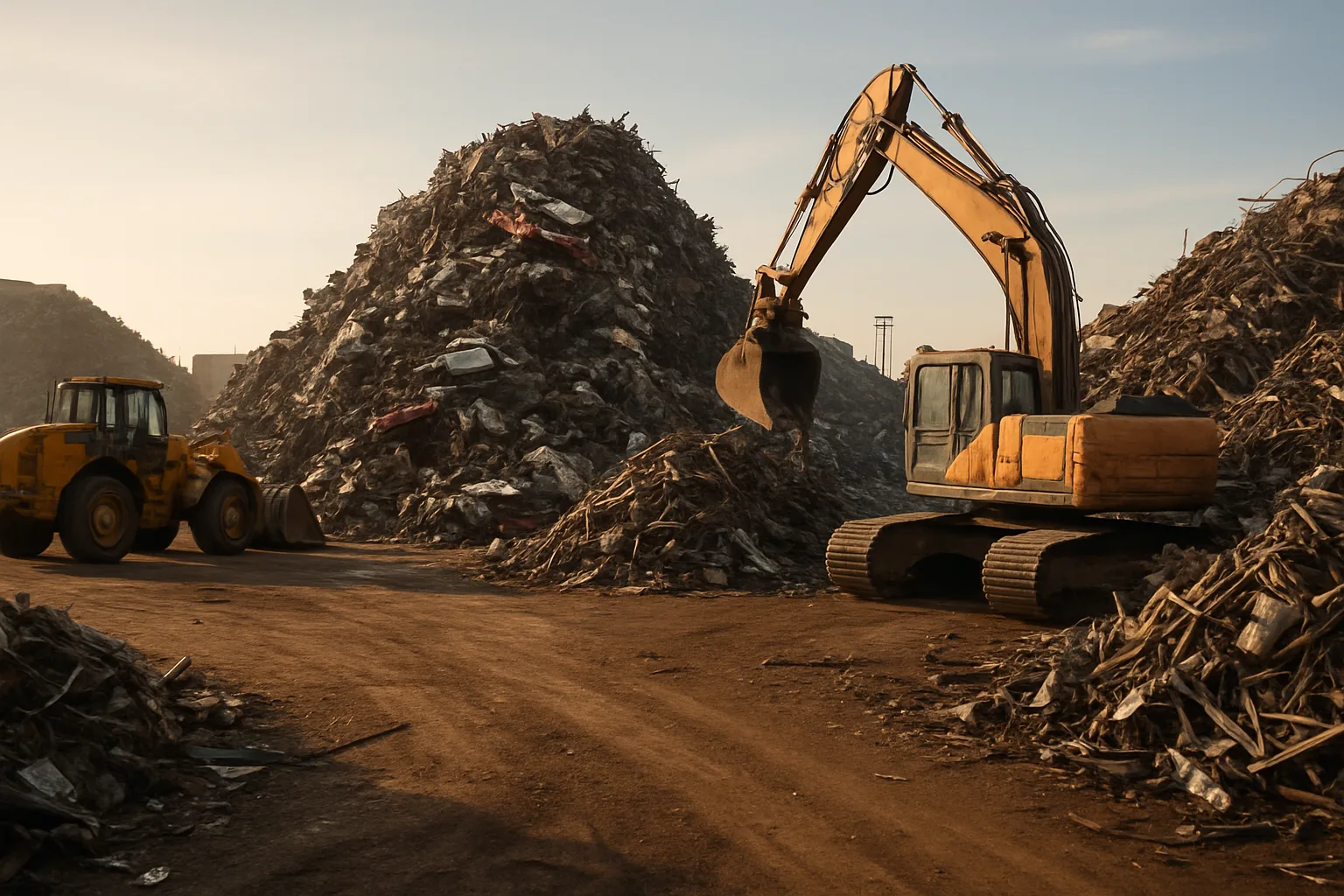
Most people hand over their keys, collect their cash, and never think about what happens next. But the journey your junk car takes after pickup is worth understanding — especially if you want to know why some buyers pay more than others, and how the recycling process actually works in 2026.
Whether you're searching for we buy junk cars Victoria or comparing offers from junk car buyers near you, knowing what happens after your car leaves the driveway helps you make a smarter sale. The vehicle you're getting rid of has real value — metal, fluids, parts, and sometimes a catalytic converter worth more than you'd expect.
Here's exactly what happens from the moment the tow truck pulls away to the point your car becomes raw material again.
Step One: The Car Arrives at the Auto Recycling Yard
Your car doesn't just sit in a lot waiting to be crushed. The moment it arrives at a licensed auto recycler, it goes through an intake process. Staff log the VIN, note the condition, and assess what's salvageable. This is where the real valuation begins — and where documentation matters.
In British Columbia, licensed recyclers follow environmental regulations around fluid handling, parts documentation, and vehicle tracking. That means your car is logged into a system, not just dropped on a pile. The intake process typically takes a few hours and sets the stage for everything that follows. Platforms like SMASH integrate inventory tools, VIN lookup, and photo documentation into this process — making it easier for buyers to assess what they're bidding on before they even show up.
Step Two: Depollution — The Environmental Phase Every Recycler Must Complete
Before any parts come off or any metal gets processed, depollution happens. This is non-negotiable for licensed auto recyclers across Canada, including every yard operating in Victoria and throughout British Columbia.
Depollution includes draining and safely disposing of:
- Engine oil and transmission fluid
- Brake fluid and power steering fluid
- Coolant and antifreeze
- Fuel remaining in the tank
- Air conditioning refrigerants (captured with certified equipment)
- Battery acid from lead-acid batteries
This step protects the environment and is required under provincial regulations. If a buyer is offering you cash without any mention of proper disposal or licensing, that's a red flag. A legitimate operation — whether you find them through a quick search for junk car buyers near me within 5 mi or through a vetted marketplace — will always complete depollution before processing the vehicle further.
Some yards also remove airbags and seatbelt pretensioners at this stage, since these are considered hazardous materials and require careful handling.
The Catalytic Converter: Why It Gets Pulled First
If your car has a catalytic converter — and most do — it comes off early. Why? Because the precious metals inside (platinum, palladium, and rhodium) make it one of the most valuable components on the entire vehicle. In 2026, catalytic converter values remain significant, driven by demand for platinum group metals in industrial and clean energy applications.
This is also why sell catalytic converters online has become a real option for recyclers and yards with volume. Platforms like SMASH allow yards to auction catalytic converter loads — including whole converters, cracked cats, and aftermarket units — to vetted buyers who compete on price. That competition matters. A single buyer offering a flat rate has no incentive to give you the best number. Multiple buyers bidding do.
If you're selling a car and wondering what your catalytic converter is worth, the answer depends on the year, make, model, and the current spot price of platinum group metals. If you're curious, get a free car valuation that factors in component values — not just scrap weight.
Victoria scrap metal services, including those handling end-of-life vehicles, are increasingly connected to broader North American markets through digital platforms that allow for real price discovery rather than guesswork. You can explore Victoria scrap metal services to see how local options stack up.
Parts Recovery: What Gets Salvaged Before the Crusher
After depollution and catalytic converter removal, the yard assesses what parts are worth pulling for resale. This depends on the car's condition, the make and model, and current demand for used auto parts. Not every car gets the full teardown — it's a time and labour calculation.
Commonly salvaged parts include:
- Engines and transmissions in working or repairable condition
- Alternators, starters, and power steering pumps
- Doors, hoods, and body panels with minimal damage
- Wheels, tires, and suspension components
- Seats, dashboards, and interior trim
- Headlights, taillights, and mirrors
- Radiators and cooling system components
Parts go into inventory — sometimes physical shelf storage, sometimes a digital listing. Buyers searching for used auto parts often find these through specialized salvage yard databases. The better the documentation (photos, condition notes, part numbers), the faster they sell and the more they're worth. This is where good intake processes pay off for the recycler.
For car owners wondering about cash for cars British Columbia — the value of your vehicle isn't just the steel. It's the sum of all these components. A 2015 pickup with a seized engine might have $400 in steel value but $1,200 in parts if the body is clean. That's why the question of how much is my junk car worth rarely has a single answer.
The Metal Phase: Shredding, Sorting, and Selling Scrap
Once salvageable parts are pulled and fluids are out, the remaining shell — called the hulk — heads toward metal processing. In most cases, this means a shredder. Industrial auto shredders can process a vehicle in under a minute, reducing it to fist-sized fragments of mixed steel, aluminum, copper, and other materials.
After shredding, the material goes through separation:
- Magnetic separation pulls out ferrous (iron and steel) material
- Eddy current separation recovers non-ferrous metals like aluminum
- Sensor-based sorting identifies specific alloys and grades
- Manual picking catches copper wiring and other high-value materials
The separated metal is baled or prepared as loose loads and sold to mills and foundries. This is where the commodity market comes in. Steel prices fluctuate based on global demand, energy costs, and mill capacity. Aluminum prices track separately. A car that weighs 1,400 kg might yield 800–1,000 kg of ferrous metal plus 80–120 kg of aluminum — but the payout per tonne changes week to week.
This is precisely why compare scrap metal bids from Canadian buyers before accepting a single offer. One buyer's flat rate might reflect yesterday's market. A competitive auction reflects today's.
How the Value Chain Affects What You Get Paid
Here's the part most car sellers don't see. Every step of the recycling process generates revenue for the yard — parts sales, catalytic converter payouts, and scrap metal proceeds. The offer you receive when you sell your car for cash across Canada is based on an estimate of all those downstream values, minus the yard's operating costs and margin.
That's why getting multiple offers matters. If you're in Victoria or anywhere else in British Columbia, a single phone call to one buyer gives you one data point. That buyer has every incentive to offer the minimum you'll accept. More buyers competing for your vehicle — or your load of catalytic converters — creates real price discovery.
SMASH exists to solve exactly this problem for scrap yards and recyclers operating at volume. By connecting sellers with vetted buyers through a competitive auction format, the platform removes the guesswork. No subscription fees. No locked-in relationships with a single buyer. Just transparent pricing based on what the market actually pays. Read Canadian car selling guides to understand how to maximize your vehicle's value before you sell.
For individual car sellers, the takeaway is simple: understand what your car is worth at every stage of the process, and don't accept the first number someone throws at you without doing a bit of homework.
What 'Scrap Car Removal Victoria' Actually Involves
If you've searched scrap car removal Victoria, you've probably seen a range of services — from small independent operators to larger regional buyers. The process they follow when they pick up your car should mirror what's described above, assuming they're licensed and operating within provincial guidelines.
In Victoria specifically, the combination of a dense urban core and strong environmental awareness in the region means licensed recyclers are the norm rather than the exception. That said, not every buyer advertising fast cash and free towing is operating a full depollution facility. Some are brokers who flip vehicles to larger yards. That's not inherently bad — but it can affect the offer you receive, since there's another margin layer in the chain.
The best outcome for a seller: find a direct buyer or a platform that connects you with vetted buyers, understand roughly what your car's components are worth, and get your offer in writing before you hand over the title. If the numbers make sense and the pickup is free, move forward. If something feels off, it probably is.
Ready to find out what your car is actually worth? Sell your car for cash across Canada — get a free quote at cashforcars-canada.ca and see what real buyers are willing to pay for your vehicle today.
Frequently Asked Questions
Q: How long does the auto recycling process take after my car is picked up in Victoria?
Depollution typically happens within 24–48 hours of a vehicle arriving at the yard. Parts assessment and removal can take several days to a few weeks depending on the vehicle and the yard's workload. Metal processing follows after that. From pickup to shredder, the full cycle is usually two to six weeks.
Q: Do I need to remove personal items before scrap car removal in Victoria?
Yes — remove all personal belongings before the tow truck arrives. Once your car leaves, recovering items from a recycling yard is difficult and sometimes impossible. Check the trunk, under seats, and in door pockets before you hand over the keys.
Q: How do I know how much my junk car is worth before I sell it?
Your car's value comes from its weight in scrap metal, any salvageable parts, and the catalytic converter if present. Using a how much is my junk car worth calculator gives you a rough baseline, but the most accurate number comes from getting offers from multiple buyers who can assess the full picture. Platforms that aggregate buyers tend to surface better offers than single-buyer phone quotes.
Q: Can I sell just the catalytic converter from my junk car separately?
Yes, in many cases you can — especially if you have access to tools and want to maximize that component's value before selling the rest of the vehicle. Selling catalytic converters online through platforms that connect you with vetted buyers can generate better returns than selling the whole car to a yard that bundles everything into one flat offer. Just ensure you have proof of ownership for the vehicle the converter came from, as regulations around converter sales have tightened across Canada in recent years.
Q: Are there specific regulations for junk car buyers in British Columbia I should know about?
Licensed auto recyclers in British Columbia must follow provincial environmental regulations around fluid disposal, parts documentation, and vehicle record-keeping. When you sell to a licensed buyer, your vehicle is properly logged and processed. Always ask if a buyer is licensed — a legitimate operation will have no issue confirming this. Unlicensed buyers operating informally may offer fast cash but create liability and environmental risk.
Stay current on scrap metal markets and the Canadian auto recycling industry — follow SMASH on LinkedIn for regular updates, price insights, and industry news straight from the yard floor.