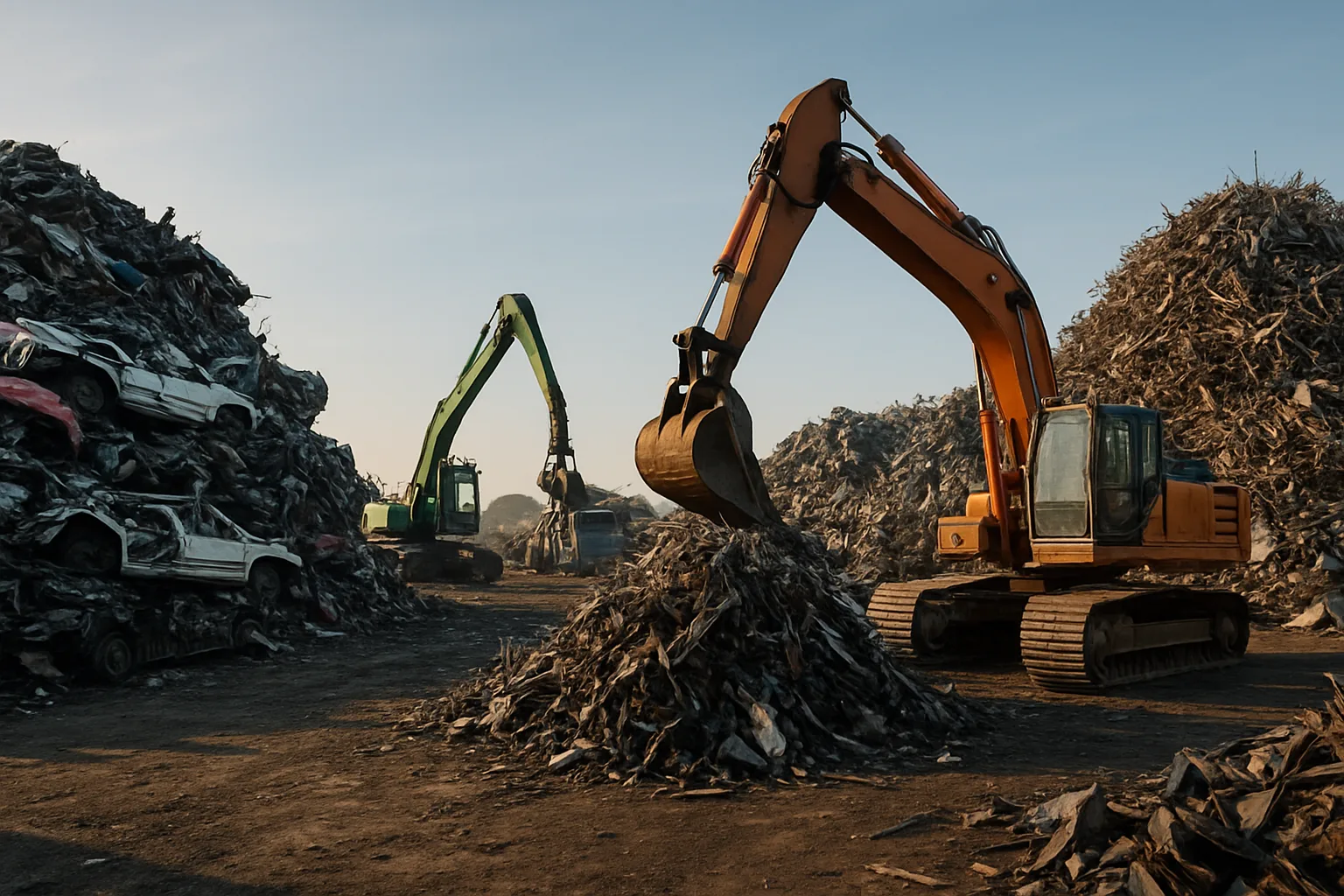
Most people hand over their keys, watch the tow truck pull away, and never think about it again. But what actually happens to your vehicle after scrap car removal in Abbotsford? The answer is more systematic — and more valuable — than most car owners realize. Your "junk car" doesn't disappear. It gets stripped, sorted, crushed, and sold as raw material that feeds manufacturing supply chains across North America.
Understanding the process matters. It helps you ask better questions, get a fair price, and avoid leaving money on the table when you sell your car for cash across Canada. Let's walk through what happens from the moment your car leaves your driveway to the moment it becomes something new.
---Step One: Arrival, Assessment, and Depollution at the Recycling Yard
Your vehicle arrives at the auto recycling facility and the first thing that happens isn't disassembly — it's depollution. Every car carries a surprising amount of hazardous material. Trained technicians drain and recover all fluids before anything else gets touched.
Here's what gets removed in depollution:
- Engine oil and transmission fluid — recovered and re-refined where possible
- Coolant (antifreeze) — drained and processed separately
- Brake fluid and power steering fluid — both hazardous if released into soil or water
- Fuel — siphoned and stored safely
- Air conditioning refrigerant — captured with certified equipment; venting it is illegal in Canada
- Mercury switches — older vehicles often contain these in trunk lights and hood lights
This step isn't optional. Canadian provincial regulations require it, and in British Columbia, the Automotive Retailers Association and the End of Life Vehicle program set specific handling standards. Yards in Abbotsford and across the province operate under these rules. Skipping depollution isn't just irresponsible — it's a liability.
Once the vehicle is clean, the yard logs it into their inventory system. Modern recyclers use digital tracking tools to record the make, model, VIN, and condition. Platforms like Canada's B2B scrap recycling marketplace have pushed yards toward better scrap metal inventory management — tracking everything from individual parts to bulk material weights. That data matters when it comes time to sell.
---Parts Harvesting: Where the Real Value Hides
After depollution, skilled dismantlers go to work. Not every car is worth parting out extensively — it depends on the make, model, age, and parts demand. But for many vehicles, the parts are worth significantly more than the scrap metal alone.
High-value parts that get pulled first:
- Catalytic converters (cats) — these contain platinum group metals and are among the most valuable components on any vehicle. A single cat from a newer vehicle can carry serious value.
- Engines and transmissions — if they're functional, they go to used parts inventory or rebuilders
- Alternators, starters, and power steering pumps — strong secondary market for these cores
- Wheels and tires — especially alloy rims in good condition
- Mirrors, doors, hoods, and body panels — collision repair shops buy these constantly
- Seats, dashboards, and interior trim — depending on condition
- Batteries — both 12V lead-acid and EV battery packs are high-priority recoveries
The dismantling process is methodical, not random. Experienced recyclers know which parts sell fast and which will sit on a shelf. They also know that documentation matters — photo records, serial tracking, and accurate part descriptions help sell inventory faster and protect against liability. This is exactly why digital tools for inventory and documentation have become standard practice at serious yards.
---The Shredder: What Happens to the Shell
Once the usable parts are removed, what's left is the hulk — the bare steel body of the vehicle. This gets flattened by a crusher or baler and then sent to an auto shredder. Industrial shredders are enormous machines that tear vehicle hulks into fist-sized pieces of mixed material in seconds.
After shredding, powerful separation systems sort the output:
- Ferrous metals (steel and iron) are pulled out with magnets — this is the bulk of the material by weight
- Non-ferrous metals like aluminum, copper, zinc, and brass are separated using eddy current separators and density separation
- Shredder residue (fluff) — the remaining foam, plastic, glass, and rubber — gets processed separately for landfill or material recovery
The sorted metals are then baled or containerized and sold to steel mills and smelters. Ferrous scrap goes into electric arc furnaces to produce new steel. Non-ferrous metals feed aluminum smelters and copper refineries. Nothing useful ends up buried — that's the whole point of the recycling process.
For junk car buyers near me Abbotsford and across British Columbia, this downstream market for shredded material is what ultimately drives what they can pay for your vehicle. When steel prices rise, yards can offer more. When commodity prices drop, margins tighten. That's the reality of the scrap market.
---How Scrap Metal Pricing Actually Works — and Why Competition Matters
Here's something most car owners don't know: the price a yard pays you for your scrap car isn't set by some universal formula. It's influenced by current commodity prices, the specific metals in your vehicle, local demand, and — critically — how many buyers are competing for your load.
If you call one yard and take their offer, you have no idea if you left $50 or $200 on the table. That's the old way. One call, one number, take it or leave it.
This is where platforms like SMASH change the game. SMASH is a B2B scrap metal auction marketplace that puts your material in front of vetted buyers who compete for it. More buyers means better price discovery. Competition can help reveal the true market value of your material — whether you're a recycling yard moving bulk loads or a seller trying to understand what your vehicle is actually worth in today's market.
Whether you're dealing with scrap car removal in Calgary, selling in Ontario, or handling a vehicle in Abbotsford, the principle is the same: transparency and competition produce better outcomes than a single phone call ever will. Read Canadian car selling guides to understand how to navigate offers and avoid underselling your vehicle.
---Paperwork, Titles, and What You Need to Know Before You Hand Over the Keys
The process at the recycling yard runs smoothly when the paperwork is right. On your end, there are a few things to handle before your vehicle gets picked up — otherwise, you could face headaches later.
What you need to have ready:
- Proof of ownership — your vehicle registration or title. In British Columbia, you'll need to complete a Transfer/Tax Form (APV9T) to transfer ownership properly.
- Government-issued ID — the buyer needs to verify who they're dealing with
- Your licence plates — in B.C., plates stay with the owner, not the vehicle. Remove them before pickup.
- ICBC notification — if you're cancelling insurance, contact ICBC directly to stop coverage and avoid unnecessary premiums
Once the paperwork clears, the yard logs the vehicle as de-registered in their system. The VIN gets recorded. In many cases, modern recycling software handles this automatically — another area where digital tools for yards have eliminated the manual errors that used to create title problems downstream.
If you're ready to move forward, get a free car valuation before you commit to any offer. Know what your vehicle is worth before someone else tells you.
---The Full Circle: From Your Driveway to New Steel
The auto recycling process is genuinely impressive when you see the full picture. A single end-of-life vehicle yields recoverable steel, aluminum, copper wiring, a catalytic converter with precious metals, functional used parts, recovered fluids, and a battery — all of which re-enter the supply chain in some form.
Vehicles are among the most recycled products on earth. The steel from your old sedan might become rebar in a building. The aluminum from your engine block might end up in a new car door. The copper from your wiring harness goes back into electrical systems somewhere. The recycling loop is real and it closes faster than most people expect.
For car owners in Abbotsford and across British Columbia, the practical takeaway is this: your old vehicle has real value, and that value is best captured when you work with buyers who are transparent about pricing and honest about what drives it. The Abbotsford scrap metal services available through Cash for Cars Canada connect you with buyers who operate this way — no guessing, no low-ball one-liners, no wasted time.
Whether you're in Abbotsford, Calgary, Toronto, or anywhere else across the country, the process is the same. Your car has a life after your driveway — and it's worth understanding that life before you decide who gets to start it. If you're ready to sell, Cash for Cars Canada makes it straightforward. Get a free quote, get a fair number, and let the professionals handle everything from pickup to paperwork.
---Frequently Asked Questions
Q: How long does scrap car removal in Abbotsford typically take?
Most pickups can be arranged within 24 to 48 hours of accepting an offer. Same-day service is available in many cases depending on location and scheduling. The actual pickup takes less than 30 minutes once the truck arrives.
Q: Do I need to drain the fluids from my car before the tow truck comes?
No — leave the fluids in the vehicle. The recycling yard handles all fluid recovery as part of the depollution process. Trying to drain fluids yourself is unnecessary and potentially hazardous without the right equipment.
Q: Will junk car buyers near me in Abbotsford pay more if my car still runs?
Generally, yes. A running vehicle may qualify for a higher offer because it opens up more options for the buyer — resale, parts harvesting, or auction. That said, non-running vehicles still have strong scrap value depending on weight and metal content.
Q: What happens to my catalytic converter when the car is scrapped?
Cats are removed during the parts harvesting stage and processed separately because they contain platinum group metals. They're typically sold to specialized processors or through auction platforms. It's one of the highest-value components on most vehicles.
Q: Do I need to be present when the car is picked up?
Someone with the ownership documents needs to be available to sign the transfer paperwork. In most cases, that's the registered owner or an authorized agent. In British Columbia, you'll also want to have your licence plates removed before the driver arrives.
---Ready to turn your old vehicle into cash? Sell your car for cash across Canada — it takes minutes to get a free quote at cashforcars-canada.ca. No obligation, no pressure, just a straight number for your vehicle.
Follow SMASH on LinkedIn for weekly scrap metal market insights, industry news, and recycling sector updates across North America.