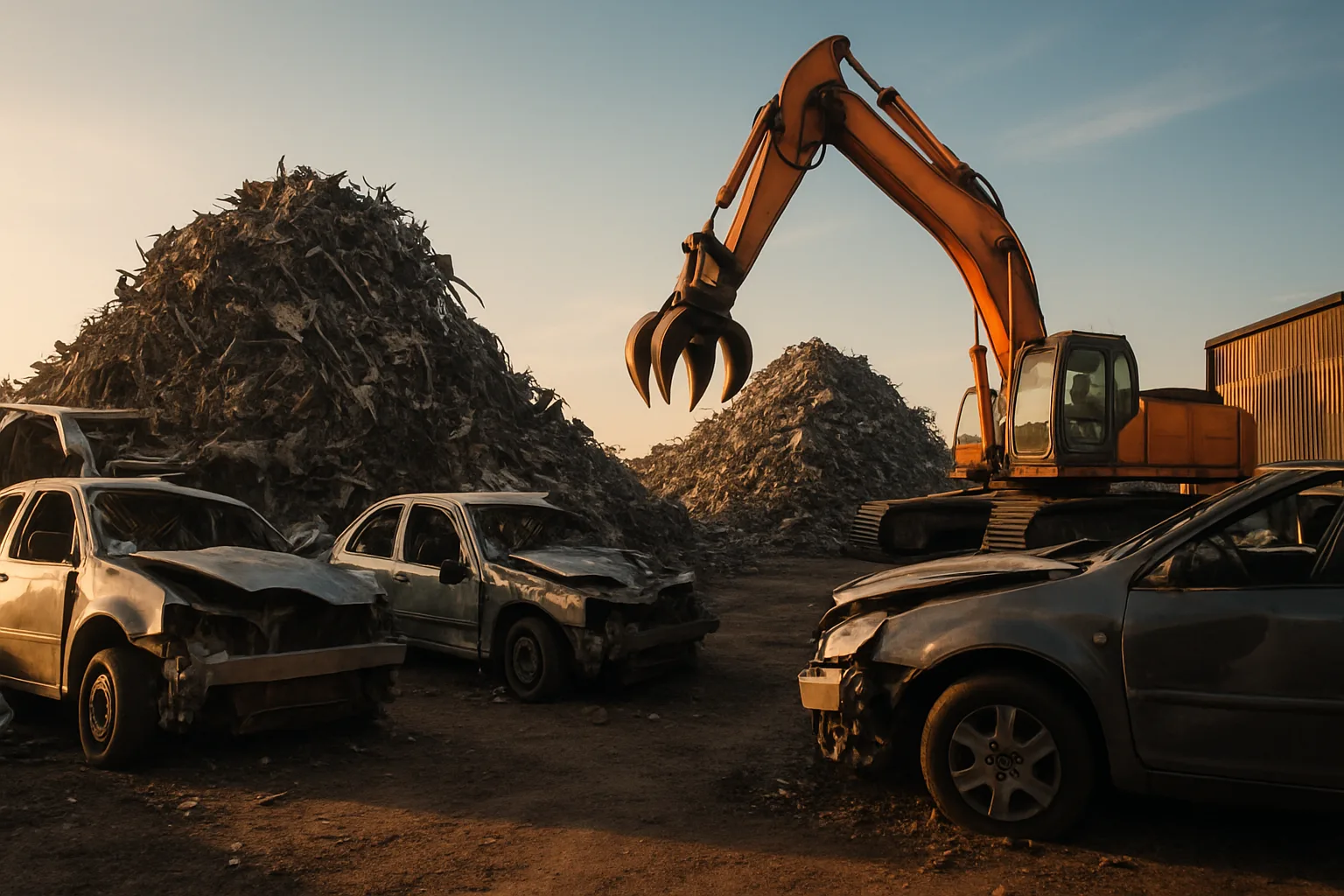
Your car got hit, it's not worth fixing, and it's been sitting in your driveway since the tow truck dropped it off. Sound familiar? Across Canada — from London, Ontario to the coasts — thousands of accident-damaged vehicles end up exactly like this every year. The repair estimate comes back higher than the car's value, the insurance settlement barely covers what you owe, and now you're stuck with a crumpled piece of metal taking up space. Here's what most people don't realize: that wreck still has real value, and you can convert it to cash faster than you think.
This guide walks you through exactly how to scrap an accident-damaged car in Canada, what affects your payout, and how to avoid leaving money on the table. Whether you're searching for cash for junk cars London or trying to figure out your options after a write-off anywhere in Ontario, this is the practical breakdown you need.
What Happens to a Car After an Accident Write-Off?
When an insurer declares a vehicle a total loss, they typically pay out the actual cash value of the car and take ownership of the salvage. But not every accident ends in an insurance write-off. Some people carry liability-only coverage, some accidents involve older vehicles where the math doesn't work in the owner's favour, and some collisions happen on private property without a claim at all. In those cases, you own the damage — and the decision about what to do next is entirely yours.
A write-off doesn't mean the car is worthless. Accident-damaged vehicles still contain:
- Recoverable scrap metal (steel, aluminum, copper wiring)
- Undamaged mechanical parts that can be resold
- Catalytic converters with recoverable platinum group metals
- Wheels, tires, and glass that may still have resale value
- Fluids and batteries that have separate recovery value
The salvage value of any vehicle is the sum of its parts — literally. Even a car that took a serious side impact often has an intact drivetrain, working engine components, and a full set of undamaged body panels on the other side. Scrap buyers and dismantlers know this. You should too, before you accept the first offer that comes your way.
What Affects the Cash Value of an Accident-Damaged Car in Ontario?
Not all wrecks pay the same. Several factors drive the difference between a strong offer and an insulting one. Understanding these before you start making calls puts you in a much better negotiating position — whether you're in London or anywhere else across Ontario.
Vehicle weight and metal content. Heavier vehicles — full-size trucks, SUVs, minivans — contain significantly more steel than compact cars. Scrap metal pricing is weight-based, so a rolled F-150 will almost always net more than a crumpled Civic at the same damage level. Steel scrap prices fluctuate with global markets, so the timing of your sale matters too.
Type and extent of damage. A front-end collision that left the rear of the car untouched is a very different proposition from a vehicle that rolled multiple times. Dismantlers pay premiums for vehicles where large sections are still functional. The more usable parts, the higher the offer — above and beyond the base scrap metal value.
Other factors that affect your payout include:
- Year, make, and model (demand for used parts varies widely)
- Whether the catalytic converter is still on the vehicle
- Airbag deployment status
- Whether the engine runs or turns over
- Location and accessibility for pickup
- Completeness — missing parts reduce offers
If you want to get a free car valuation before committing to any buyer, do it. A quick assessment of what's still intact on your vehicle gives you a baseline to compare against incoming offers.
The London Scrap Car Market: What to Expect Locally
London, Ontario sits in a strong position for scrap vehicle sales. The city's industrial base, proximity to the 401 corridor, and active auto dismantling sector mean there's genuine competition for accident-damaged vehicles. That competition matters — when multiple buyers want your car, you get better price discovery instead of one buyer setting the floor.
If you've been shopping around for cash for cars Ontario options and getting wildly different quotes, that's not unusual. The spread between the lowest and highest offer on an accident vehicle can be substantial, especially for late-model trucks or vehicles with intact drivetrains. A single phone call to one local buyer is the worst strategy. You're essentially letting one person set the price with no competitive pressure.
This is exactly where platforms like SMASH change the equation. Instead of calling buyers one at a time and hoping someone gives you a fair number, SMASH puts your vehicle in front of vetted buyers simultaneously. More eyes on your load means real competition — and competition is how you find out what the market actually thinks your car is worth. You can compare scrap metal bids from Canadian buyers and see the difference for yourself.
For local residents, London scrap metal services are a practical starting point — but make sure whatever buyer you choose is offering you a competitive rate, not just a convenient one.
How to Sell My Car for Cash in London: Step-by-Step
The process is more straightforward than most people expect. Here's exactly what to do after an accident leaves you with a vehicle you can't — or won't — repair.
- Gather your documents. You'll need the vehicle's ownership (title) in your name. If the insurance company took ownership after a write-off settlement, you'll need to confirm whether they retained salvage rights. In Ontario, salvage titles are a separate designation — know what you're selling.
- Remove your personal belongings. Sounds obvious, but people routinely leave items in glove compartments, trunks, and under seats. Do a thorough sweep before handing anything over.
- Note what's intact. Walk around the vehicle and document what survived the accident — take photos. Buyers who can see undamaged components are more likely to offer above base scrap rates.
- Get multiple offers. Don't accept the first number. Contact at least three buyers. Use platforms that bring buyers to you — that's far more efficient than cold-calling yards one at a time.
- Confirm pickup logistics. Most junk car buyers will tow the vehicle at no cost to you. Confirm this upfront so there are no deductions at pickup.
- Transfer ownership properly. In Ontario, you must notify the Ministry of Transportation when you sell or transfer a vehicle. Get a bill of sale and keep a copy for your records.
The whole process — from first contact to cash in hand — can happen within 24 to 48 hours for most straightforward cases. If a buyer is dragging their feet or adding last-minute conditions, that's a red flag. Move on.
Using SMASH to Sell Scrap Metal Online and Maximize Your Return
Whether you're scrapping one accident-damaged personal vehicle or you run a yard that processes dozens of write-offs monthly, the principle is the same: more buyers equals better outcomes. The old model — one buyer, one phone call, take it or leave it — consistently undervalues inventory because there's no competitive pressure pushing the price toward real market value.
SMASH is built around a simple idea. You list your vehicle or scrap inventory, vetted buyers compete, and you see where the market actually sits. No subscription fees. No guesswork. If your load sells, SMASH earns a cut. If it doesn't, you're out nothing. That's a structure that aligns incentives properly — the platform only wins when you do.
For sellers looking to sell scrap metal online, SMASH also handles the documentation side: photo documentation, inventory tracking, and auto-invoicing. That matters when you're dealing with accident vehicles, because a well-documented load with clear photos of intact components consistently attracts stronger bids than a vague listing. Buyers bid with more confidence when they can see what they're getting.
If you're managing a volume of vehicles — whether you're a dealer clearing write-offs, a tow yard sitting on unclaimed accident vehicles, or a fleet operator — read Canadian car selling guides to understand the full range of your options before committing to a single buyer relationship.
Common Mistakes That Cost You Money When Scrapping an Accident Car
Most sellers leave money behind not because they made a major error, but because they didn't know what to watch for. These are the mistakes that consistently reduce payouts on accident-damaged vehicles.
Accepting verbal offers without confirmation. Get the offer in writing — or at minimum confirmed by email or text — before scheduling pickup. Last-minute price changes at the curb are a known tactic in low-quality scrap buying operations.
Selling with the catalytic converter already removed. If your cat is still on the vehicle, it's part of what makes the car worth more. Some buyers price it into their vehicle offer. Others buy cats separately. Know which situation you're in before you list.
Not confirming towing is included. Free pickup is standard with most reputable buyers. But "free towing" should mean zero deduction from your agreed payout — not a surprise line item at the end.
Waiting too long. Scrap metal markets move. A price that makes sense this week may not look the same in six weeks. If you've decided to scrap the car, move on it. You can always sell your car for cash across Canada through a platform that connects you with active buyers — no waiting around for one buyer to call back.
Forgetting to cancel insurance. The moment ownership transfers, you should notify your insurer. Continuing to pay premiums on a vehicle you no longer own is a clean waste of money.
Accident-damaged vehicles across Canada — including right here in London and throughout Ontario — have real market value. The key is making sure you capture it rather than handing it to the first buyer who shows up with cash. Get your documents in order, document what's intact, and use competitive platforms to let buyers work for your business instead of the other way around. When you're ready to move, get a free quote at cashforcars-canada.ca — it takes minutes and puts real numbers in front of you with no commitment required.
Stay current on scrap metal market movements and industry pricing trends by following SMASH on LinkedIn.
Frequently Asked Questions
Q: Can I sell a car for cash in London if it's been written off by insurance?
Yes — but confirm who holds ownership first. If your insurer took the salvage title as part of the write-off settlement, they own the vehicle and you cannot sell it independently. If you retained the title (common with liability-only policies or when you declined the insurer's offer), it's yours to sell. Always verify your title status before listing the vehicle.
Q: How much cash can I get for a junk car in London, Ontario?
Payouts vary based on vehicle weight, damage extent, make and model, and current scrap metal prices — all of which fluctuate. Heavier vehicles with intact drivetrains and undamaged components consistently attract higher offers than smaller cars with widespread damage. Getting multiple offers through a competitive platform gives you the clearest picture of actual market value for your specific vehicle.
Q: Do I need to tow the car myself to sell it for scrap?
No. Most reputable junk car buyers and scrap services include free towing as part of the transaction. Confirm this before you agree to anything, and make sure "free towing" means no deduction from your payout — not a surprise fee applied after pickup.
Q: What documents do I need to sell a scrap car in Ontario?
You'll need the vehicle ownership (title) in your name, valid government-issued ID, and a bill of sale documenting the transaction. In Ontario, you're also required to notify the Ministry of Transportation of the transfer. Keep copies of everything — both for your records and for cancelling your insurance policy on the vehicle.
Q: Is it worth selling an accident car privately before scrapping it?
Sometimes, yes — particularly for vehicles with a repairable salvage designation and intact mechanical components. A late-model truck or SUV with front-end damage but a working drivetrain may attract private buyers looking for a project. However, private sales take longer, involve more risk, and require a roadworthy vehicle for test drives. If speed and certainty matter more than squeezing out maximum value, scrap or salvage buyers are the more practical route.